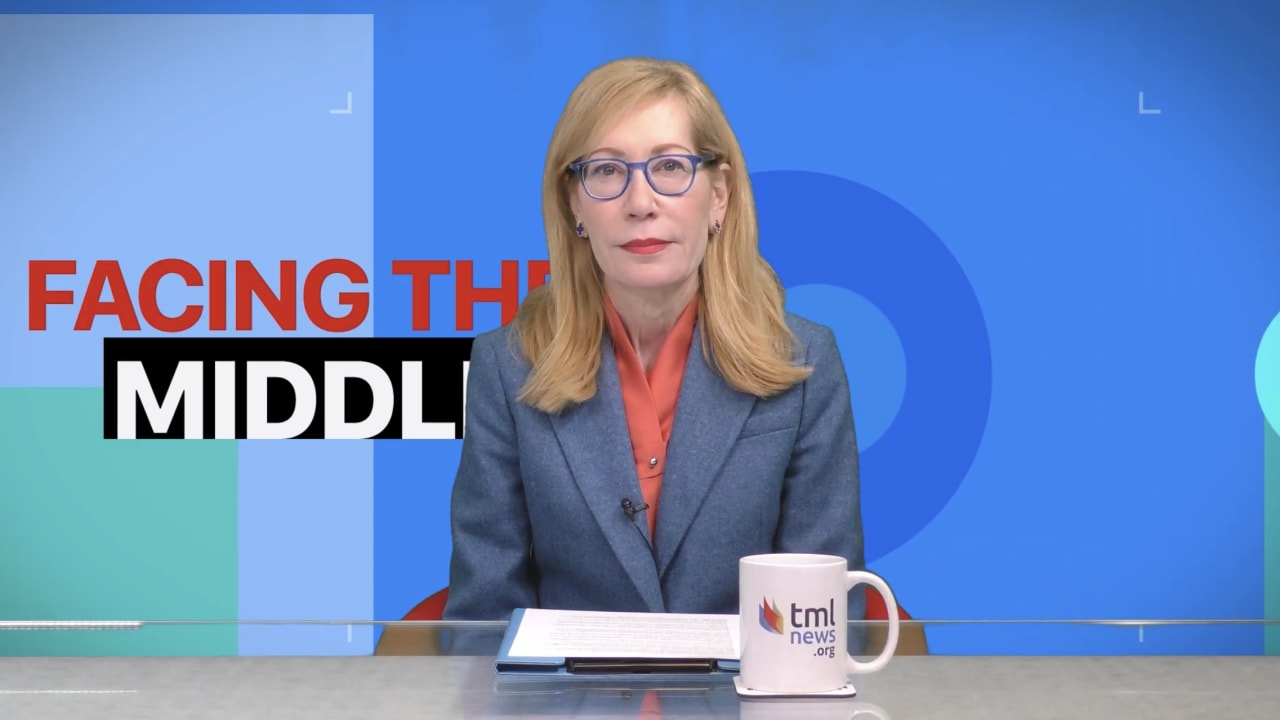
As the world marks International Women’s Day, episode 19 of Facing the Middle East with Felice Friedson turns the focus to women whose leadership is reshaping communities, challenging old barriers, and trying to build a more hopeful future in a region battered by war, distrust, and political upheaval.
For more stories from The Media Line go to themedialine.org
Centered on the Women Champions for Change initiative, the program brings together voices from Israel, the broader Middle East, and beyond to examine what women can do when they are not just invited to the table but are helping build it.
The episode opens with Danny Hakim, founder of Sports for Social Impact and director of the Azrieli Foundation, who explains how the idea for Women Champions for Change grew out of the collapse of regional trust after the October 7, 2023, Hamas attack on Israel.
At a time when many peace-building efforts were frozen, Hakim chose to move in the opposite direction, convening about 50 women leaders in Israel for a two-day gathering focused on relationships, cooperation, and long-term regional change. His argument is plain: women are already building networks that may prove more durable and more practical than many formal political efforts.
Bedouin and Iranian activists
That theme continues in Felice Friedson’s conversation with Hanan Alsanah, a Bedouin attorney, activist, and co-executive director of Itach Ma’aki - Women Lawyers for Social Justice. Alsanah reflects on her own path from a conservative Bedouin upbringing in Lakia to becoming a public advocate for women’s education, economic opportunity, and leadership.
Her story gives the episode a grounded view of social change inside Israel itself, where questions of equality, representation, and tradition remain deeply contested.
The program then widens its lens with Nazanin Afshin Jam-McKay, the Iranian-born human rights activist and co-founder of Stop Child Executions. She speaks about the brutality of the Iranian regime, her family’s escape after the 1979 revolution, and her hope that Iranian women and men may yet reclaim their country. Her appearance gives the episode moral force and a sense of urgency, tying women’s rights to the larger struggle against state repression.
The final guest, Donna Orender, the former president of the Women’s National Basketball Association, brings an international and strategic perspective. She argues that real progress begins with connection, trust, and the willingness to see people not as slogans or categories but as human beings shaped by different experiences. Taken together, the episode is a strong case for women’s leadership not as symbolism, but as practical power.