

Regrettably, it is by now an old, tried and true story. Something in the normal run of things goes awry, we all hunker down within our own four walls and tune in to largely virtual channels of communication with the world around us.
We had just surfaced, licking our emotional and physical wounds, from two or three years of COVID-19 lockdowns and other constraints on our freedom of movement and choice. Then, a few months later, there was that most horrific of events, Oct. 7, 2023, and its seemingly endless aftermath, which continues to rumble on in our collective and individual memories. And now we have a second round of hostilities with Iran as rockets head over our way, some intercepted and others wreaking havoc on human life across the country.
Call it escapism or an emotionally and intellectually enriching endeavor, but either way, the Jerusalem Municipality has been offering online and other activities to locals, across a wide range of topics and fields, for quite a while.
As Operation Roaring Lion goes on, we can all benefit from some succor, something to draw our thoughts and feelings away from the madness outside and help keep our blood pressure and pulse at as healthy an ebb as possible.
Dropping into the municipal website reveals a veritable plethora of activities that we can all access at the click of a button or two. There are educational slots, interactive events, entertainment offerings, and plain old fun stuff to get into.
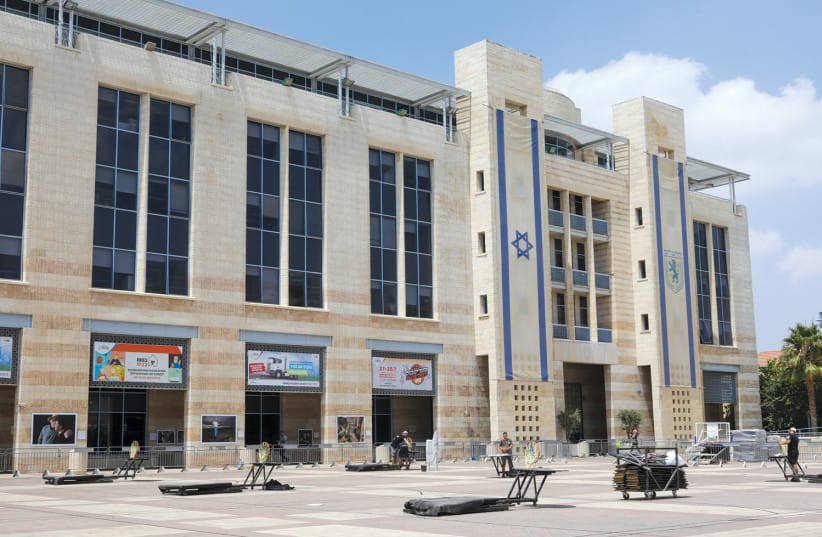
Distractions and entertainment from the Jerusalem Municipality
The focus, naturally, is very much on children and youth, whose regular schooling routine has been – yet again – disrupted, with schools currently closed. Besides the daily sirens and explosions, our already shaken younger folk could do with something to keep them joyously engaged and, hopefully, socially active.
To that end, the municipality is allocating games kits all around the city, delivered to community centers and other spots where kids regularly gather these days, such as communal bomb shelters.
“The idea behind the kits relates to two purposes,” explains municipal Culture, Society and Sports Administration head Orit Dolev. “It offers collective enjoyable activities away from the screens for as many participants as possible across different age groups.”
Providing kids with some productive and rewarding downtime away from those infernal, addictive cellphone and computer screens has got to be a huge plus for all concerned, including their parents. And getting them to use their corporeal sensorial abilities and skills, and socialize in the same physical space, provides all sorts of rewards, including on a sorely needed emotional level.
Dolev cites additional advantages of getting together for some fun and games. “We are also aiming to make the time spent in bomb shelters shared, communal, and enjoyable time, as much as we can. Social interaction helps to reduce tension and anxiety levels, and we hope that it will turn this complex situation into a positive memory for the children, and allow parents some respite and a restorative breather.”
Dolev notes this isn’t just a blanket handout, and says some thought went into making the municipal gifts appropriate for the consumership. She adds that the administration is also thinking past the present lamentable state of affairs. “The games in the kits can be used at any time, and we believe they can turn the community spaces into places that are accessible and where children can play and have fun together, even after the sirens and alerts are a thing of the past.”
Let’s hope the recurring hostilities and life-threatening situations are, indeed, at some stage of our lifetime consigned to the history books, permanently. Hope springs eternal.
ANOTHER STAFFER, Gal Helfman, who is very much hands on with the current municipality tax payer-supported endeavor, goes along with the cross-societal help line of thought. The idea, from the off, was to make the services user-friendly and accessible.
“As soon as we realized the situation was not going to be resolved within a matter of days, we prepared kits for all the public bomb shelters, for both kinds of shelters in Jerusalem – the standalone shelters and shelters that are located within schools.”
In a digital, often humanly detached world where people talk in terms of Zoom “meetings” and “talking” via social media networks when, in actual fact, we don’t “meet” or “talk,” it is gratifying to hear Helfman speak about getting children congregating and interacting in the original definitive sense of the word.
It was, she says, very much a matter of upscaling for the occasion. “We took the regular small checkers game we all know and enlarged it, to suit the size of a bomb shelter. We created a board for the bomb shelter floor so that as many people as possible can feel they are a part of it, that they are involved.”
That has to be a boon in a socially estranged situation, let alone in times of war. “Even if the game is played by only two people at a time, the fact that it is so big and has a powerful presence in the place helps to divert a person’s focus from the tension and pressure and fear, and you can engage in something else for a while. It is so physical, so much there!” Helfman enthuses. As someone who has a pretty technophobic take on life over a quarter of the way into the 21st century, I can but applaud that mindset.
As we learned during the pandemic mess, one of the most distressing aspects of the lockdown fallout was the sense of social alienation, and abject loneliness, that many – especially senior citizens and children – endured and suffered from. That particularly harmed the golden agers who, it has been suggested by some experts in the field, may have been literally killed off by the distress that it caused them. Keeping the physical as well as emotional juices flowing is all-important for older folk, and the digitally provided fare also features keep-fit exercises and other sporty items.
As has been noted many a time over the years, if we don’t learn from our past mistakes, history will unfortunately repeat itself. Hence, the municipality’s palliative efforts are all the more welcome and heartwarming in the present trying circumstances.
“We made large checkers sets and large snakes and ladders [games], and we took the booklets we made for the website and printed them out and inserted them into the kits, with felt-tipped pens and stickers. There are also regular playing cards, for youth and adults. We very much wanted to cater to all ages but also to create a different ambiance – fun and lighter – to mitigate some of the tension and anxiety.” The booklet can also be accessed on the website.
The personal touch, says Helfman, always figured high up in the logistics order of preference priority. “We could have used a courier service to get the kits to the different places, but we decided to take a more challenging option and use our Enforcement and Policing Wing, and representatives of the community centers, so that we could generate a genuine, personal direct encounter with the field. We wanted the people to feel there is someone who cares about them.”
That interface also allowed Helfman, Dolev, and their colleagues to get a feel for the way things were working out in practice, and what Jerusalemites actually wanted to get from the municipality. “We were able to learn about the needs of the public, possibly if there was a particular problem with some shelter or other.”
JERUSALEM RESIDENTS do not only constitute different age groups. This sprawling city is also home to various ethnic and cultural groups. That was also factored into the municipality’s venture thinking.
“The kits, and it came into our overall approach, all that was tailored to the different groups across the city,” Helfman adds. “We designed the kits and booklets so they would match the needs of the haredi [ultra-Orthodox] community, and also related to Ramadan and the Arabic language for residents in the eastern part of the city. We hope we have managed to cater to almost everyone in Jerusalem.”
A look at the municipality website, and the vast spread of online and other wartime activities, shows there is much more to the endeavor than delivering games kits across town. There is an abundance of items on offer for our current circumstantially imposed leisure time. Take, for example, interactive cooking workshops, and there is topnotch entertainment for kids courtesy of online-facilitated productions of the celebrated Orna Porat Children’s Theater company.
It is all, says Helfman, there for the convenient taking. “It is a bit funny to call it a website. It is more like a digital platform that provides a solution for anything I am looking for. I might be looking for something for my kids, something on screen but via better quality screens. I can find shows by the Train Theater or online concerts for children by the [Israel] Philharmonic [Orchestra].”
There are also offerings designed to titillate our gray matter. “The Welfare Department and the Parenthood Unit of the Education Administration have their finger on that pulse,” Helfman advises me. “There are Zoom lectures for parents almost every evening.”
Having an Internet dissemination facility at one’s disposal also makes it possible to virtually take us beyond the physical perimeters of the capital. The municipality website, for example, provides an online tour of the Mizgaga Museum on Kibbutz Nahsholim, not far from Zichron Ya’acov. This is a somewhat left-field repository that houses contemporary glass and ceramic art, as well as diverse local archaeological finds dating back to biblical times.
DOLEV, HELFMAN, and the rest of the municipal administration gang have had to exercise more than a modicum of on-the-fly logistics as security developments here have unfolded over the past week or two.
“We suddenly had the evacuees from Beit Shemesh who came to hotels in Jerusalem. The day they arrived, we had representatives at the hotels who met the people to get an idea of their situation, the mess they were in, and to identify any weak points [in the existing municipality services for them].”
The ability to rapidly adapt has been hard-earned. “Sadly, we are very experienced in that,” Helfman says. “The day after they came to Jerusalem, we already had relaxation activities for the children, cultural activities, and there were shows, magicians, and clowns. We tried to provide them with things that could take their minds off what had happened [in Beit Shemesh] and to give the parents a moment or two to take stock.”
Perusing the municipality website and the plethora of interest items available to the digital user, there appears to be something for everyone there. Senior-aged social media users can get a better handle on digital communications via a lecture by Aliza Malul, and the evidently multi-talented Ms. Malul also offers insight into the life and work of the Baal Shem Tov, as well as background information on the creation of the Society for the Protection of Nature in Israel. Other online enlightening slots include virtual rendezvous with award-winning poet Agi Mishol and author Galit Dahan Carlibach.
Matters could be a lot better in these parts, but at least the Jerusalem Municipality – among other institutional and individual service providers up and down the country – is making an effort to keep our minds on some life-affirming activities while distracting us from the ongoing distressing elements of life here.
And, should you somehow not find anything that takes your fancy among the armory of municipal offerings, or have an idea for an additional digital activity that could appeal, why not just drop the city officials a line? No doubt they will be happy to take your needs and desires into consideration and add it to their program list.
For more information: jerusalem.muni.il/