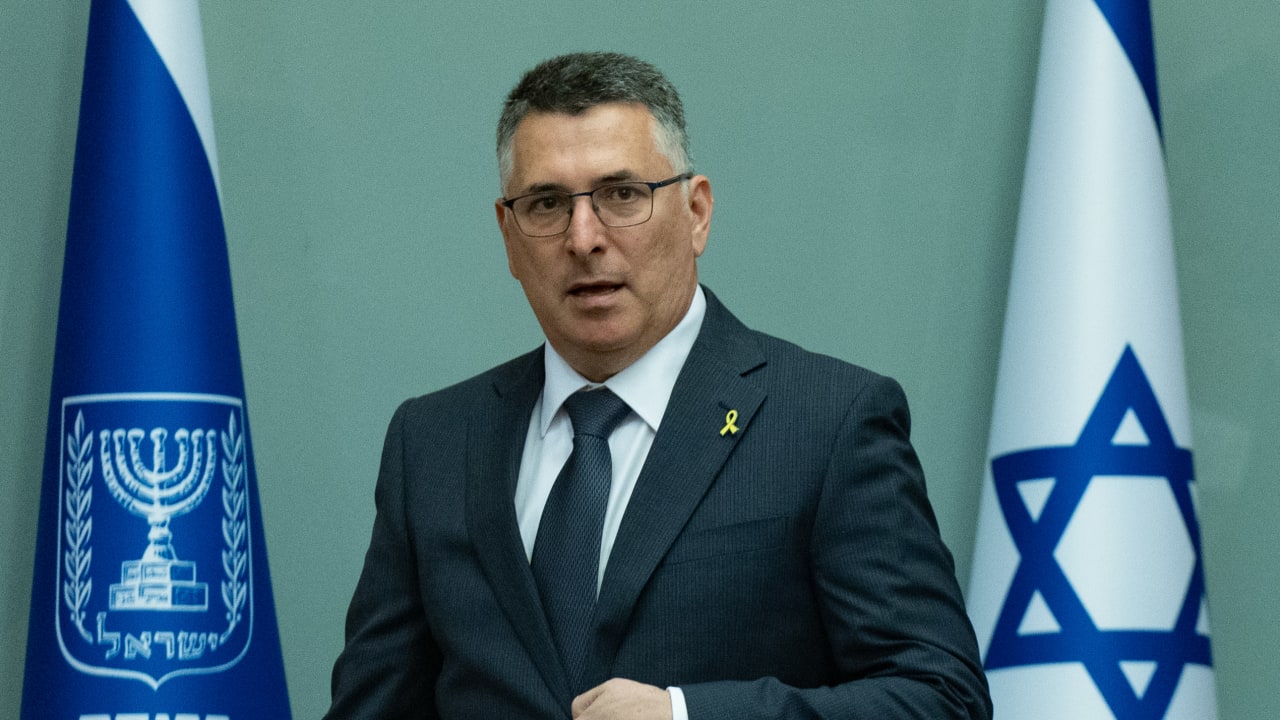
In recent days, since the war by Israel and the United States against Iran began, Foreign Minister Gideon Sa’ar has not been getting much sleep.
“It’s not only because of the sirens,” he told The Jerusalem Post. “There are quite a few discussions, meetings, and also phone calls with counterparts that continue late into the night.”
Sa’ar was one of the insiders who participated in planning the war and in the discussions convened by Prime Minister Benjamin Netanyahu to deliberate on the joint Israeli-American operation.
The operation, which dramatically shifted the balance of power in the Middle East, stood out not only for its kinetic success but also for the US’s close involvement.
Sa’ar rejected claims that Jerusalem had dragged Washington into the campaign or persuaded it to join, emphasizing instead the complete alignment of interests between the two allies.
“I have no intention of sharing the content of the dialogue between us and the administration, but President Donald Trump saw, and continues to see, the situation exactly as we do,” he said. “That was reflected in their joining the military action in June 2025. All the more so now. This was not merely participation; it was a joint operation with joint planning, and that speaks for itself.”
Against the backdrop of Trump’s remarks that the war might be nearing its end, and concerns among some Israeli officials that Washington and Jerusalem might define “victory” differently, Sa’ar addressed the war’s ultimate objective. He stressed that the definition of victory held by the Israeli government and the American administration is the same.

“We don’t want to enter a new war every year or every two years,” he said. “Therefore, our goal is to remove the existential threats that Iran poses to Israel for the long term, not just temporarily.”
Sa'ar says Operation Roaring Lion intends to weaken Iranian regime
When asked whether the complete overthrow of the ayatollah regime had been a defined and shared military objective for both Washington and Jerusalem, Sa’ar offered a clear clarification.
“Regime change may be a consequence of the operation; it does not necessarily have to be part of the military campaign itself,” he said. “Our mission was to weaken the regime, particularly its repression forces, in a way that creates the conditions that will ultimately allow the Iranian people themselves to bring about that change.”
Sa’ar revealed that there were already signs of cracks and disagreements between the political and military leadership within the Iranian regime.
“The regime has been weakened, and its level of operational readiness is declining,” he said.
According to Sa’ar, the joint offensive has dealt a severe blow to the regime’s “image of power,” both domestically and internationally.
“The strikes caused enormous damage to Iran’s nuclear-weaponization program, ballistic-missile program, as well as targeting senior figures and various enrichment components,” he said. “As a result, Iran has been pushed significantly further away from acquiring nuclear weapons.”
Nevertheless, Sa’ar remained realistic about the nature of Iran’s leadership, particularly following the death of supreme leader Ali Khamenei and the rise of his son, whom he described as “even more extreme.”
“The reality of life during the 47 years of the Islamic Republic proves that this regime does not change its nature,” he said. “It has not changed its intention or its plan to destroy the State of Israel. Therefore, the long-term goal can be fully realized only when this regime is replaced by another. Otherwise, the threat could always return.”
The consequences of the war have reverberated across the Middle East, triggering diplomatic developments and new alliances.
Sa’ar has held countless phone calls with his counterparts, briefings, and even took the German foreign minister, who recently visited Israel, to see the missile impact sites. He emphasized the deep anger in the Arab world toward Tehran, especially following Iran’s unprovoked strikes against more than 10 countries in the region, including Qatar and Turkey.
“The Iranian axis already existed before, but a fairly broad regional alignment against it has now emerged,” Sa’ar said, citing a recent initiative led by Bahrain together with other Gulf states to condemn Iran at the United Nations Security Council.
“There is genuine concern in the international community about Iran’s pursuit of nuclear weapons, its long-range ballistic missiles, and, of course, its ties to terrorist organizations,” he said. “I believe this concern has only grown during the war.”
This regional anger has also affected the Palestinian arena. The Qatari leadership is furious with Hamas after it refused to condemn Iranian strikes on Qatari territory, Sa’ar revealed.
“You can already see the changes happening now,” he said. “Iran’s inability to financially support Hamas, Hezbollah, and the Houthis is reshaping the situation in many places across the Middle East.”
Regarding the ongoing conflict on the northern border, Sa’ar said Israel was not surprised by Hezbollah’s entry into the war on March 2. He emphasized that Iranian pressure and the death of Khamenei had served as catalysts for the escalation by the Lebanese terrorist organization.
While acknowledging the Lebanese government’s desire to disarm Hezbollah and avoid dragging the country into a devastating war, Sa’ar spoke candidly about Beirut’s limitations.
“Has the Lebanese government done enough? The answer is no,” he said. “I do not dismiss its desire to disarm Hezbollah and avoid dragging Lebanon into wars that are not its own. But the pattern of behavior of the Lebanese government and the Lebanese army is to avoid confrontation, and what they fear could turn into a civil war.
“In practice, the state does not enforce its political will over Hezbollah. Hezbollah enforces its will over the Lebanese government.”
As fighting in the North escalates, Sa’ar warned that the Israeli cabinet might soon change its operational approach to protect its citizens more decisively.
Asked whether civilian infrastructure in Lebanon could become a target, he said: “As the war escalates, and it is indeed escalating, the government may decide on changes in its operational patterns. The government is committed to protecting its citizens, and it will have to act accordingly.”
This week, Sa’ar was included in the list of the 100 Jews positively influencing the world compiled by The Algemeiner Journal, partly because he is described as “a prominent voice warning against international attempts to impose dictates on Israel.”
Even during the current war, the international community often prefers “temporary calm,” a concept Israel can no longer accept after the painful lessons of the past, he said.
“We have learned that temporary quiet can lead to the emergence of very serious dangers in the not-so-distant future,” Sa’ar said. “Our policy is a policy of removing threats. There will always be friction, and there will always be a need for public diplomacy, but ultimately, when it comes to our fate and our security, we must stand firm.”