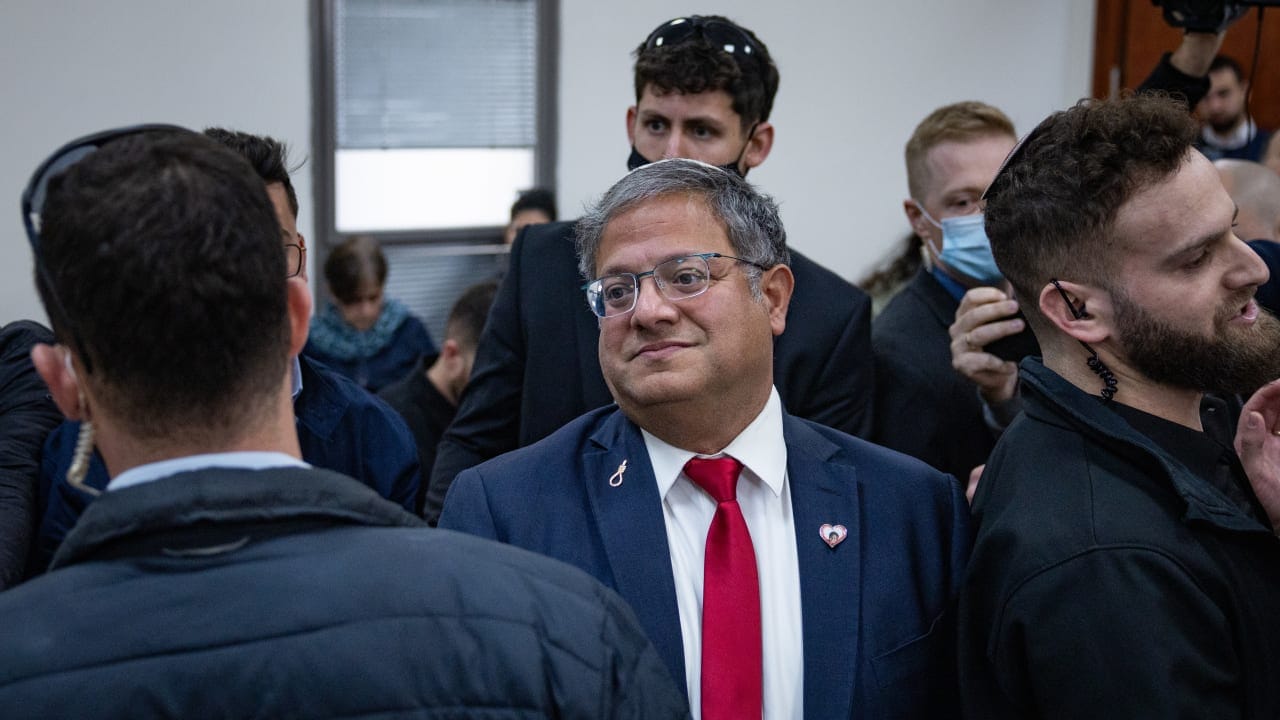
Police officer Rinat Saban received her promotion to the rank of chief superintendent on Tuesday, bringing to a close a months-long legal and institutional battle over a promotion that the Jerusalem District Court had already ordered National Security Minister Itamar Ben-Gvir to approve.
The ceremony marked the practical implementation of a ruling that had become one of the clearest judicial tests yet of the limits of the minister’s authority over police appointments and the independence of investigators involved in politically sensitive cases.
Earlier that day, Ben-Gvir appealed to the Supreme Court against the district court’s decisions in the case, seeking to overturn both Judge David Gidoni’s February 9 ruling ordering Saban’s promotion and his March 18 clarification that if the minister did not sign by March 23, the promotion would take effect by force of the judicial ruling itself, retroactive to April 28, 2025.
In the filing, Ben-Gvir argued that the court had acted without authority by effectively bypassing his signature and turning a judicial order into the operative act of promotion.
The dispute has stretched on for months. Gidoni ruled in February that Ben-Gvir’s continued refusal to approve Saban’s promotion was “extremely unreasonable” and raised a “real and substantial concern” that extraneous considerations were at work.

Later, when the minister sought to stay the ruling pending appeal, the court rejected that request as well, warning that further delay would deepen the harm to Saban personally and to the broader public interest in an independent police force.
At the center of the affair is Saban’s role in investigations connected to Prime Minister Benjamin Netanyahu and several of his associates, as well as her later testimony in Netanyahu’s criminal trial.
Ben-Gvir had approved Saban’s appointment to her current post in late 2024, and she began serving in that role on January 1, 2025.
After she completed the required senior command course on April 28, 2025, however, her promotion was frozen even as senior professional officials supported advancing her rank.
Saban had meanwhile turned back to court, asking that Ben-Gvir be held in contempt after he failed to implement the February judgment and continued acting as though the ruling had been stayed when no stay had been granted.
Her motion asked the court either to compel the minister to sign within days or, failing that, to declare the promotion effective retroactively and have it carried out without him. That request set the stage for the March 18 clarification that ultimately allowed the promotion to go forward even without the minister’s signature.
Ben-Gvir’s appeal seeks to recast the case not as an unlawful refusal to promote an officer, but as a dispute over administrative process and separation of powers.
According to the filing, the minister had not made a final decision rejecting Saban’s promotion, but was still seeking additional review by senior police command. On that basis, he argues that the court erred by treating the matter as a complete refusal, intervening before the administrative process had run its course, and intruding into a statutory area, he says, that is reserved to the minister.
The appeal also revives two broader attacks that have shadowed the case from the outset. One concerns Ben-Gvir’s substantive criticism of Saban’s past conduct as an investigator, particularly regarding the phone-search litigation involving Netanyahu aide Yonatan Urich.
The other concerns her legal representation by the NGO Movement for Quality Government in Israel, which Ben-Gvir has argued created an improper outside benefit to a public servant. Those claims form part of the minister’s broader case against the promotion, but they are his arguments – not findings the district court accepted in his favor.
After the promotion went through, attorney Rachel El-Shai Rosenfeld, head of the whistleblower protection unit at MQG, which represented Saban in the proceedings, said the group welcomed what she called Saban’s deserved advancement after more than 25 years of distinguished service and a lengthy legal struggle.
She said that Saban had shown unusual courage in withstanding heavy pressure and attempts at intimidation, and described the outcome as not only a personal victory for Saban, but also an important moment for police independence and the rule of law.
Rosenfeld said the message to officers and investigators involved in exposing government corruption was clear: continue your work without fear.
She added that Ben-Gvir’s conduct throughout the affair illustrated the danger of injecting political considerations into professional promotion procedures in law-enforcement bodies, warning that harm to the police’s professional independence could deter investigators in cases involving senior officials and erode public trust.
She said that the movement would continue working to protect the independence of law-enforcement institutions and to ensure that appointments and promotions in the public service are determined on the basis of professionalism and integrity alone.
What began as a dispute over one officer’s advancement has hardened into something larger: a fight over whether a minister can indefinitely block a professionally backed promotion after an officer becomes associated with sensitive investigations, and whether the courts can still enforce their rulings when a cabinet minister refuses to carry them out.
Tuesday’s events – Saban’s promotion on the ground, and Ben-Gvir’s appeal in court – laid those competing visions side by side.