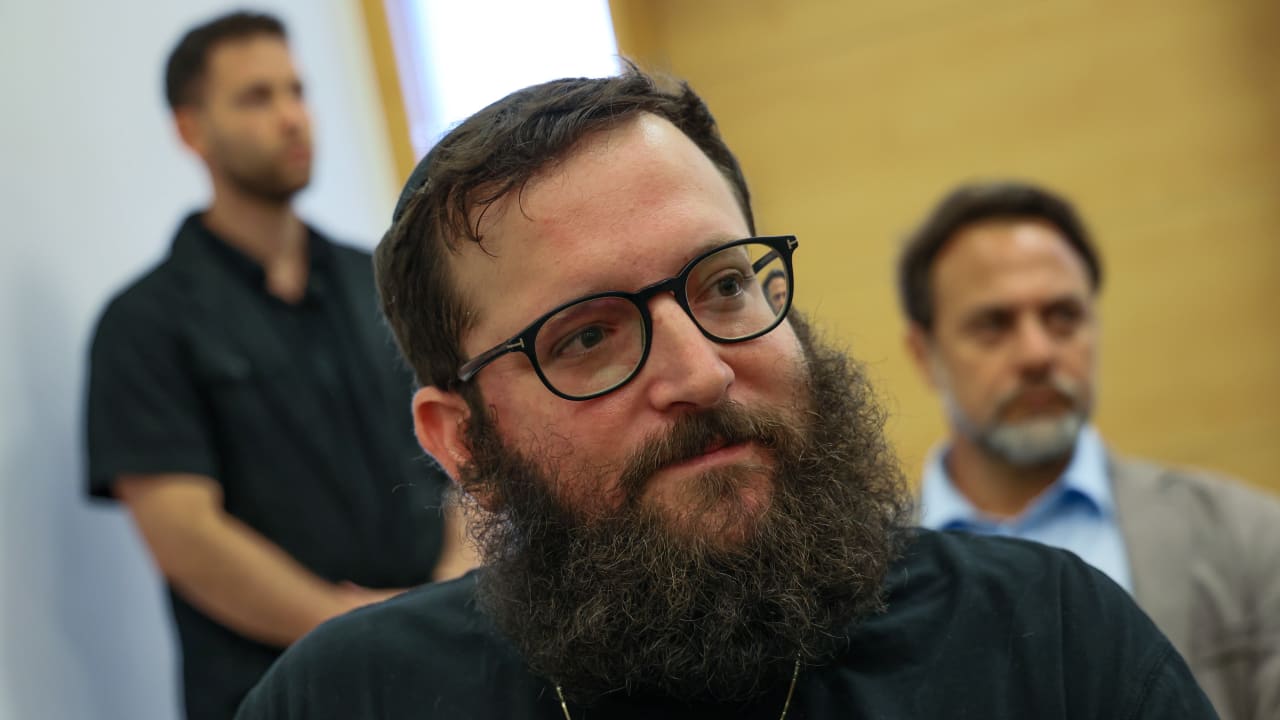
Yonatan Urich, senior aide and personal media adviser to Prime Minister Benjamin Netanyahu, was added on Thursday as a defendant in the amended indictment in the Bild classified-documents case, alongside former Prime Minister’s Office spokesman Eli Feldstein and IDF reservist Ari Rosenfeld.
The amended indictment, filed in the Tel Aviv District Court, charges Urich over his alleged role in receiving, using, and disseminating classified information. He is charged with providing secret information with the intent to harm state security, providing secret information, possession of secret information, and destroying evidence.
The first charge is a legal formulation that prosecutors say applies because of the alleged foreseeable security harm caused by exposing classified material, rather than necessarily ideological intent to harm Israel. Urich has denied wrongdoing and has argued that the investigation is political.
The case centers on allegations that classified IDF intelligence was removed from military channels and later published in Bild after the Israeli military censor barred its publication in Israel.
Prosecutors describe the alleged leak as an exposure of intelligence capabilities, sources, and methods during wartime, arguing that publication and repeated media use could have harmed Israel’s security, intelligence operations, and human sources.

Effort to sway public opinion over hostages debate
According to the indictment, the alleged media effort was tied to the public debate over hostage negotiations after the murder of six hostages in Gaza by Hamas terrorists: Hersh Goldberg-Polin, Eden Yerushalmi, Ori Danino, Alexander Lobanov, Carmel Gat, and Almog Sarusi.
Their bodies were recovered from a Hamas tunnel in Rafah in early September 2024, after they were murdered in captivity. Their deaths triggered public outrage, renewed pressure for a hostage deal, and criticism of Netanyahu’s handling of the negotiations.
Prosecutors allege that Feldstein and Urich sought to influence that conversation by using classified information that had not been formally passed to the diplomatic echelon.
At the center of the case is a classified intelligence document that allegedly detailed Hamas’s expected hostage-negotiation strategy. According to the indictment, the document was obtained through a secret intelligence source and classified as top secret, for limited access.
The IDF’s information security apparatus, known in Hebrew as Mahbam, receives raw intelligence, stores it in secure systems, and distributes it under strict rules. When intelligence is meant to reach the political echelon, the indictment says, it is transferred through the National Security Council.
Rosenfeld, who had served in Mahbam during his mandatory service, was called up after October 7 and was exposed to classified material connected to Hamas military intelligence. Prosecutors allege that, from June 2024, Rosenfeld and Feldstein created a channel for moving classified information outside the military system.
On June 6, according to the indictment, Rosenfeld contacted Feldstein on WhatsApp and offered to pass along classified intelligence he had seen as a reservist, asking that it reach the prime minister. Two minutes later, Feldstein allegedly updated Urich, writing: “A senior officer,” “my source,” “in Military Intelligence,” “wants to transfer material urgently to the prime minister,” and “insane material.”
The next day, Rosenfeld allegedly sent Feldstein a photograph of the document. Prosecutors say Rosenfeld knew he was passing secret information without authority and knew Feldstein was not authorized to receive it.
Feldstein had previously been blocked from serving as PMO spokesman for security-diplomatic affairs after the Shin Bet found him to have a “security incompatibility” for the relevant clearance level. The indictment says he spoke with Urich, who then initiated a way for him to work as an external media adviser in the PMO.
Urich worked directly under Netanyahu
Urich, according to the indictment, worked directly under Netanyahu as his personal media adviser and did not hold security clearance.
The alleged use of the document accelerated after the hostages’ bodies were recovered. On September 2, the indictment says, Feldstein proposed using Rosenfeld’s information to shape the media conversation around the murders and hostage negotiations, and updated Urich in advance.
Feldstein first allegedly sent the material to Channel 12 reporter Raviv Golan, who submitted it to the censor. The censor refused to approve it for publication. Feldstein then allegedly asked Urich whether he knew someone abroad who could publish it, writing: “Who do you have abroad?” and adding that it could not come from him.
Urich, according to the indictment, directed him to Israel Einhorn, a media strategist who had worked with Urich on Likud campaigns and at Perception.
The indictment says Feldstein and Einhorn spoke with a Bild reporter and passed the document’s contents onward for publication abroad. On September 4, Rosenfeld, Feldstein, Einhorn, and the reporter allegedly held a WhatsApp call in which Rosenfeld clarified that the document was top secret.
Bild published the article on September 6. According to the indictment, Feldstein, with Urich’s knowledge, then worked to echo the foreign publication in Israeli media. That day, Urich allegedly called Feldstein. Feldstein wrote back that he was speaking with the source. Urich allegedly replied, according to the indictment: “Take your time... The boss is happy.”
The following day, the indictment says, Feldstein and Urich drafted a statement for Netanyahu referring to the content published in the Bild report. Feldstein also allegedly sent Urich a full translation of the classified document, which Urich kept despite lacking authorization.
After journalists questioned the authenticity of the Bild report, Feldstein allegedly sought the original document from Rosenfeld. The two met at the Kirya on September 9, where Rosenfeld allegedly handed him a printout in Arabic and additional classified materials.
Feldstein allegedly wrote to Urich: “The document,” “I got everything,” “Everything is with me,” “The boss needs to see everything,” and “Waiting for you.” The indictment says Feldstein later approached journalists, including Golan and Omri Assenheim, to present the original document as proof that the Bild report was authentic. Golan and Assenheim did not publish it because of the censor’s ban.
After Feldstein gave a three-part interview to Assenheim on KAN 11 in December 2025, police sought the raw materials as part of the Bild and related “midnight meeting” investigations. The Supreme Court later accepted Assenheim’s appeal in part, ruling that the request was too broad and that journalistic privilege may extend beyond a source’s identity.
The indictment also sits alongside the separate “Qatargate” investigation, concerning suspicions that Qatar-linked interests sought influence inside Netanyahu’s wartime advisory circle.
Former Shin Bet director Yoram Cohen criticized Netanyahu over his public embrace of Urich, saying that Netanyahu knows the damage caused by removing classified information from security systems during wartime.
“The prime minister is choosing to embrace and protect someone accused of providing secret information that could significantly harm sensitive information sources and state security,” Cohen said, adding that Netanyahu was signaling that personal loyalty matters more than loyalty to the state.
Following the amended indictment, the prosecution asked the court to impose new restrictive conditions on Urich until the end of proceedings, including a ban from the PMO and security facilities, a contact ban, a travel ban, and financial guarantees.
Prosecutors argued that the indictment changed the balance and created grounds for stricter restrictions. They also noted that Netanyahu himself was added as prosecution witness No. 80 in the amended indictment. Netanyahu is not a defendant in the case.
Judge Ala Masarwa did not grant the additional restrictions immediately, pointing to the case chronology and the fact that Urich had been exposed to core investigation materials months earlier. The existing conditions were extended until further decision, and the hearing was set for July 5.