
The Israel Fire and Rescue Authority is seeking to prohibit passengers from bringing electric scooters aboard Israel Railways trains due to concerns over lithium-ion battery fires and difficulties extinguishing them in confined spaces.
The proposed restrictions come five years after passengers were first permitted to bring electric scooters aboard trains, a practice that has since become popular among thousands of Israeli commuters.
Under current regulations, passengers can bring folded electric scooters weighing up to 15 kg. into any train carriage.
IFRA initially seeks to restrict electric scooters to a designated carriage before introducing a complete ban on transporting the devices by train.
"Extinguishing a burning scooter battery is a problem, particularly when the train is inside a tunnel," an IFRA official said.
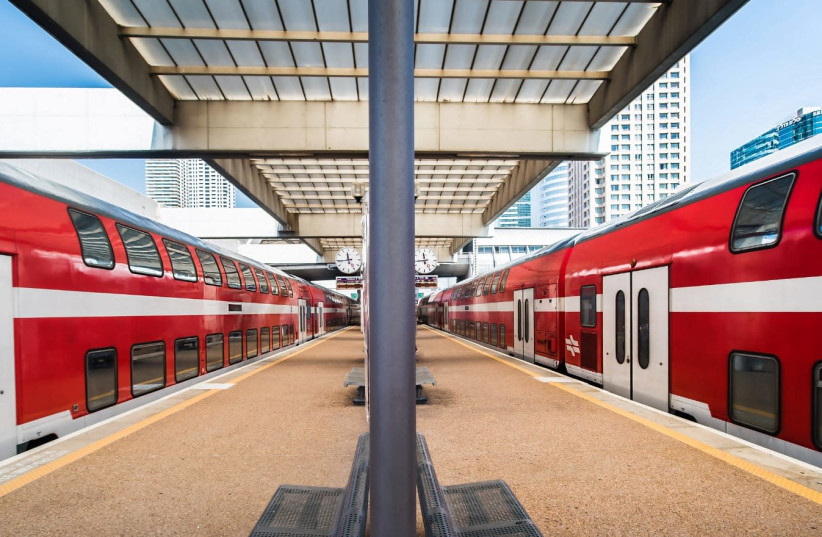
Electric scooter fire at Tel Aviv train station raises safety concerns
Although such incidents are relatively rare, an electric scooter caught fire approximately two months ago at Tel Aviv's HaHagana railway station as a passenger was disembarking.
A train inspector quickly removed the burning scooter from the carriage onto the platform, where firefighters extinguished the blaze. No injuries were reported.
However, the incident occurred under relatively favorable conditions, with the train stationary at a station and emergency services able to access the scene.
Fire officials are concerned that a similar incident aboard a moving train, particularly inside a railway tunnel, could present considerably greater challenges for emergency responders.
The IFRA's recommendations require approval from the Transportation Ministry, which regulates railway operations in Israel. No implementation timeline has been established, and the proposed ban has yet to receive final approval.
Proposed electric scooter ban could increase commuting costs
Electric scooters have become a popular complementary means of transportation for railway passengers, allowing commuters to travel between stations and their final destinations without relying on additional public transportation or private vehicles.
Electric scooter rental companies could benefit significantly from the proposed restrictions, with demand for their services potentially increasing around railway stations and in major cities.
However, regularly renting electric scooters is generally more expensive than owning a private vehicle, potentially increasing transportation costs for frequent commuters.
Tel Aviv Deputy Mayor Meital Lehavi, who oversees the municipality's transportation portfolio, criticized the proposed restrictions in a post on X.
"This is a misguided way of addressing a genuine problem involving tampered-with and improvised vehicles that can pose a real danger, while penalizing responsible riders," Lehavi wrote.
"Integrating bicycles with railway transportation is a vital public interest in encouraging people to adopt alternatives to private vehicles, particularly for last-mile transportation."
Electric scooter restrictions expand across European public transportation networks
The proposed Israeli restrictions reflect a growing international trend toward limiting the transportation of electric scooters on public transit due to concerns over lithium-ion battery fires.
However, many transportation authorities distinguish between electric scooters and electric bicycles, with the latter frequently exempt from restrictions.
United Kingdom: Restrictions on privately owned electric scooters, electric skateboards, hoverboards, and electric unicycles were introduced across much of Britain's railway network on Thursday, June 1, 2023, approximately three and a half years ago.
The restrictions were introduced over concerns regarding battery fires, heavy smoke, difficulties extinguishing fires, and damage caused by uncontrolled lithium-ion battery thermal runaway.
Electric bicycles are generally exempt. However, railway operator Merseyrail separately announced stricter restrictions on non-folding electric bicycles, scheduled to take effect on Friday, January 1, 2027.
Spain: Barcelona introduced restrictions on electric scooters following a fire aboard a train. Madrid subsequently implemented stricter measures after a defective scooter battery exploded aboard a subway train.
France and Germany: Public transportation operators in Paris and Berlin have restricted electric scooters on buses and trams, while permitting them on certain railway services.
Some German transportation operators, including those serving the Hanover region, have extended restrictions to railway services.
Ireland: Public transportation operators prohibit passengers from bringing electric scooters aboard buses and trains due to fire safety concerns.
Electric bicycles and mobility scooters are exempt, reflecting differences in manufacturing standards, regulatory oversight, and the maturity of the respective industries.
Australia and Canada tighten lithium-ion battery safety regulations
Australia: The New South Wales government has considered temporary restrictions on electric bicycles, electric scooters, and other micromobility devices aboard trains and metro services amid growing concerns over lithium-ion battery fires.
The discussions followed battery-related fires aboard a metropolitan train in Melbourne and inside an elevator at Blacktown railway station in Sydney.
A partial restriction took effect on Sunday, November 1, 2026, approximately four weeks ago, prohibiting passengers from bringing conventional bicycles that have been converted into electric bicycles aboard trains.
The measure followed public consultations indicating that a blanket ban on all electric bicycles would be excessively restrictive.
Canada: Toronto has introduced seasonal winter restrictions on electric bicycles and scooters powered by lithium-ion batteries following battery-related incidents involving the city's subway system.
Electric wheelchairs and other mobility devices designed for people with disabilities are exempt from the restrictions.
Seoul subway bans electric scooters following battery fire concerns
South Korea has also introduced restrictions on electric scooters aboard Seoul's subway network following a battery-related incident in September 2025, approximately 14 months ago.
Smoke was detected coming from an electric scooter battery at Seoul's Hapjeong subway station, prompting trains to temporarily bypass the station.
On Wednesday, July 1, 2026, nearly five months ago, restrictions prohibiting passengers from bringing electric scooters and large lithium batteries aboard Seoul's subway network took effect.
In Israel, the proposed restrictions remain subject to Transportation Ministry approval. Until a final decision is reached, passengers can continue bringing qualifying folded electric scooters aboard Israel Railways trains under existing regulations.