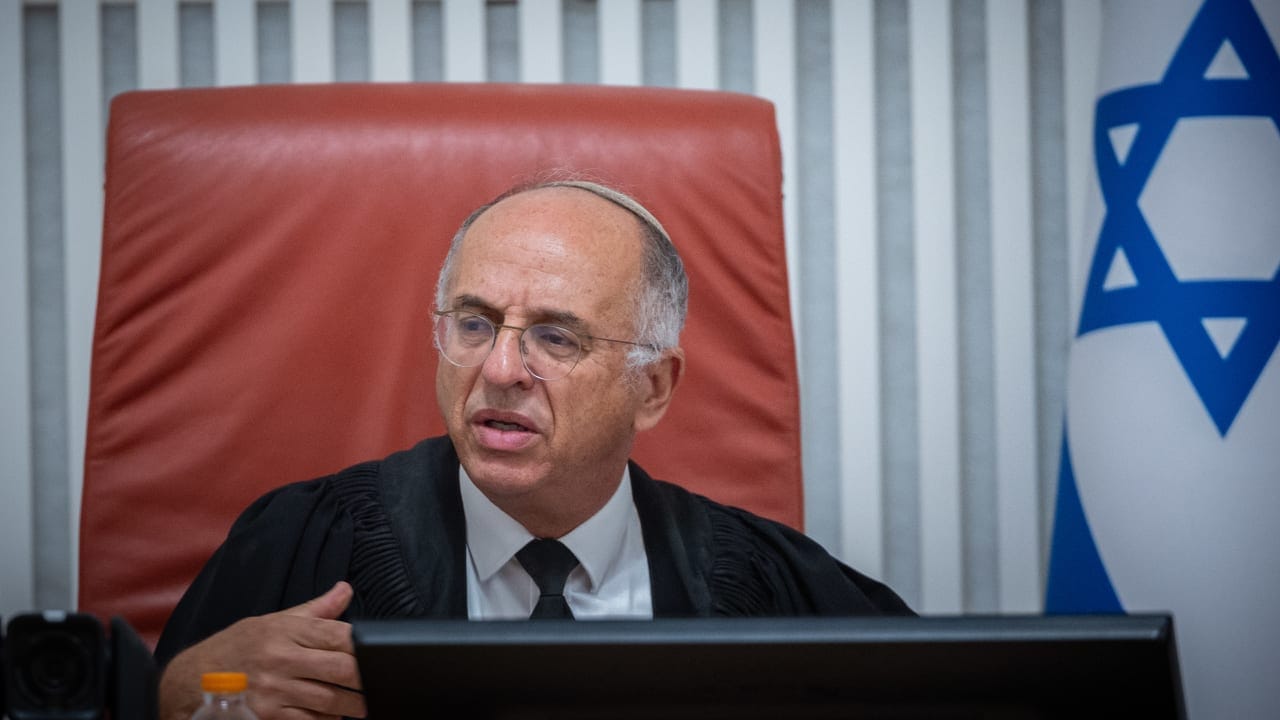
Central Elections Committee chairman Justice Noam Sohlberg said on Sunday that even if suspicions of foreign interference in last week’s Knesset election are substantiated, they do not undermine the integrity of the vote or its results as a whole.
His statement followed Likud claims that Arab parties had “stolen” the election – allegations police had said were not supported by the information available to them. The final count left Prime Minister Benjamin Netanyahu’s bloc short of a parliamentary majority.
Sohlberg said the investigation would continue, but official results would be published and submitted to President Isaac Herzog as scheduled on Wednesday, when consultations on forming the next government are also due to begin.
“It is our position that, even if the suspicions are substantiated, this does not detract from the integrity of the election process or the election results as a whole,” he said, appearing in a circulated video alongside Shin Bet (Israel Security Agency) Director David Zini, Attorney-General Gali Baharav-Miara and acting CEC director-general Dean Livne.
“I would also like to clarify the following: nothing stated here is intended to cast aspersions on the voting of the Arab community,” he added.
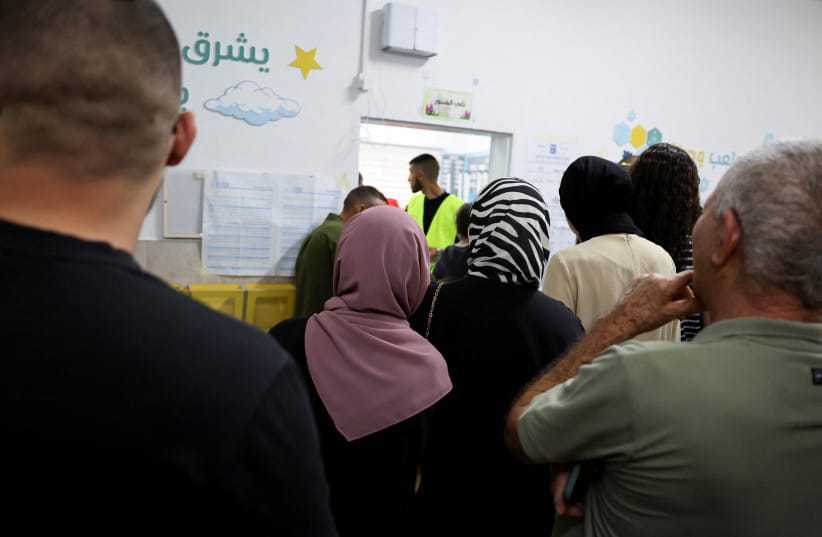
The completed count gave Arab parties Ra’am and the Joint List a combined 19 seats, Netanyahu’s bloc 53, and the rival bloc led by Yashar chairman Gadi Eisenkot 48, leaving neither bloc with a parliamentary majority on its own.
A covert joint investigation
Sohlberg said the suspicions concerned foreign funding intended to influence the election and potentially involved a security dimension. The inquiry remained covert and relied on classified intelligence, he said.
A joint team led by the Shin Bet, police and prosecution would investigate the suspicions, with Sohlberg monitoring its work. Investigating possible offenses and completing the election process would proceed in parallel.
Likud challenged Sohlberg’s announcement on Sunday, calling it puzzling that he could describe the suspicions as serious while concluding, before the investigation ended, that they would not affect the results.
“A black cloud hangs over the results” until the investigation is completed, the party said.
Likud also claimed that only 4,612 votes separated Ra’am from losing a seat to the right-wing bloc, arguing that such a transfer would have transformed the political picture. That claim does not establish that any votes were cast unlawfully. A single-seat transfer would increase Netanyahu’s bloc from 53 to 54 seats, still short of the 61 needed for a parliamentary majority.
‘The people are sovereign’
Eisenkot, Netanyahu’s principal rival for the premiership, welcomed Sohlberg’s statement and accused those challenging the results of trying to discredit an entire community and force another election.
“The vile and malicious attempt to deny the election results, undermine the public’s will, smear an entire community and drag Israel into another election has failed,” he said.
“The people are sovereign, and they have spoken: the government of failure has no majority, and it has lost,” he added.
The foreign-interference investigation became public on Thursday, when Sohlberg’s letter instructing Zini to investigate suspected foreign funding and election bribery was released. The letter, dated Wednesday, sought evidence to substantiate or refute the suspicions and requested available findings within the coming week because of the timetable for election appeals.
The Shin Bet subsequently said the intelligence came from its own work, rather than a political party, and that no one outside the agency apart from Sohlberg had seen it before voting ended. Zini met Netanyahu on Wednesday evening and also briefed Eisenkot and opposition leader Yair Lapid with Sohlberg’s approval.
On Thursday, Likud invoked the investigation to urge other parties not to rely on Arab parties to form a government or replace the Knesset speaker. Police said that day that they had no investigative or intelligence support for broader claims that the election had been stolen.
Court releases man accused of election bribery
Separately, the Beersheba Magistrate’s Court on Sunday released Dr. Sayaf Abu Riash, one of three men arrested on Election Day on suspicion of election bribery, without restrictive conditions.
The police bribery case has not been publicly established as connected to the Shin Bet’s foreign-interference investigation.
Investigators were examining whether 10 envelopes containing NIS 1,000 each, found at one suspect’s home, were intended for prospective voters in exchange for votes for Ra’am. Investigators still needed to establish the connection between the money and the suspected bribery. The case was transferred to the Lahav 433 National Crime Unit, and four additional suspects were arrested on Thursday.
Abu Riash’s father, Issa, described his son’s arrest as political persecution, saying he had been working to encourage turnout. Ra’am rejected attempts to link the party to election offenses, saying the activists had been arrested at home before polling stations opened. It accused police of making wrongful arrests to suppress Arab voting and alleged political misuse of the force by National Security Minister Itamar Ben-Gvir.
The arrests and discovery of cash do not themselves establish that Ra’am organized election bribery.
The government-formation process is meanwhile moving forward. President’s Residence director-general Eyal Shviki wrote to the elected factions on Sunday to inform them that Herzog would begin consultations on Wednesday before choosing an MK to try to form the next government.
Under Basic Law: The Government, the president must assign that task within seven days of publication of the election results. The chosen MK initially receives 28 days, which the president may extend by up to 14 days.