Sports are supposed to be played in front of fans. Period.
But in Israel right now, that simple truth feels almost like a memory. Due to restrictions imposed by the Home Front Command amid the ongoing war with Iran, professional sports have returned – but without the one element that gives them life: the crowd.
As the Israel Soccer League resumed play across the country this week, the atmosphere was eerie. It evoked the empty-stadium days of the COVID-19 pandemic in 2020, but this carried a heavier emotional weight. Players lined up for “Hatikva” in near silence, while artificial crowd noise was piped into broadcasts. Every shout from the coaches, every touch of the ball echoed through cavernous venues in Jerusalem, Netanya, Beersheba, and Nazareth, each limited to roughly 150 people.
The games went on, but the spirit of the sport felt detached from the field.
That reality struck even harder in Netanya, where one match was temporarily halted due to incoming missile fire. Players were rushed off the pitch into a shelter as explosions were heard overhead. When the all-clear was given, they returned to the field and resumed play – as if such interruptions were just another part of the matchday routine.

This is what professional sports look like in Israel today.
At Teddy Stadium, Beitar Jerusalem’s clash with Ironi Tiberias unfolded in front of empty stands that would normally hold 30,000 roaring supporters. Head coach Barak Itzhaki had spoken before the match about the uncertainty of returning to play after a 40-day wartime break, and that unpredictability showed early as Tiberias stunned the hosts with a 2-0 lead.
Beitar returns from defeat despite fan absence
Yet even without fans, the drama of competition persisted. Beitar adjusted, made key substitutions, and slowly clawed its way back into the game. Across the country, results shifted the table, adding urgency to every attack. And when Beitar finally found its rhythm, the comeback felt inevitable.
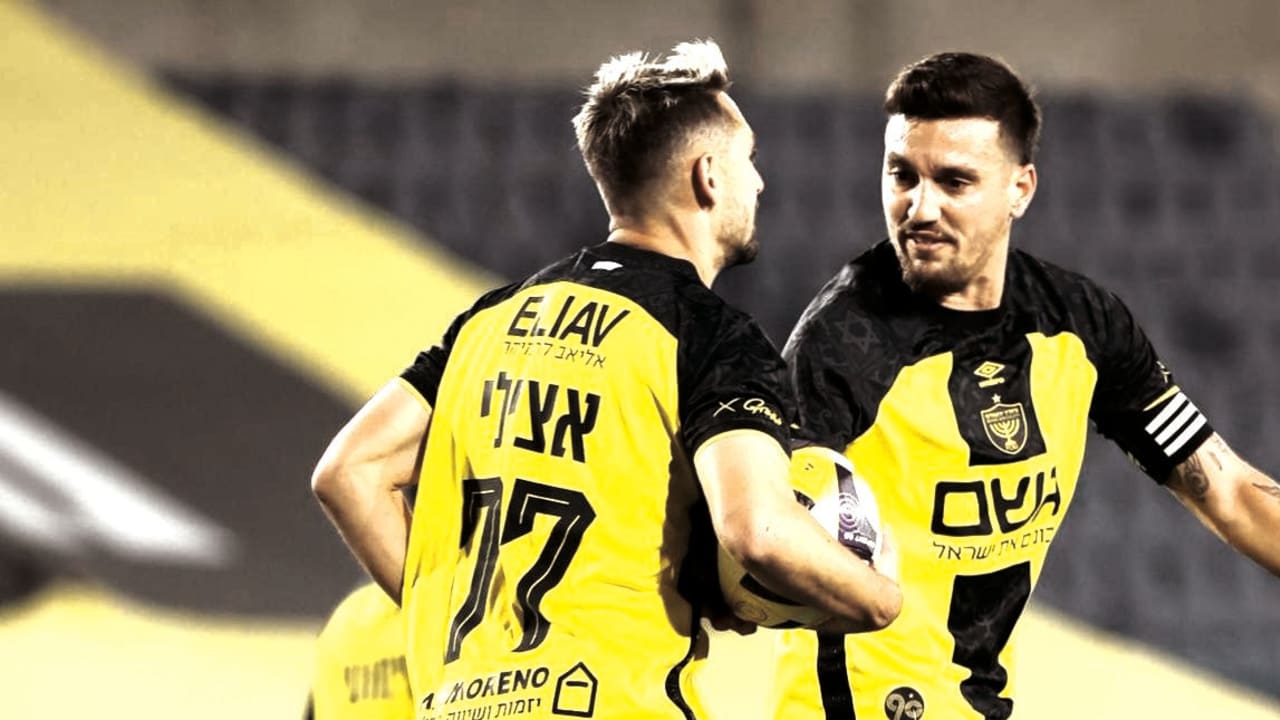
A headed goal cut the deficit. A penalty brought it level. Then, deep into injury time, a long-range strike deflected into the net to complete a 3-2 victory. Players and staff celebrated passionately on the sidelines – but there were no supporters to embrace, no stands to salute.
Instead, the fans were elsewhere: at home, on couches, or in shelters, celebrating together as sirens and interceptions filled the sky above.
Beitar’s win was thrilling, but incomplete. The connection between team and supporters – the heartbeat of sport – remains on hold. As the league pushes toward its final matchday and into the championship playoffs, the games will continue, but in a surreal, muted reality.
Until the situation changes, Israeli sports will exist in this in-between state: played professionally, competed fiercely, but missing the very soul that makes them whole.
See more Israeli sports coverage at www.sportsrabbi.com/en