
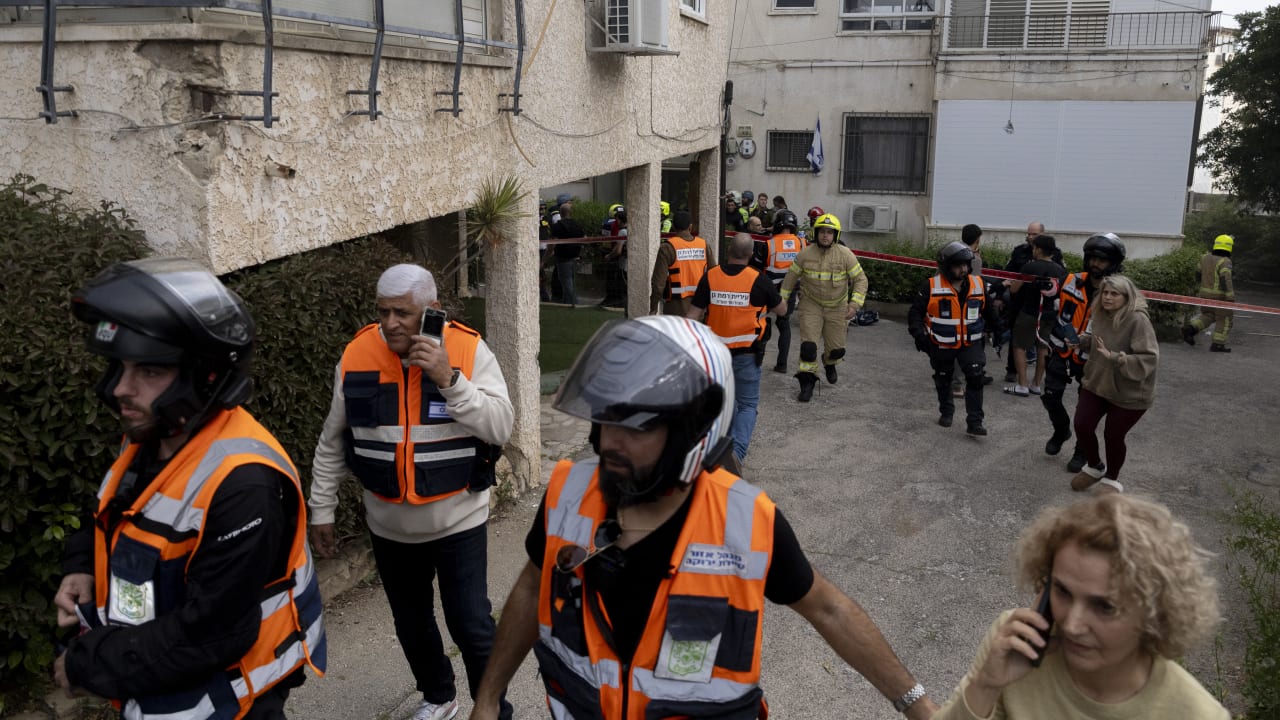

A family crouches in a bomb shelter as sirens wail through the night. Hours later, in the same neighborhood, music plays, guests dance, and a wedding proceeds.
It’s as if nothing happened.
These were not scenes from different days or even different cities. They were two videos a friend of mine sent me, taken just hours apart during Israel’s latest ballistic missile barrages.
That jarring transition, from fear to joy, from survival to celebration, is not an anomaly in Israel. It is the essence of Israeli resilience.
To most Americans, this is incomprehensible. To Israelis, it is simply life.
With the Iranian regime still entrenched, Hezbollah retaining a veto over Lebanon, and virulent antisemitism persisting not only among Palestinians but also in parts of Egypt and Jordan, Israelis understand that they live between cycles of terror and war.
Why do Israelis do it? Because they are not fighting on distant battlefields, they are fighting in their own backyards.
War at home
In December 2023, I stood with an IDF soldier peering into southern Lebanon from the northern Galilee. When I asked where he was from, he didn’t name a city; he simply pointed. His home was right there, in Margaliot, a border community within sight of the frontline.
I have witnessed this repeatedly, across multiple conflicts. Along the Gaza border, a lieutenant colonel gestured toward his house as rockets streaked overhead. In Samaria, as soldiers prepared for a night helicopter operation targeting terrorists, I asked one where he lived. He pointed to a cluster of lights in the distance: “There.”
In what other army in the world do soldiers fight on the frontlines in the morning and can be home, a short drive away, for a Passover Seder that same night?
This is not just geography. It is the essence of Israeli resilience.
I first grasped this reality during visits to Israel during the Second Intifada, when Palestinian terrorists routinely targeted buses, malls, and pizza parlors filled with children. What struck me was not only the brutality of the acts but also the speed of Israeli recovery. Scenes of carnage were restored to normalcy with remarkable efficiency, as if the country refused to grant terror even a psychological victory.
It was not denial. It was defiance.
Last week, I watched on television a scene in Ramat Gan, where a missile strike devastated a major intersection. Within hours, roads were repaired, vehicles cleared, and a heavily damaged building was draped in a giant Israeli flag, masking its shattered façade. By the next day, one could pass by without realizing what had occurred less than 24 hours earlier.
This instinct, to rebuild, to resume, to refuse defeat, defines Israeli society.

In the United States, sites of violence often become permanent memorials, reinforcing collective trauma and vulnerability. In Israel, the instinct is the opposite: reopen schools, restart businesses, and restore daily life as quickly as possible. Within 48 hours of the latest ceasefire with Iran, students were back in classrooms.
Roots of resilience
After decades of spending time with ordinary Israelis, meeting victims of terror, embedding with soldiers, and observing how Israeli media covers conflict, I have come to understand part of the “secret sauce” behind Israeli resilience: a fusion of necessity, history, and identity.
Americans like myself cannot fully grasp what it means to wake up multiple times a night to sirens, rushing children into shelters, living under a constant cloud of fatigue. Nor can we easily comprehend a society where nearly everyone is one degree removed from someone physically or emotionally scarred by war.
Israeli resilience is not merely endurance. It is deeply embedded, a national operating system forged through both modern statehood and nearly two millennia of Jewish vulnerability in exile. For generations, Jews lived as minorities subject to persecution, often without protection or refuge. The return to sovereignty in Israel changed that equation, but not the threats.
From the time of its founding, Israel has faced existential danger. In its War of Independence, it lost 1% of its population, a proportional equivalent of tens of millions of Americans. Survival required not just military strength but psychological endurance: the ability to mourn, and then to rebuild; to grieve, and then to dance again.
Are Israelis happy? Not in the conventional American sense.
In the United States, happiness is often equated with material success and individual achievement. Israelis value prosperity as well, but their sense of fulfillment is more closely tied to meaning, contribution, and collective responsibility.
Every Israeli matters. The sanitation worker and the tech executive stand side by side in the reserves. I once met a middle-aged executive from Apple Inc. at the Netzarim crossing in Gaza after he had been serving for hundreds of days. It is difficult to imagine a comparable scenario in the United States.

And there are countless other examples. My friend Keren, a major in the Home Front Command, repeatedly leaves her children in the care of grandparents so she can serve her country. This is not exceptional – it is normative.
Israeli happiness is rooted in purpose, family, and community. While many Americans – Jewish and non-Jewish alike – live far from their children, Israelis overwhelmingly maintain close familial ties. Even secular Israelis often gather for Shabbat dinners, reinforcing a sense of continuity and belonging.
Given these differences, it is unrealistic to expect Americans to fully understand the Israeli lived experience. Yet many still comment, critique, and moralize from 6,000 miles away, often without meaningful exposure to the realities Israelis face daily.
Before the latest war with Iran, several Israeli friends told me they were deeply concerned, not only about their own security but also about what they were seeing in the United States: rising antisemitism from both the political Left and Right, and a growing number of American Jews questioning Israel’s legitimacy.
They found this difficult to comprehend.
A parallel reality
If current trends continue, it may be that future generations of American Jews will come to understand Israeli resilience not from afar but firsthand, in Israel itself.
However, Israelis are not superhuman. They carry immense psychological burdens. The cumulative impact of years of conflict has produced widespread trauma and PTSD.
I know a young major who has struggled with PTSD since the 2014 Gaza war. After October 7, he returned to his elite combat unit. At the same time, while still in uniform, he began helping fellow soldiers cope with trauma and raising funds for mental health services.
This, too, is Israeli resilience: not the absence of pain but the determination to carry on despite it, and to help others do the same.
When I asked ChatGPT to define Israeli resilience, it offered a precise but clinical answer:
“The fusion of societal cohesion, civilian-military integration, and strategic patience that enables a small state to withstand continuous existential threats without societal breakdown.”
Accurate – but incomplete.
Israeli resilience is also emotional, historical, and deeply human. It is the ability to stand up after being knocked down, again and again, and to choose life, purpose, and continuity in the face of relentless adversity.
Americans may never fully understand this reality.
We may never fully grasp what Israelis endure. But we can strive to understand, to appreciate, and to stand with them.
Because now, more than ever, we need each other.■
Dr. Mandel is the director of MEPIN, the Middle East Political Information Network, and senior security editor of The Jerusalem Report. He briefs members of Congress and their foreign policy aides, think tanks, and the State Department. He is a regular contributor to The Hill, The Jerusalem Post, JNS, i24, ILTV, and other publications.