Fashion forward: Meet the 4 Israeli designers betting on unapologetic excess
Four emerging designers turn Tel Aviv’s runway into a world of reinvention, fantasy and unapologetic excess
Follow us on GoogleAt Tel Aviv Fashion Week, a new generation of Israeli designers pushed beyond convention, experimenting with recycled fabrics, unexpected textures and bold silhouettes.(photo credit: OMRI ROSENGART)ByORI LENKINSKI
The past three years in Israel have brought a whirlwind of challenges to the fashion industry, among many others. But adversity is hardly new to the local design community. Geographical isolation, limited access to materials, and ongoing regional conflicts have long shaped the conditions in which Israeli designers work.
Against this backdrop, Israel Canada Fashion Week, which took place in the first week of November at Tel Aviv’s Bitzaron neighborhood, offered something unexpected: an outpouring of imagination, exuberance and creative possibility.
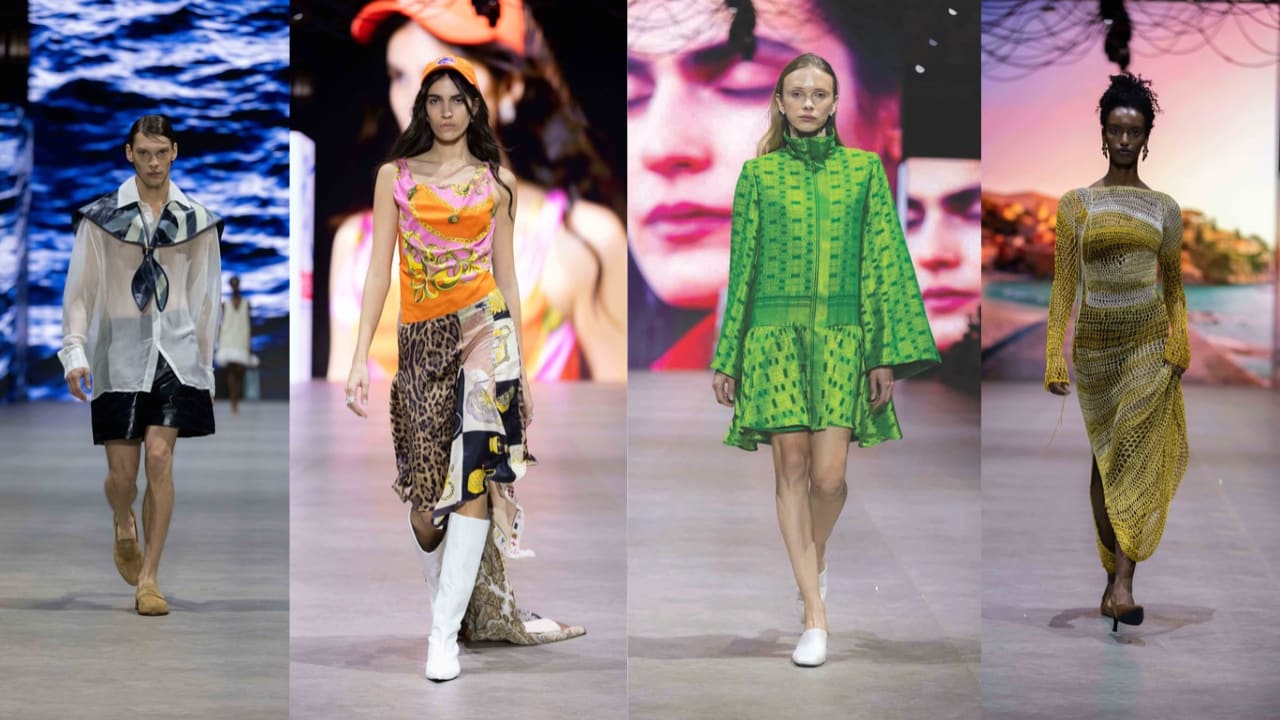
The Upcoming Designers runway, which featured four new labels, presented the richness of the Israeli imagination as told through fabrics, materials and textures.
Reinvention through recycling
The show began with TABU by Lilach Eliahu. Her designs presented vibrant athleisure ensembles created through the upcycling of existing fabrics, vintage garments and surplus textiles. Drawing on the visual language of sports clubs and team uniforms, Eliahu incorporated bold colors, athletic stripes and playful combinations of materials.
In Eliahu’s vision, men and women of all ages commanded the runway in casual yet loud looks against the backdrop of pop music. Beneath the exuberant surface was a feminist statement about strength, identity, and the freedom to take up space.
Eliahu’s imagining of the future seemed to hint at drawing from the past to pave the way forward.
TABU by Lilach Eliahu. (credit: OMRI ROSENGART)
Transformation through texture
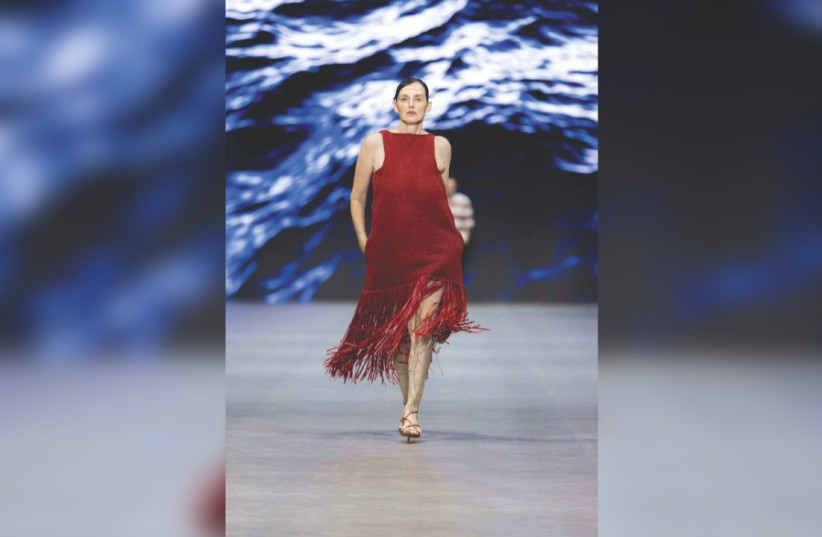
The second presentation opened with a video of roiling waves on the enormous screens at the head of the runway. Inbal Heffer’s designs translated the textures and movement of the sea into garments, with patchwork leather suggesting layers of water.
Inspired by family memories of the sea and her father’s work as a glass artist, Heffer explored the tension between rigidity and fluidity, transparency and opacity. She incorporated knits and leathers in crimson and navy, evoking a nautical sensibility. Standout pieces included a white pillbox hat and an oversized leather shirt with thick, woven silk trim.
Designed by Inbal Heffer. (credit: OMRI ROSENGART)
Exuberance in excess
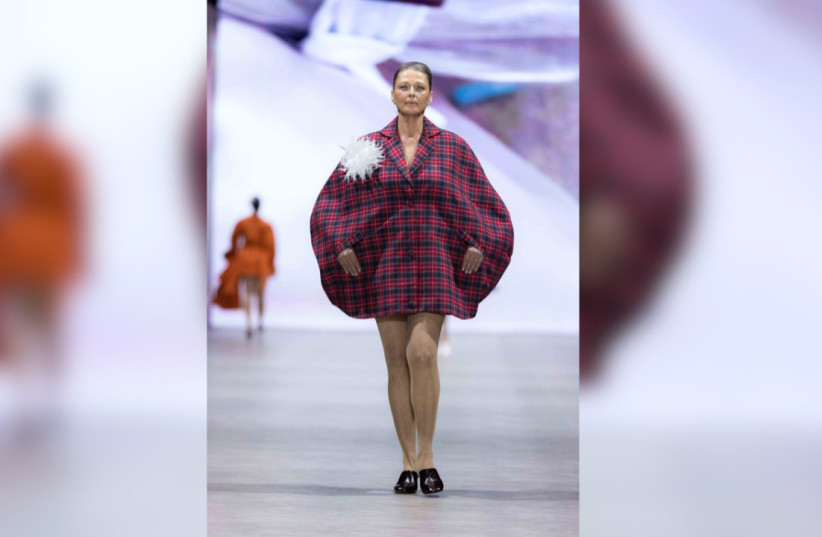
Next came Tal Yosifov’s HALT. A group of models gathered at the foot of the runway before descending the long catwalk one by one. The ensemble effect was one of whimsy and strength, with bold colors and sharp tailoring prevailing. Yosifov’s imagination took her to a world of long jackets, ruffles, bandeaus and animal prints.
At the heart of the collection was a reconsideration of the coat, no longer merely a protective outer layer but a complete statement in itself. Amidst the candy-colored pieces was a sculptural tartan coat-dress, displaying Yosifov’s talent and whimsy when it comes to outerwear silhouettes.
Escape into fantasy
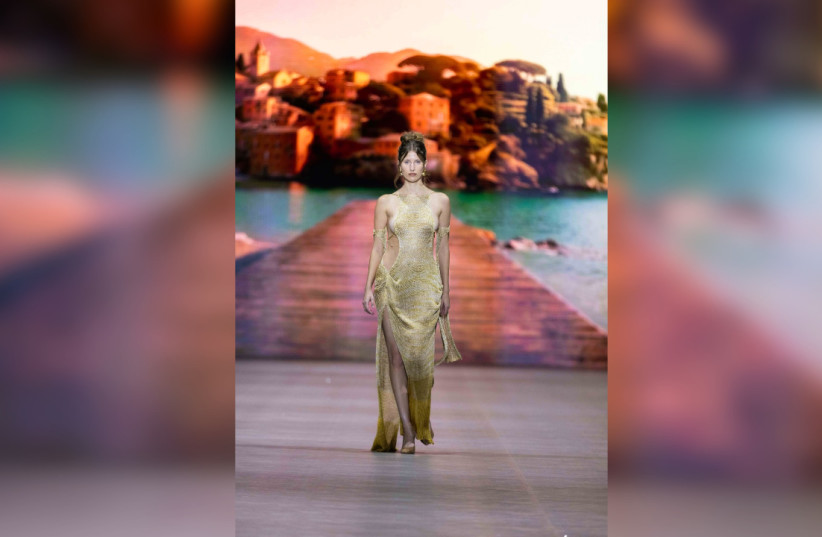
The final collection in the Upcoming Designers show was Ravid Haken’s HKN. Entitled LIBERA, the collection sought to whisk the audience away to the Italian Riviera of the 1960s.
The oversized backdrop reinforced this fantasy of the leisurely glamour of the Riviera.
The designs leaned heavily on sheer knitwear, combining layers, open textures and flowing silhouettes in a celebration of sensuality and ease.
HALT by Tal Yosifov. (credit: OMRI ROSENGART)
Presented on models of different ages and genders, the garments offered a vision of beauty unconstrained by conventional expectations.
Perhaps Haken’s fantasy for this period was to escape from the confines of Israel, imagining a getaway in which vacationers are worry-free and radiant.
As the final model made her way back up the runway, Nessun Dorma rang out. It was a fitting conclusion to a show that seemed determined to make room for fantasy, pleasure and excess, even as the world outside offered little encouragement for any of them.■