
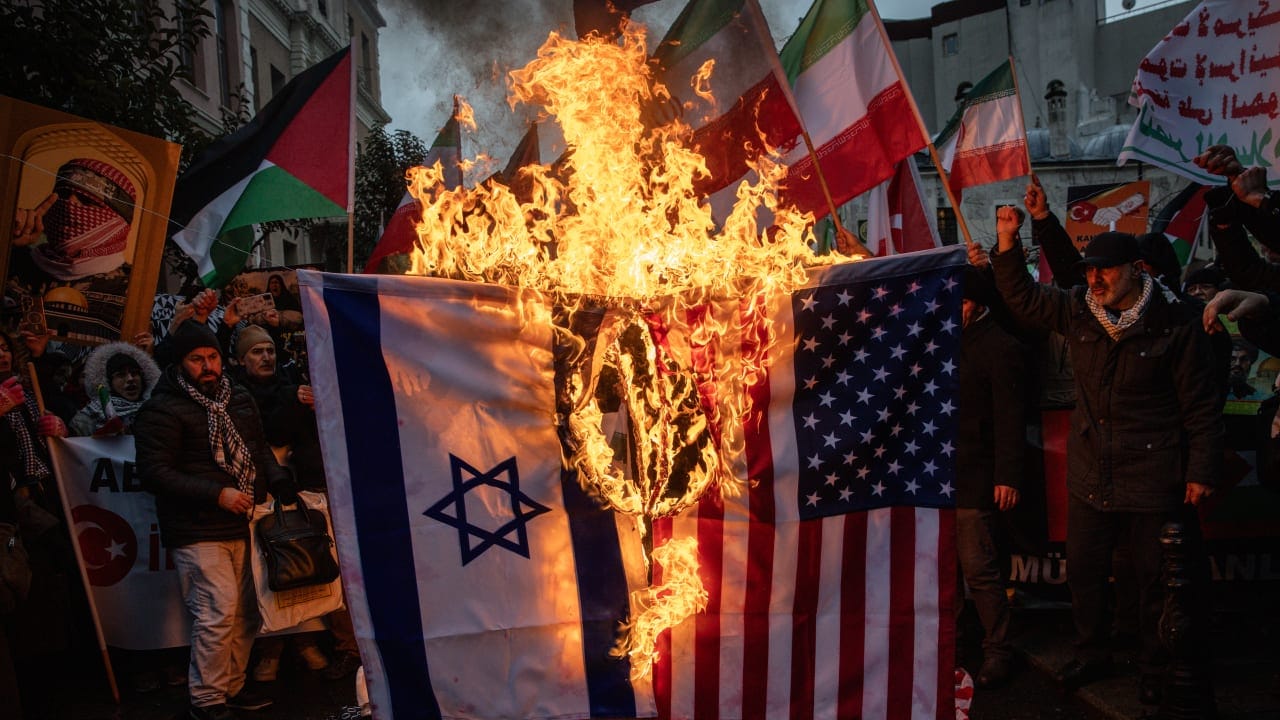

The ongoing debate over the US-Israel relationship is often framed as a choice between supporting Israel as an ally and prioritizing US national interests. This framing is misleading and benefits only those hostile to the United States and the West.
Israel’s security is closely tied to the regional order the US has spent decades building and protecting, given its direct connection to US security and economic interests.
Some political movements, including Islamist groups, seek to weaken the US-Israel alliance for ideological reasons that extend well beyond the Israeli-Palestinian conflict.
For these actors, hostility toward Israel is part of a broader confrontation with American power, Western political influence, and the international order represented by Washington.
Understanding this distinction makes it clear that maintaining a strong relationship with Israel is the United States’ first line of defense against the forces of evil that use anti-Israel rhetoric to target Western civilization, of which the US is a key pillar.
The ideological battleground
This ideological dimension is often overlooked in American debates about Israel. Criticizing Israeli government policies or raising legitimate concerns about Palestinian rights is not necessarily hostile to American interests.
However, a pattern is difficult to ignore: Islamists – from terrorist groups such as Hamas and Hezbollah, to the Muslim Brotherhood’s extensive network in the US, to states hostile to the US, such as Iran’s Islamic regime – have long used anti-Israel rhetoric to mobilize political support for agendas that openly challenge US national security, regional role, and global leadership.
Their obsession with Israel is part of a broader ideological and geopolitical principle that the Muslim Brotherhood carried to the West as its members fled the ironically Muslim-majority Middle East, which had rejected their hateful ideology in the 1960s and 1970s.
Almost half a century later, these Islamists have made one of the main elements of their ideology (i.e., anti-Zionism and hostility to Israel) a mainstream global topic, extending their influence beyond traditional constituencies and attracting support from groups that may not share their ideology, as we are seeing today among the progressive left in several Western countries.
The Palestinian pretext
Having personally witnessed the political exploitation of the Palestinian cause in the Arab world, I recognize a familiar mechanism in the growing influence of anti-Israel narratives in Western political debates.
For decades, Arab regimes and ideological movements have used the “Palestinian cause” not merely as a foreign policy issue but as an instrument of domestic legitimacy, political mobilization, and competition for power.
I describe this phenomenon as “Palestinization”: the transformation of the Palestinian cause from a national struggle into a political framework through which unrelated domestic and regional conflicts are interpreted and mobilized.
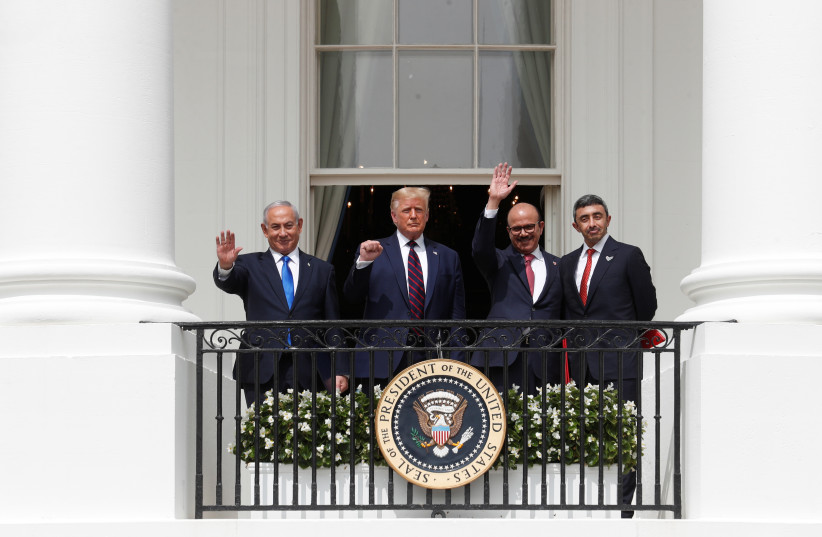
The problem emerges when exploiting the Palestinians becomes more important to these movements than resolving the conflict itself.
The historical consequences are evident throughout the Middle East. In Jordan, Palestinian armed organizations gained enough political and military influence to challenge the Hashemite state, culminating in the violent confrontation known as Black September in 1970.
In Lebanon, Palestinian armed factions became embroiled in domestic power struggles that contributed to the outbreak of civil war in 1975.
Hezbollah later adopted a different model: it invoked resistance to Israel to justify maintaining an independent military structure while expanding its influence within Lebanese political institutions.
Although these conflicts had multiple causes, they show how movements operating under the banner of the Palestinian cause, which, for most of them, means destroying Israel, can gain political and military power and ultimately challenge the sovereignty and stability of the states in which they operate.
The US has stronger democratic institutions and a fundamentally different political environment. Nevertheless, the underlying mechanism of Palestinization can operate wherever a foreign conflict becomes a defining measure of domestic political legitimacy.
Anti-Israel rhetoric can serve as a common political language connecting movements with otherwise different ideological priorities. For Islamist actors, this creates opportunities to build alliances, gain legitimacy, and influence political debates without exposing their broader ideological objectives.
The concern is not that Americans criticize Israel or sympathize with Palestinians. It is that organized movements hostile to American interests may exploit these sentiments to advance agendas that extend far beyond the Palestinian question. The Muslim Brotherhood is actively doing so today.
The strategic stakes
The most serious implication arises when this domestic political pressure influences US foreign policy. The US-Israel relationship is not an isolated bilateral arrangement.
It is part of a broader Middle Eastern security structure in which Israel’s military capabilities, US strategic commitments, and Arab security interests are deeply interconnected.
A substantial weakening of this alliance would affect more than Israel’s security. It could alter Iran’s calculations, complicate US relationships with Arab partners, and undermine regional arrangements that Washington has spent decades developing to advance its national security interests.
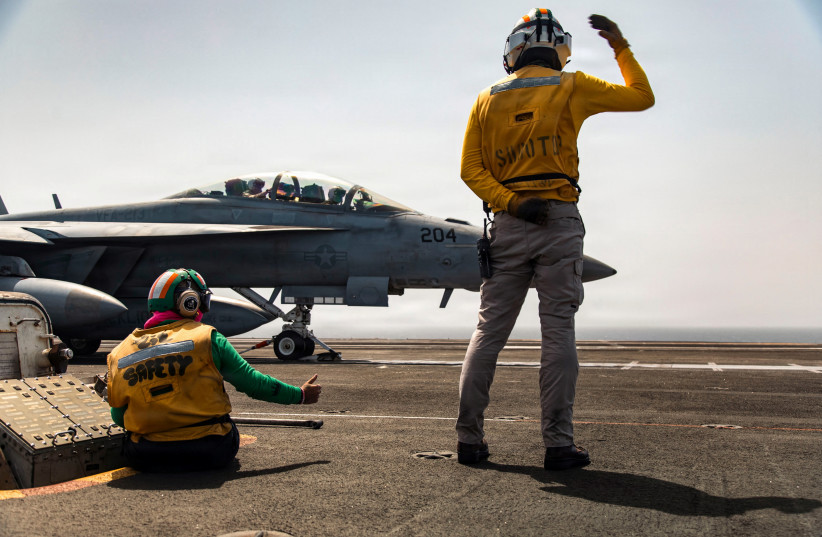
In other words, weakening the US-Israel bond will cost the US the entire Middle East and, consequently, a large share of its global power, playing into the hands of adversaries like Russia and China.
Israel is also more than a recipient of American military assistance; it contributes technological capabilities, intelligence, and practical experience to countering threats to American forces and interests across the region.
The practical value of this cooperation was demonstrated during the most recent war with Iran, when Israel was the most reliable intelligence and military partner to American forces operating in the region, while Arab and European allies declined to join.
In promoting American values as a national security priority, it is important to remember that Israel is the only standing democracy in the Middle East.
Unlike many US security partners in the region, Israel maintains competitive elections, an independent judiciary, an active civil society, and established mechanisms for political accountability. It is the only country in the region where religious freedom and freedom of speech are effectively protected.
These considerations do not mean that US support for Israel should be unconditional or that Israeli policies cannot be discussed or criticized in Washington.
However, the main question US policymakers should ask is whether abandoning a strong, decades-long alliance with Israel would resolve regional troubles or serve US national interests, rather than create greater strategic vulnerabilities for the US, Israel, and Arab states.
Reducing American influence over Israeli decisions while weakening regional deterrence could lead to outcomes contrary to Washington’s objectives. Maintaining a strong alliance with Israel and applying diplomatic pressure on specific policies are not mutually exclusive.
Returning to the ideological challenge, movements whose opposition to Israel is part of a broader confrontation with American power are unlikely to abandon their objectives simply because Washington distances itself from Israel.
The experience of Arab states shows that the political instrumentalization of the so-called “Palestinian cause” can persist even as progress toward resolving the Palestinian question advances.
For political Islamists who derive legitimacy and influence from perpetuating confrontation, the conflict itself can become a source of power. American policymakers should recognize this dynamic rather than assume that weakening Israel would necessarily reduce hostility toward the US.
Supporting Israel is not a departure from US national interests but an essential part of protecting them against the ideological ambitions of Islamists who hate both Israel and the US.■
Dalia Ziada is a Middle East scholar and ISGAP’s director in Washington, DC.