

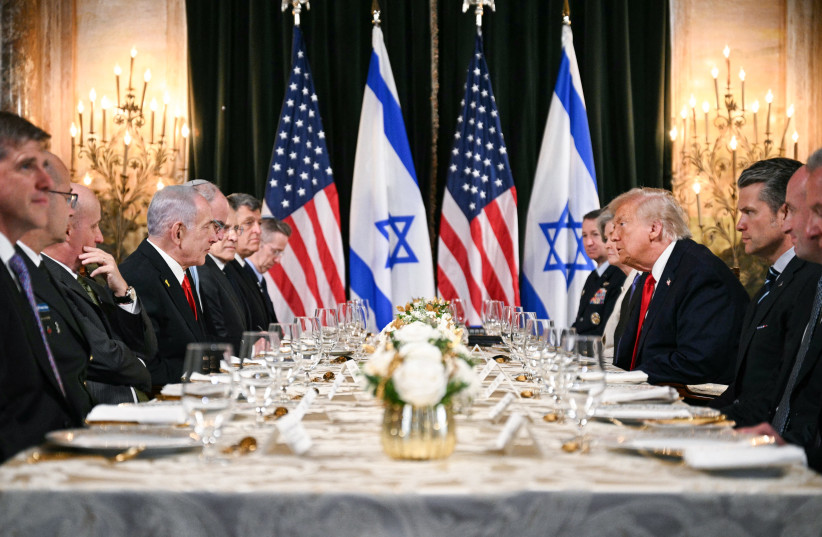
On November 3, US President Donald Trump announced that the US may cut off Israel’s military aid at the end of this year, claiming that Israel no longer needs it and that he and Prime Minister Benjamin Netanyahu made a deal on the issue “months ago.”
The move itself is not a big surprise, since the option has been on the table since January. The timing of the announcement, however, suggests strong political motives, especially since Netanyahu spoke in January of phasing out the aid over 10 years, not one.
Many view US military assistance to Israel through the same lens as other foreign military financing provided to foreign countries – as a way to support their stability or help them address internal and external security threats.
This article proposes a different way of looking at US assistance to Israel: not simply as foreign aid, but as a strategic investment that generates tangible returns for the American economy, defense industry, and national security.
Israel doesn’t receive more aid from the US than other nations at war
Before explaining why this arrangement serves both sides, it is worth asking why some people object to the aid in the first place. Is it the amount of money the US “spends” on Israel? Since February 2022, the US has allocated more than $67 billion in military aid to Ukraine, compared with around $28b. to Israel over the same period.
Yet even though Ukraine received more than twice as much, analysis of public opinion shows that Americans are more willing to back Ukraine: only 22% want to cut or stop aid to Ukraine, while 40% want to cut or stop aid to Israel. Against this backdrop, Trump’s announcement on the day of the midterm elections should not come as a shock.
How does the aid serve US interests?
The American dividend
Rather than approaching the issue through the often politically charged debate surrounding Israel, the discussion should begin with a straightforward question from an American perspective: Does US assistance to Israel advance American economic and security interests?
US foreign assistance accounts for less than 1% of the federal budget, totaling approximately $47b. annually. The $3.8b. in annual assistance provided to Israel represents about 8% of the overall US foreign assistance budget.
Unlike much of the assistance allocated to other countries, however, US military aid to Israel generates a significant strategic return for America.
More than 85% of this assistance is reinvested in the US economy and defense industry. Israel uses these funds to procure weapons systems, aircraft, and munitions from American defense manufacturers, channeling billions of dollars back into the US defense industrial base.
This arrangement supports American companies, manufacturing capacity, and jobs, while ensuring that US assistance contributes directly to America’s own industrial and technological capacity.
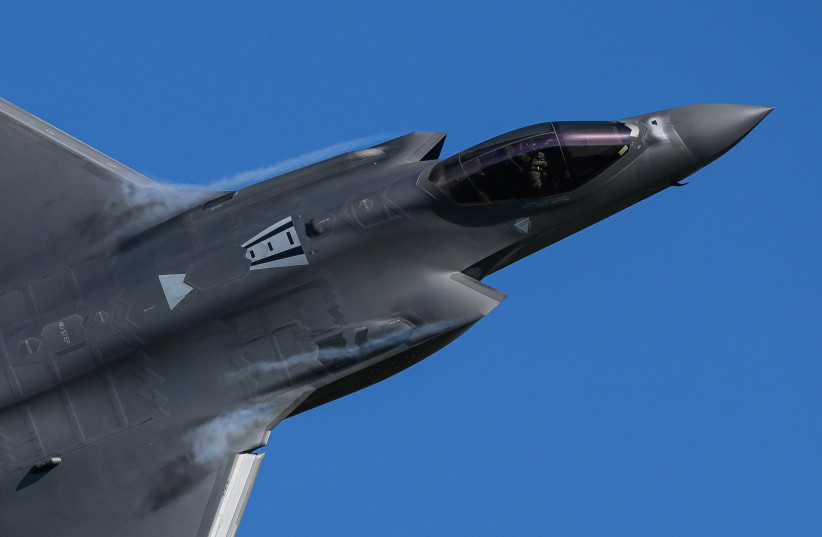
The return on this investment extends well beyond procurement. US assistance has helped advance joint Israeli-American research and development (R&D), producing innovative solutions to some of the most complex modern security challenges, particularly in the field of air and missile defense.
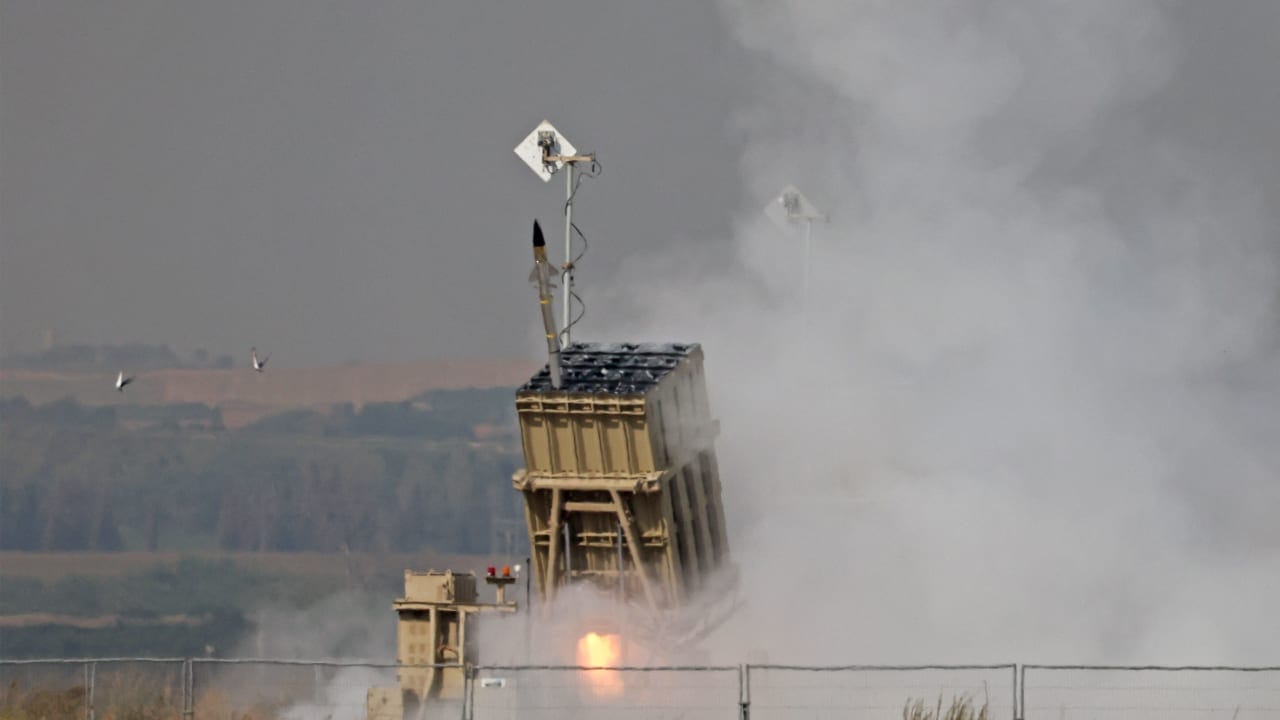
Systems such as Iron Dome, David’s Sling, Arrow, and emerging high-energy laser technologies demonstrate the value of this cooperation. These programs have generated technological breakthroughs, operational experience, and capabilities with applications far beyond Israel’s borders; some of these systems are now deployed to protect American soil.
In this sense, investing in Israel’s defense is also an investment in America’s technological advantage and long-term security.
The Israeli perspective
For Israel, continued US assistance remains critical to maintaining its qualitative military edge and ensuring its long-term security in the region. Beyond its material contribution, American assistance also represents a powerful symbol of the strategic partnership between the two countries – a partnership rooted in shared democratic values and mutual strategic interests.
Ending or significantly reducing assistance could undermine future military and technological cooperation, weaken the institutional foundations of the bilateral relationship, and erode the shared values that have historically sustained it.
Alternatively, as experts have already suggested, the current US–Israel security aid framework could be replaced by a more business-oriented partnership that strengthens Israel’s military capabilities while serving both sides’ interests. Such a partnership is all the more important as Israel builds new military capabilities: IDF Chief of Staff Lt.-Gen. Eyal Zamir recently said that the military is creating a new branch for AI and autonomous warfare.
Since Israel still relies on US AI models, and that is unlikely to change soon, shifting from military aid to joint development will help Israel achieve its long-term goals while reducing the political cost to the US government.
Ultimately, US military assistance to Israel should not be understood merely as a financial commitment or a historical obligation. It is a policy instrument that enables Washington to turn a relatively limited investment into substantial strategic returns: strengthening the American defense industrial base, advancing critical technologies, gaining operational knowledge, and reinforcing America’s long-term security.
The question, therefore, should not simply be how much the United States spends on Israel, but what the US gains from this investment. Viewed from this perspective, supporting Israel does not just benefit an American ally; it is an investment in America itself.■
The writers, both Master of Arts in International Relations (MAIR) candidates at Johns Hopkins University’s School of Advanced International Studies (SAIS), have extensive security backgrounds.
Tomer Rayfer, specializing in International Economics and Economic Statecraft, served approximately eight years as a combatant officer (Maj. in Res.) in the IDF.
Sagie Sharon, specializing in Security, Strategy, and Statecraft, brings nearly a decade of experience in Israel’s national security establishment, advising senior decision-makers and contributing to strategic planning and security policy.