For most of her 38 years, dancer Daniella Bloch performed a complicated internal pas de deux: Must she compromise her religious lifestyle to dance professionally, or compromise her dance career to remain religious? Must she refuse to perform before men or to wear body-hugging dancewear? Would she let Shabbat observance and childbearing conflict with her professional aspirations? In 2011, she founded the Nehara Dance Group to provide a professional home for Orthodox female dancers. “The whole idea just kind of dropped down from the heavens. It came out of my own biography as a dancer and modern Orthodox woman, and the constant tension between the two. For many years, I kept trying to find out how to coexist between them, until something in me just decided to stop struggling and to somehow put the two together – to be an excellent dancer with a glorious, successful career,” she says during a rehearsal before a Nehara show at Tel Aviv's Suzanne Dellal Dance Center, attended by 360 men and women. Bloch – who has a degree in dance and dance instruction from the Jerusalem Academy of Music and Dance and teaches ballet – previously danced with the Na Ni Chen Dance Company in New York, the Bat Dor Dance Company in Israel and the Israeli Opera. There were already several dance troupes for Orthodox women in Israel, but they weren't a good fit for her. “None of those groups interact with the larger dance community, and they don't perform before mixed audiences,” explains Bloch, now the mother of a toddler and a newborn. “I feel that in the performing-arts world, you really have to be in the hub of what's going on if you want to be great, and you have to have men in the audience. A women-to-women performance makes for a nice evening, but it's missing some of the greatness. That was something I couldn't compromise on.” FOR THE seven Orthodox male dancers in the Ka'et (“Right Now”) Ensemble, the limitations of Shabbat and single-gender dancing are compounded by societal disapproval of their nontraditional career choice. “My family comes to all the shows, but doesn't understand what brought me to it,” says ensemble member Hananya Schwartz. Eyal Ogen, another Ka'et dancer, says his father is reluctant to attend a performance. Even the ensemble's artistic director, Ronen Izhaki, was initially skeptical. A secular dancer-choreographer and movement teacher from Tel Aviv, Izhaki was hired about 15 years ago to create a performance piece for a group of Acre yeshiva students based on the swaying motions of men at prayer. “I didn't like it at first,” he admits. But he quickly warmed to the novel notion of using the physicality of Jewish prayer as a new dance language. Several years later, he opened a dance theater school for religious men in Jerusalem, Kol Atzmotai Tomarna (“All My Bones Shall Say,” from Psalm 35). He founded Ka'et as a performance vehicle for especially serious students. “Till not long ago, the best chance for a religious male to move was while attending a wedding or participating in [martial arts],” Izhaki says. In 2014, Ka'et won recognition and funding from the Culture and Sport Ministry and from the Jerusalem Municipality, giving the ensemble a stronger footing in the dance world and giving the individual dancers the support they needed to devote themselves to their craft professionally. “This opens a lot of doors for us,” says Izhaki. “It's the first time ever that a religious professional group got to this level in the dance field. Many communities around the world are interested in inviting us to perform.” The ensemble is involved in the Prophecy Project, which links Israeli performance artists from various disciplines, and it has received a grant from Mifal Hapayis, the national lottery. As part of a Mifal Hapayis project in homage to Israeli dance pieces from the 1980s, Ka'et performed a work at Suzanne Dellal last January about three underground creatures, one of which is different from the others, gets eaten by them and then becomes like them. “It talks about being different in society,” says Izhaki – a theme that understandably resonates with Orthodox dancers. The troupe's signature piece, “Highway No. 1,” choreographed by Izhaki and his wife, Tammy, is named for the road connecting Tel Aviv (representing secular Israel) and Jerusalem (representing religious Israel). Ka'et and Nehara – which is an Aramaic word for “pool of light” – have a warm professional relationship. Tammy Izhaki choreographed the first performance piece for Nehara, and Ronen has provided advice and guidance to Bloch from the start. UNTIL NEHARA came along, Dalia Peretz, now 32, did not think it possible to continue with the career she'd dreamed of since graduating from the Jerusalem Academy of Music and Dance. “After the academy, I got married, and we went traveling. I came back two months pregnant, and one pregnancy led to another. Now I have four beautiful children,” she says. “After my third birth, I never thought I'd go on a stage again. I had to find the right niche. Then I heard about auditions for Nehara in 2012.” At Nehara she has the freedom to choose costumes in which she feels comfortable in front of male audience members, and the group respects her preference to keep her hair covered, even though it is not easy to fashion hair coverings that stay in place – and don't look out of place – during the rigors of dance. “Here I feel at home, you know? I feel I don't have to compromise,” she says. Like Bloch, she sometimes brings her baby to rehearsals. Pregnancies pose a challenge for the troupe, which generally performs once or twice a month. Right now both Bloch and dancer Tzipi Nir are on maternity leave. Yet Bloch says her troupe allows her dancers “not to have to struggle with what I had to struggle with. It's a home for them to just come and work.” Leia Weil, 27, grew up in California and studied at the Joffrey Ballet School of San Francisco and New York University's Tisch School of Arts. As she became more religiously observant and moved to Israel in 2008, she sought ways to integrate dance into her emerging identity. “Then I met Daniella in February 2012, and it was miraculous to find a like-minded person who wanted to say something from a professional place, who had seen the larger world and creativity happening in many places and didn't think it had to be boxed in because of religiosity,” Weil says. “It was such a gift. It's a treat that I can do what I always wanted to do, without having to give up pieces of myself.” Snunit Baraban, raised in Kfar Saba, performed for one year with the Vertigo Dance Group, and then joined Nehara at its inception. “Throughout the years, the conflicts between my religious world and my professional world have become more and more external and less internal, and therefore, for me, the answers became more and more simple,” Baraban says. “It became obvious – this is my reality, as simple as that.”
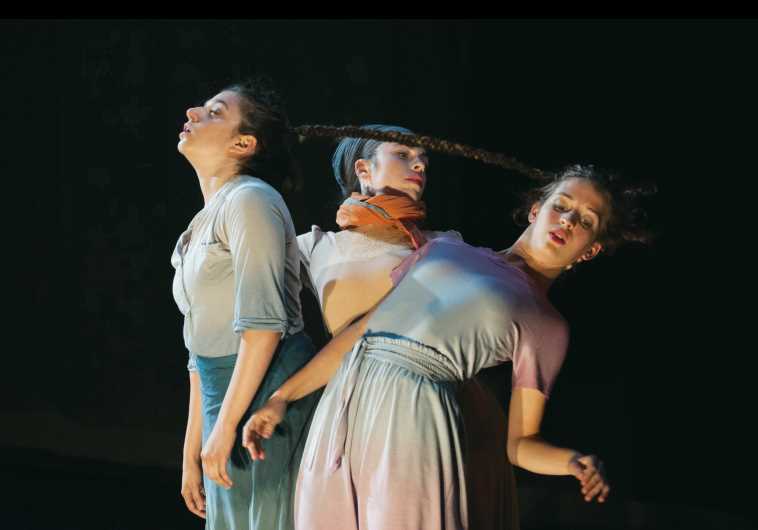 Nehara's performance pieces explore issues of interest to Jewish women, such as showing or covering hair.