
Qatar’s English-language media ecosystem, led by Al Jazeera English and AJ+, presented an overwhelmingly negative narrative on the US war against Iran while downplaying the security role Qatar itself plays as host of a major American air base, a new study by Jewish People Policy Institute (JPPI) researchers argues.
According to JPPI, the coverage frequently framed the campaign as politically motivated, legally dubious, or morally illegitimate.
The analysis reviewed dozens of English-language opinion columns, articles, and videos published between January 28 and March 8, 2026, before and after the outbreak of the war. The researchers said the findings showed a consistent pattern of harsh criticism, with little emphasis on Iranian attacks against Gulf states or on the contradiction between Qatar’s military cooperation with Washington and the editorial tone of its flagship media outlets.
According to the study, 77.8% of the material reviewed during the pre-war period was classified as very negative, while another 5.6% was labeled negative. In total, JPPI said 89% of the publications expressed negative sentiment toward the prospect of war.
After the fighting began, the pattern intensified. JPPI said 85.3% of the publications were classified as very negative and 5.9% as negative, bringing the combined negative share to 91.2%.
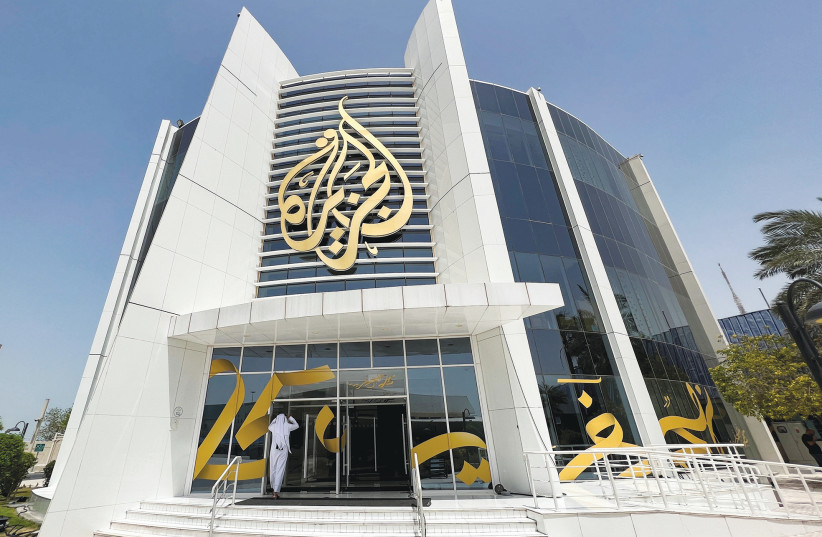
The trend was even sharper on AJ+, the study found. Researchers said 95.2% of the digital content sampled was classified as very negative toward the war, with some items including direct personal criticism of US President Donald Trump, and none of the sampled videos presented the campaign in a positive light.
YouTube shorts, articles, analyses: How Qatari media messaging undermines war with Iran
To illustrate the editorial line, the report cited several English-language examples published during the conflict. One example pointed to reporting and commentary suggesting that public interest in the Jeffrey Epstein files declined after the launch of the war with Iran, reinforcing the study’s conclusion that some coverage framed the military campaign as a distraction from domestic political controversies in the United States.
JPPI also highlighted short-form AJ+ and YouTube video content that questioned the purpose of the American campaign, emphasized US and Israeli responsibility for the escalation, and portrayed the war as destabilizing and unjustified. According to the report, those examples supported the broader finding that the network’s English-language output presented the conflict almost entirely through a condemnatory frame.
The report was prepared by analysts from JPPI’s Glazer Information and Consulting Center, including Yaakov Katz, Shlomi Breznik, and Eli Kannai. They said the findings shed light on what they described as Qatar’s dual-track strategy, maintaining strategic ties with the United States while enabling media messaging that is deeply critical of US leadership and policy.
Lt.-Col. (res.) Or Hurwitz, a senior fellow at JPPI and a former senior officer in Israeli Military Intelligence, said Qatar had already experienced the Iranian threat firsthand during the current war. “Its longstanding strategy of attempting to ‘live alongside tigers,’ pursuing reconciliation while maintaining strategic relationships with terrorist organizations and extremist actors, has not protected it,” he said.
“At the moment of truth, this approach failed to prevent Iran from harming Qatar itself and directly threatening its sovereignty,” Hurwitz added. He said the development, together with the Israeli strike in Doha several months ago, demonstrated the limits of Qatar’s attempt to “dance at two weddings.”
Hurwitz said the current war could create “a unique window of opportunity for a strategic shift in Qatari policy after the conflict.” He said such a shift could include “a harder stance toward Iran and Sunni terrorist organizations, a reassessment of Al Jazeera’s editorial guidelines, and perhaps even gradual changes in Qatar’s posture toward Israel.”