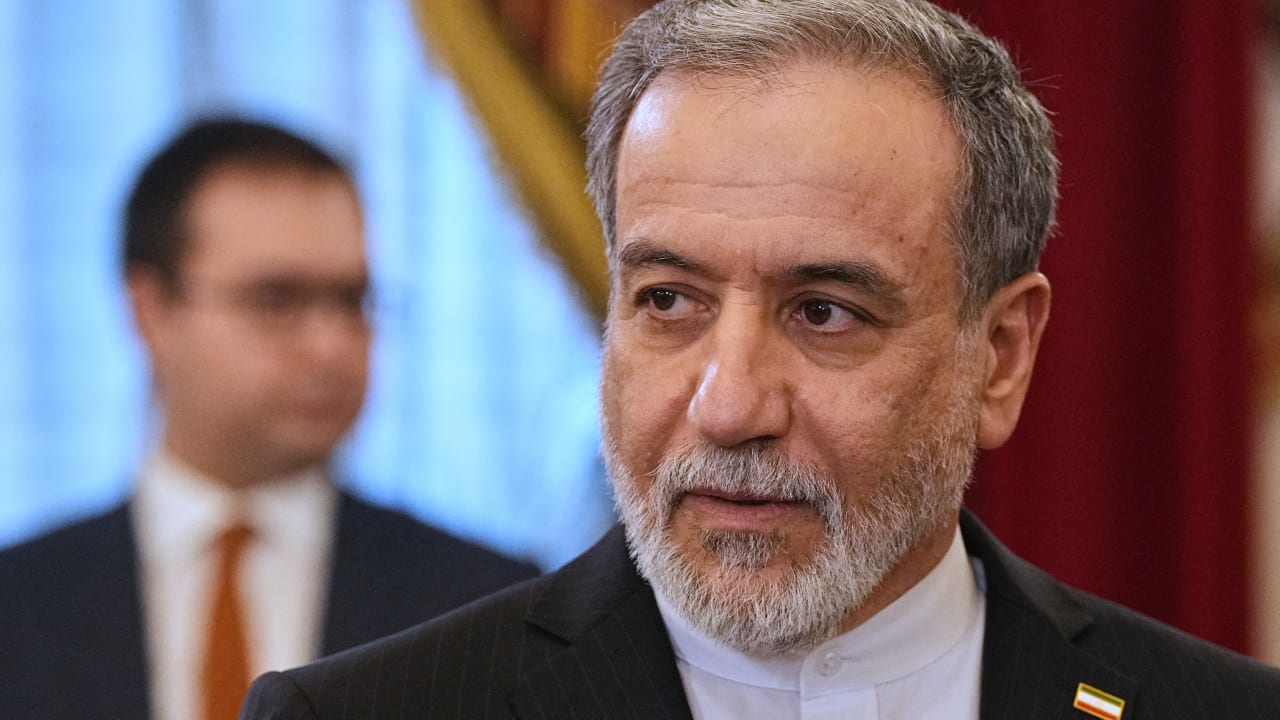
Iranian Foreign Minister Abbas Araghchi said on Friday that nuclear talks with the United States would only take place at a later stage and would not proceed unless a proposed interim deal was implemented, state TV reported.
He said the interim deal would include reopening the Strait of Hormuz and ending conflicts on multiple fronts, adding that a memorandum of understanding had not yet been signed and could still change.
US and Iranian officials have expressed optimism about the negotiations, noting that both sides have agreed on a text and that a deal could be signed as early as Sunday.
Araghchi said the agreement demonstrates Iran was the winner of the conflict, stating, "Iran is the winner of the war with the US."
Araghchi also said that management of the Strait of Hormuz would not return to the pre-war era, that sovereignty over the strait belonged to Iran and Oman, and that Iran would secure safe passage for ships through it. "Our sword will always hang over the Strait of Hormuz," he said.

Terms of the deal
Draft terms of the deal, outlined to Reuters by several sources, reportedly envision the US immediately unfreezing billions of dollars in Iranian assets and lifting sanctions on Iranian oil exports, in exchange for reopening the Strait.
Discussions of Iran’s nuclear program would be conducted under a 60-day negotiation framework, after which it would be fully dismantled, with its stockpile of highly enriched uranium destroyed and removed. Another US official described this as a core requirement, saying it “will be destroyed and removed.”
The same US official told Reuters that this was a "performance-based deal" and that no money will be released until "they (Iran) perform."
Araghchi said on this issue that Iran’s preferred approach for dealing with enriched uranium would be to “blend the material,” effectively diluting it.
Other terms of the deal included the possibility of war reparations, the US dropping its demands on Iran's missile program, and no funding of terrorist groups, US officials told Reuters.
Israel has not been a party to these negotiations.
The deal could be signed by US Vice President J.D. Vance and Iran’s parliament speaker Mohammad Baqer Qalibaf as early as Sunday, Reuters reported, with Geneva seen as the most likely venue.