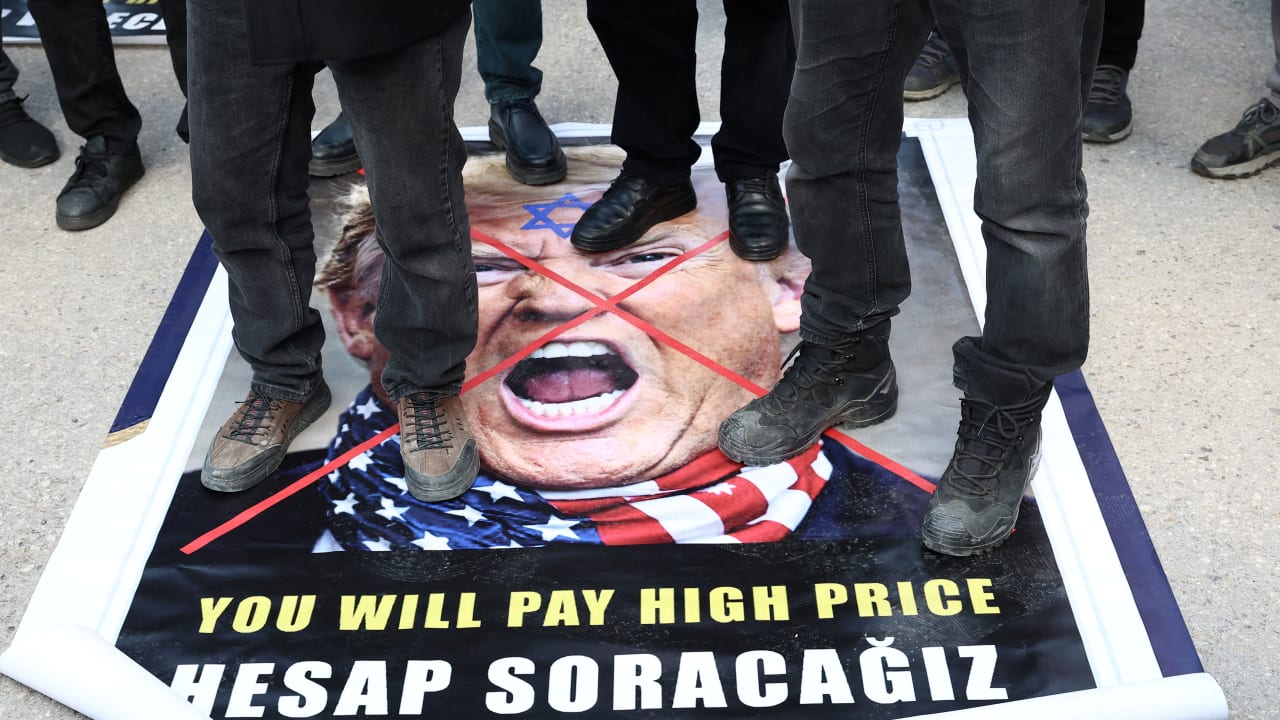
In the face of domestic criticism of the war in Iran, President Donald Trump and his top officials repeatedly emphasize the broader American interest: reinforcing the United States’ uncontested status as a global power – a state with the strongest military in the world, capable of conducting multi-theater operations simultaneously and shaping the international agenda.
Regional security and the consolidation of American leadership
In a series of interviews and press conferences over the past two days, Trump defined the broad international American interest in the war against Iran, as being the removal of direct threats posed by the Iranian regime to the United States, Europe, Israel, and the Gulf states. This includes protecting American bases and troops across the region, as well as safeguarding international shipping routes.
From Washington’s perspective, the war against Iran marks a turning point in its relations with its allies in the Middle East. Only a year ago, Trump was still pursuing diplomatic initiatives aimed at countering China’s growing influence in the region. During visits to moderate Sunni states, and amid growing concerns over their potential drift toward rival geopolitical blocs, agreements were signed to expand cooperation in science, trade, and technology.
Now the Trump administration is signaling the next phase of this policy: providing a protective strategic umbrella through American military capabilities while ensuring the security of its regional partners.
This policy is reflected in military support, operational cooperation, assistance in air defense, the escorting of oil tankers, and a determined effort to confront Iran’s nuclear program – as well as its ambition to establish itself as the dominant power in the Middle East.
In the case of Israel, cooperation reflects a concept of capability-based partnership. This approach distinguishes between countries that receive American protection and those considered strategic security partners. Within the administration, officials emphasize Israel’s significant role in the conflict and its strategic value as a “capable partner” – a state able not only to defend itself but also to contribute meaningfully to regional operations. According to administration officials, Israel’s military and technological capabilities allow the United States to operate in the region more effectively.
This dynamic has taken on additional significance considering tensions with the United Kingdom – one of Washington’s most important security allies – and Trump’s sharp criticism of London after it signaled willingness to join the campaign only at a later stage.
In Trump’s view, creating and maintaining an international order in which the United States remains the central power is a core national interest. The campaign in the Middle East therefore carries global implications. From Washington’s perspective, demonstrating military strength in the region is intended to show that the United States continues to shape the international order at a time of growing great-power competition.
The display of military capability sends a signal to Russia that it should reassess both its war in Ukraine and its global strategic balance. At the same time, Trump has stressed toward China that American policy also takes Beijing’s economic interests into account – particularly by ensuring the safe passage of oil shipments. Since the war in Ukraine began, Iran has become one of China’s major oil suppliers, making stable maritime routes a shared interest.
For Trump, this also represents an additional strategic advantage: a strong American presence in the Middle East limits China’s ability to expand its influence across the region.
Managing war while managing domestic politics
One of the central challenges facing Trump is conducting an international military campaign while also managing domestic political pressures in the United States. The president is seeking to demonstrate that the war does not come at the expense of addressing internal challenges.
Within this framework, the administration has taken steps intended to signal that the domestic agenda continues alongside the war effort. Significant political decisions have been made on internal issues, including changes within the administration surrounding immigration policy. As part of this effort, Homeland Security secretary Kristi Noem was fired following intense criticism in recent weeks. Political commentators in the US view such moves as an attempt to maintain domestic political support during wartime.
A historical lesson often referenced in this context concerns the decline in public support for president George W. Bush in the early 2000s, when the war in Iraq was accompanied by growing public criticism. Much of that criticism focused on the perception that the administration had neglected domestic issues while becoming deeply entangled in the Middle East without a clear political end-state. The Trump administration appears determined to avoid a similar trajectory.
The strategic message: capacity to operate on multiple fronts
Alongside the campaign in the Middle East, the United States is emphasizing that it remains active in other theaters as well. The US Department of War is currently holding regional meetings with countries from Latin America and the Caribbean to address issues of regional security and the fight against drug cartels.
This policy draws on the strategic tradition of the Monroe Doctrine, which holds that the United States bears primary responsibility for stability within its “backyard” – the Western Hemisphere.
Within this framework, Trump has previously pursued policy pressure toward Venezuela and is currently applying diplomatic pressure on Cuba.
Ultimately, the war in Iran reflects a broader American effort to signal to both allies and rivals that the United States has returned to a model of active global leadership – one capable of operating across multiple theaters simultaneously and of shaping regional security orders.
The author is a senior fellow at the Misgav Institute for National Security and Zionist Strategy.