
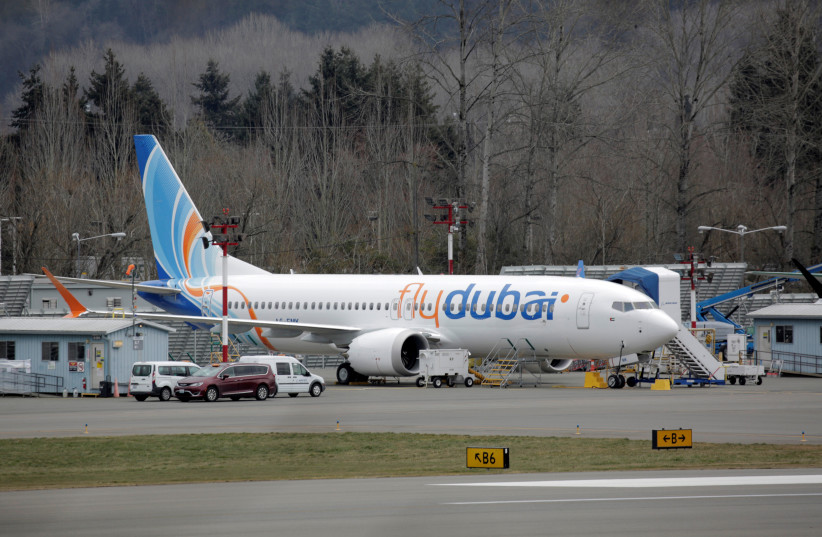
Given the sensitivities surrounding the regional security environment and the limited information currently available, it is important to await the outcome of the official investigation into the flydubai FZ 1073 in-flight cockpit incident before reaching definitive conclusions about what transpired. That said, several analytical scenarios merit consideration.
If this proves to be an isolated incident, it would nevertheless underscore the extent to which Iranian influence networks and affiliated non-state actors have expanded across the region. The concern is no longer limited to organized proxy groups. Increasingly, the operational landscape appears to include sleeper cells, independent operatives, and ideologically motivated sympathizers who may act with varying degrees of coordination. Such individuals can represent valuable assets for Tehran’s broader strategic objectives while remaining sufficiently deniable and ultimately expendable.
This dynamic recalls patterns witnessed during the 1970s and 1980s, particularly with organizations such as the Abu Nidal Organization (ANO), which employed airline hijackings, assassinations, and attacks against Arab and Gulf targets as instruments of coercion and political pressure. The lesson from that period is that unconventional actors can generate significant strategic effects disproportionate to their size and capabilities.
A second and more concerning possibility is that this incident forms part of a broader evolution in Iranian strategy. Following years of reliance on conventional proxy warfare and indirect confrontation, Tehran may be exploring alternative tracks that shift the battlefield toward disruption, psychological pressure, transportation infrastructure, aviation security, and other forms of asymmetric activity. If so, such actions would represent a new phase in an already expanding regional conflict environment.
Regardless of which scenario ultimately proves correct, the incident should be viewed as a potential escalation signal. Even if the event is later determined to be isolated, it highlights the growing challenge posed by decentralized actors operating below the threshold of conventional conflict.
To mitigate these emerging risks, GCC security leadership should prioritize five immediate policy actions: enforce strict cockpit integrity protocols and expand air marshal deployments on sensitive routes; establish a real-time GCC aviation intelligence-sharing database to cross-reference watchlists and flight deck personnel data; transition to dynamic, continuous crew vetting paired with behavioral and psychological assessments; synchronize civil air traffic control hubs with military air operation centers for immediate air defense interception during transponder squawk 7500/7700 events; and harden aviation supply chains through comprehensive counter-infiltration audits of foreign recruitment and ground-handling contractors.
Until the investigation is completed, definitive attribution remains premature. However, if deliberate hostile intent is ultimately established, the incident may indicate either a troubling expansion of proxy-linked activity or the emergence of a new asymmetric pressure campaign in the Gulf. Both possibilities carry significant security implications for the region.
Policy steps the GCC leadership can take now
For Gulf states, the priority will be to strengthen intelligence cooperation, aviation security, and counter-infiltration capabilities while avoiding premature conclusions until the facts are established through the investigative process. To mitigate these emerging risks, GCC security leadership should prioritize five immediate policy actions:
- Enforce strict cockpit integrity and air marshal deployment: Mandate continuous two-person cockpit presence protocols across all GCC flag carriers and expand discreet sky marshal coverage on high-sensitivity regional and international flight routes.
- Establish real-time GCC aviation intelligence sharing: Construct a centralized, real-time threat sharing database across Gulf civil aviation authorities to cross-reference watchlists, flag suspicious background changes, and share intelligence on ground and flight crew personnel.
- Transition to dynamic crew vetting and psychological assessment: Upgrade periodic background checks to continuous, automated vetting systems paired with dynamic psychological and behavioral monitoring for all commercial flight deck personnel operating in GCC airspace.
- Synchronize civil-military emergency air defense interception: Harmonize emergency response protocols between civil air traffic control hubs and military air operation centers to ensure immediate, coordinated fighter interception during transponder squawk 7500/7700 incidents.
- Harden aviation supply chains and counter-infiltration: Conduct comprehensive counter-infiltration audits of foreign national recruitment, ground handling contractors, and third-party maintenance providers to prevent covert access to critical aviation infrastructure.
Ultimately, whether the flydubai FZ 1073 incident is formally attributed to an isolated personal crisis or a deliberate asymmetric probe, it serves as a decisive catalyst for the Gulf Cooperation Council to re-examine the perimeter of regional defense. Modern security in the Gulf can no longer be defined solely by air-defense batteries, maritime patrols, or regional troop posture, but must extend into the subtle, high-trust operational spaces that enable everyday commercial infrastructure.
Given Tehran's established operational doctrine of exploiting gray-zone ambiguity, GCC’s and Israel’s security planners cannot afford a purely reactive stance that absorbs initial tactical hits before adjusting defense perimeters; strategic prudence demands anticipating worst case Iranian intent and hardening potential targets proactively. By implementing this counter infiltration roadmap, GCC leadership can systematically close emerging vulnerabilities, deny hostile actors the leverage of grey zone disruption, and ensure that Gulf airspace remains an unassailable pillar of regional stability and economic resilience.
The writer is a political consultant and N7 expert fellow, as well as a columnist and author, with a focus on Gulf affairs and the architecture of regional diplomacy.