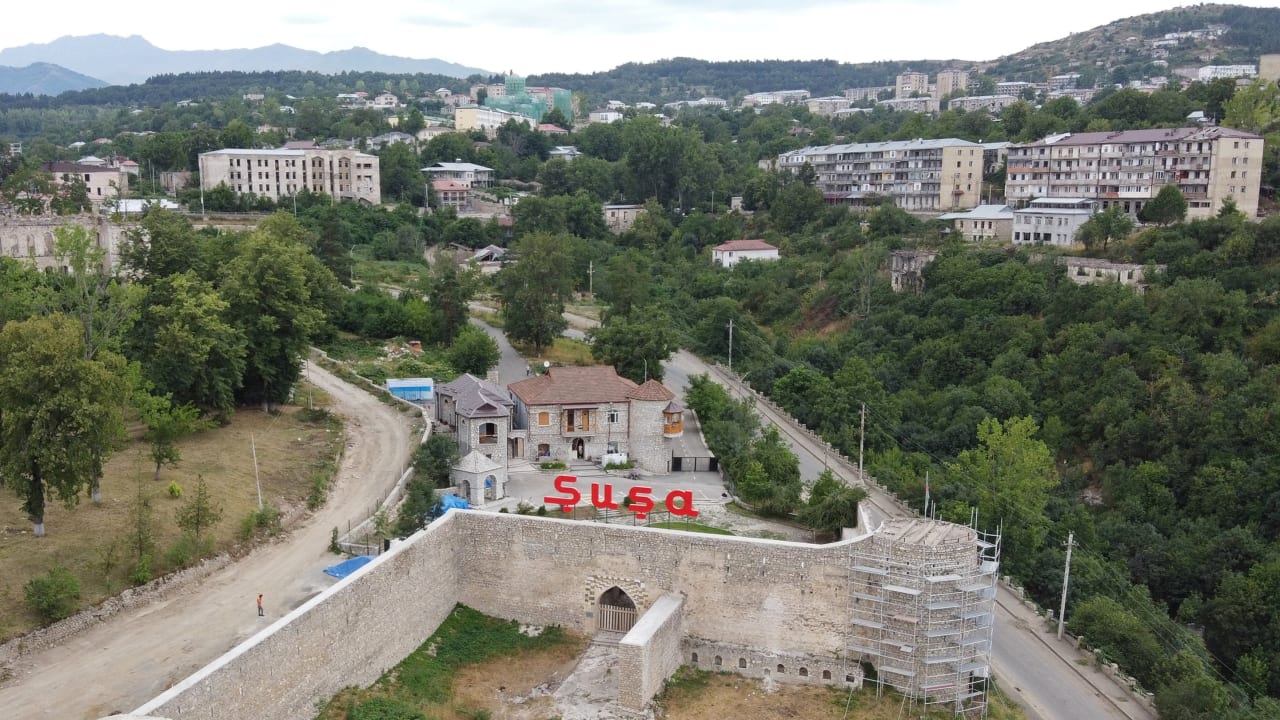
“Dear Shusha, you are free! Dear Shusha, we have returned!” declared Azerbaijani President Ilham Aliyev on that historic day. Those words carried the pain of nearly three decades of occupation, the joy of returning home, and the promise of a new life.
On Victory Day, the streets of Baku filled with jubilant crowds. Strangers embraced. Men made no attempt to hide their tears. Above the celebrating crowds flew the flags of Azerbaijan, Turkey, and Israel.
Azerbaijan was celebrating its victory in the 44-day Patriotic War and the liberation of Shusha, a city that holds a special place in the nation's history and culture.
Six years have passed. That victory changed not only Azerbaijan's destiny but also the geopolitical balance of the South Caucasus.
Along with reclaiming their lands, the Azerbaijani people regained confidence in their own strength and restored their national pride. And the Khari Bulbul – the flower that has become a symbol of remembrance for the fallen, of victory, and of return – is blooming once again on its native soil.
Remembrance and the return home
Behind the words “territorial integrity” and “occupation” lie the destinies of hundreds of thousands of people. Families forced to flee their homes in the early 1990s spent decades hoping to return. Children grew up far from their ancestral lands, knowing their hometowns only through photographs and the stories of their parents.
Today, homes, schools, and roads are being built there once again. More than 40,000 people have already returned to their homeland.
Azerbaijani soldiers fought and died to make this possible. November 8 is not only a celebration of national pride but also a day to remember those who paid for victory with their lives. Winning this war for justice was far from easy.
A war for justice
After regaining independence in 1991, Azerbaijan faced an exceptionally difficult domestic and international situation. In 1993, the Azerbaijani people called upon Heydar Aliyev to return to the country's leadership. Aliyev succeeded in stabilizing the state and establishing relations with various countries. In May 1994, he secured a ceasefire and an end to hostilities.
Yet for nearly three decades, Azerbaijan continued its struggle to restore its territorial integrity. Four United Nations Security Council resolutions called for the withdrawal of occupying forces. Negotiations dragged on for decades, but the resolutions remained little more than words on paper.
In 2020, the Azerbaijani army independently liberated most of the occupied territories, and in September 2023, Azerbaijan fully restored control over its entire territory. The victory transformed the military and political balance of the South Caucasus, opening new prospects for transport cooperation, economic integration, and regional security.
Azerbaijan possesses substantial energy resources. Its strategic foreign exchange reserves reached $89.4 billion, while nominal GDP rose from $42.6b. in 2020 to $75.9b. in 2025. These figures reflect a combination of economic factors, including conditions in global oil and gas markets, but the historic victory also played an enormous role in the country's economic prosperity.
Today, Azerbaijan supplies natural gas to Europe and actively participates in developing the Middle Corridor, connecting European markets with Central Asia and China. Azerbaijan's influence and standing on the international stage continue to grow – in the United States, across the Muslim world, in Europe, and in Asia.
Washington, too, has recognized Azerbaijan's new role on the world stage.
Washington: Azerbaijan's new role
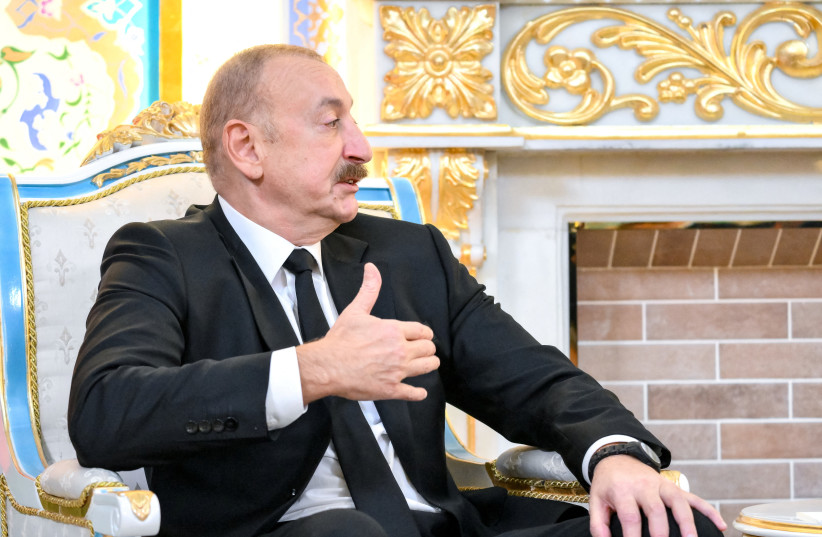
On August 8, 2025, President Ilham Aliyev and Armenian Prime Minister Nikol Pashinyan met at the White House. Their joint declaration and the initialed peace agreement opened the way toward ending decades of confrontation. The next step is to formally sign the agreement and turn diplomatic understandings into lasting peace.
In February 2026, Aliyev and US Vice President JD Vance signed a Charter on Strategic Partnership in Baku. Behind the diplomatic language lie concrete interests: energy, security, artificial intelligence, critical minerals, the Middle Corridor, and the TRIPP project, designed to connect mainland Azerbaijan with Nakhchivan.
For Washington, partnership with Baku offers additional opportunities to strengthen ties with Central Asia and expand American influence in the South Caucasus.
Particularly noteworthy was Vance's observation about Baku's ability to maintain good relations with both Turkey and Israel simultaneously – two countries locked in deep conflict. This is yet another indication of Azerbaijan's growing influence.
An influence that unsettles its neighbors
Having strengthened its position on the international stage, Azerbaijan now pursues an independent policy even in its relations with its closest partners and neighbors.
Even with brotherly Turkey, which played a crucial role in strengthening Azerbaijan's security, interests do not always coincide. Ankara seeks to expand its own regional influence. Baku, meanwhile, insists that any regional arrangements must take Azerbaijan's sovereign interests into account above all else.
Tehran is concerned about the strengthening of Azerbaijani-Israeli cooperation, changes in the region's transport landscape, and Baku's expanding influence.
One reality must now be accepted: Following its victory, Azerbaijan has become a strong, independent player in regional affairs, whose interests can no longer be ignored. At the same time, Baku seeks stability that will allow it to consolidate and build upon its achievements. And Baku chooses its own friends. Israel among them.
Israel: A strong partnership and enduring friendship
Israelis need no explanation of the price of national security, historical memory, or a nation's right to defend itself.
Azerbaijan is a secular Muslim-majority state. In this country, Jews and Israel have always been treated with affection and respect. The strongest foundation of Azerbaijani-Israeli relations is the centuries-old friendship between our peoples.
Moreover, Azerbaijani oil plays an important role in Israel's energy supply. Israeli defense technologies have helped strengthen Azerbaijan's armed forces. Cooperation continues to develop in security, advanced technology, and agriculture. Azerbaijan's growing regional standing opens new economic and technological opportunities for Israel.
A strong Azerbaijan is a vital strategic interest for Israel.
We reciprocate that friendship. And the Israeli flags flying above the streets of Baku in the autumn of 2020 became a symbol of the strong partnership and enduring friendship between our peoples and our countries. With friends like these, we can look to the future with confidence.
The future begins today
Six years ago, Azerbaijan transformed the military and political reality of the South Caucasus. Today, it seeks to turn the results of that historic transformation into the foundation of lasting peace and a new international standing.
A long road stretches from the liberation of Shusha to the meetings in Washington. It is the historic journey of a nation that has risen to the heights of international politics and influence, treating its friends and partners with dignity, profound respect, and understanding, while firmly defending its own interests.
As Azerbaijani poet, translator, and documentary filmmaker Alexander Grich said after the victory: “Let everyone know: From now on, Azerbaijan's future will not be decided in Moscow. Not in Brussels. Not in Ankara. And not in Washington. The future of a strong, independent Azerbaijan will henceforth be decided in Baku – and Baku alone!”
So be it! Happy Victory Day, Azerbaijan! Strength, power, and prosperity to you, dear friends!