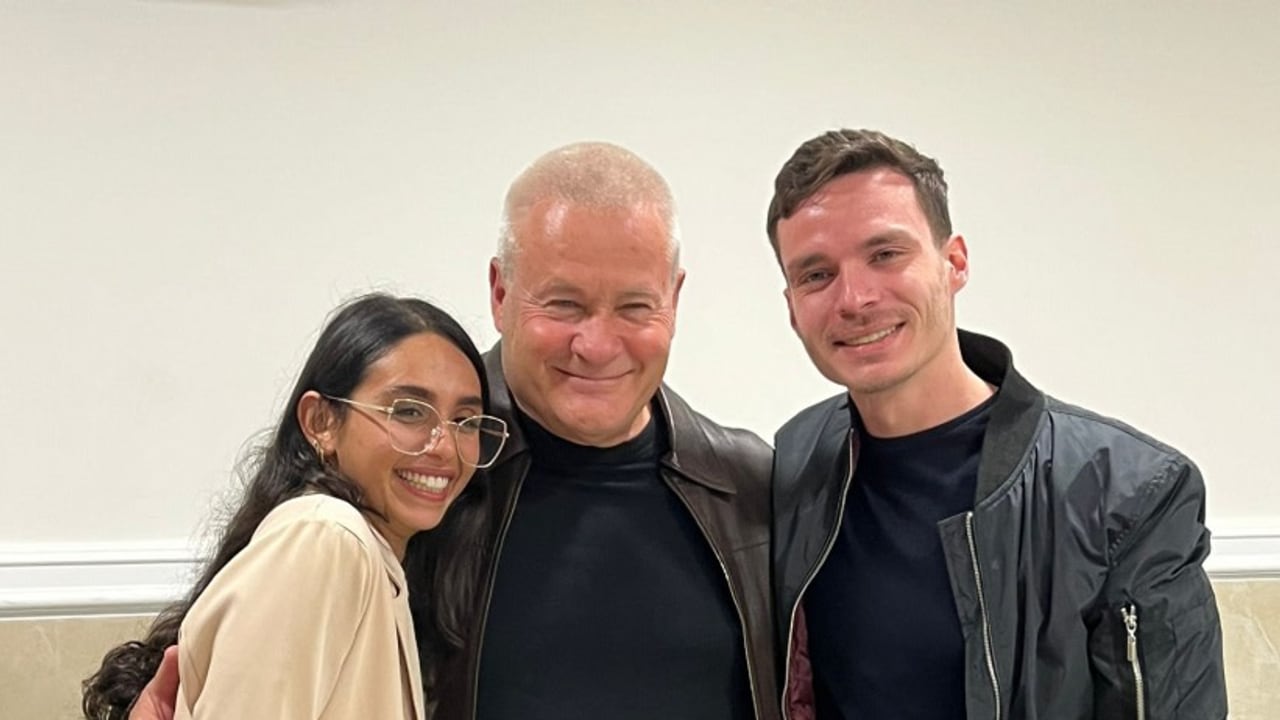
A major in the reserves, Israel Ziv is the CEO of the Global Group company. He engaged in security and civil project management, served as commander of the Gaza Division, and as head of the Operations Division in 2003-2005.
Where did the war take you?
Every Saturday, I go for a bike ride. At 6:30, I was greeted by the rocket barrages. At 7 a.m., I started receiving calls that something was happening in the Gaza Strip area.
What did you do?
I returned home, put on my uniform, took a gun and left. At 10, I was at the entrance to Sderot. There were burnt vehicles and corpses on the sides of the road. From Yad Mordechai to Sderot, it was empty. I realized there were terrorists in the area. I was told that there were enough Magav and Yamam forces that were dealing with the problem.
I continued to Sha’ar Hanegev. After one kilometer, there was shooting and a force that responded. Along the way, I received calls from parents of children at the Supernova event. From the Sha’ar Hanegev intersection, I left my car and caught a ride with two officers and drove south. After a level crossing, there was a large ambush of terrorists at the entrance to the Black Arrow monument, where they opened fire. Our vehicle was hit by bullets. Two military forces fought against a huge number of terrorists. In the distance we saw a large number of terrorists as well. An hour later the gunfire stopped, and the terrorists were killed.
I continued to receive messages. Someone asked me to help the girls at the Supernova party who were hiding in the shelter of Mepalim. I got a ride, took my, and went to the shelter. But I went to the wrong one. At 9 a.m. terrorists had thrown a grenades into the shelter, which killed the girl I was supposed to save. I went to the shelter on the other side. A frightened woman came out, who called my name. It was Gali, the wife of Noam Tivon. She said their son was in Nahal Oz, and Noam was evacuating the wounded. We agreed that she would drive the wounded to the hospital and I would go with Noam and their son.
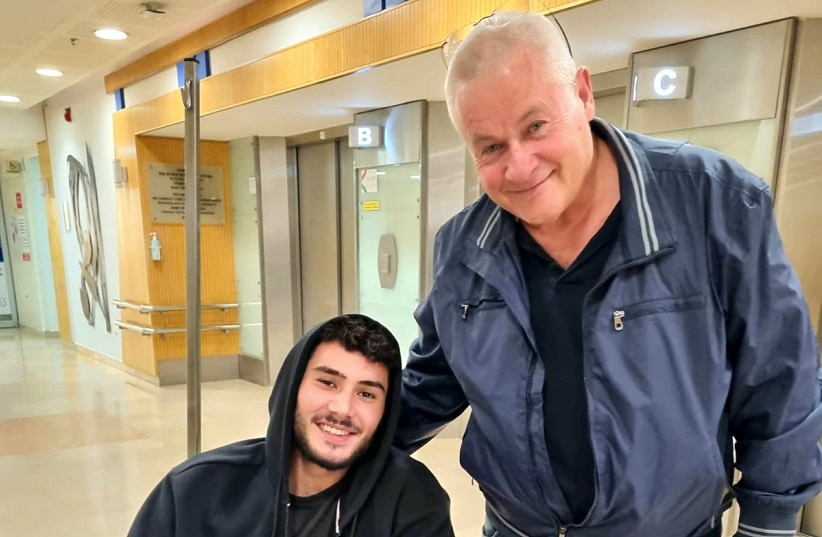
We drove through an area full of terrorists to the entrance to Nahal Oz. There, a force of paratroopers encountered gunfire. We convinced a force to accompany us to Nahal Oz to free the residents. In Nahal Oz, I said goodbye to them to go elsewhere.
At 2 p.m. I drove back to the party area. I saw burnt vehicles and bodies of terrorists and civilians. I continued to the Be’eri intersection. The road was empty. I asked the police force why they didn't enter Be’eri. They said there were two small forces there and many dead. I received more messages from parents with locations around Be’eri. I found children who were hiding a meter away from terrorists, and I rescued them.
When I arrived at the Supernova parking lot, it was the most difficult sight I’d ever seen: cars filled with dead bodies. I went to check if anyone was alive. But I was afraid that if an IDF force arrived, they’d think I was a terrorist because some disguised themselves as soldiers.
I drove to the entrance of Be’eri an hour before nightfall. There was quite a force there. I spoke with the commanding general and tried to help him with the situational picture. I received calls from Kfar Gaza that the situation was difficult. I saw that the situation was under control in Be’eri and told the general to send reinforcements to Kfar Gaza. I asked the commander of the Gaza Division what he intended to do. I told him there was a force, let's take over the settlement. He said it was complex and was trying to put together a situational picture. Unfortunately, he lost time and the opportunity to take control.
Since our takeover of the settlement wasn’t carried out, every team that went in to rescue took fire and casualties. They fought bravely and got many people out of the houses. The same method was used the next day because the terrorists were in control, not our forces. A force arrived, and I received many requests from parents who said there were traces of the places where their children were. We sent task forces to landmarks outside the fence of Be’eri. Everywhere there were clashes. There were no survivors.
Around midnight, the command put in some aerial lighting. They wanted to send another reinforcement battalion because the Gaza village lacked power and the situation was bad. But the reinforcement battalion they wanted to send to Be’eri didn't take action; they sent it to a Gaza village on my recommendation. The problem there was an approach. I explained that the line between the border and the settlements had to be taken over; otherwise, the terrorists would loot, steal, and take hostages. They said they were handling it, but it was too late because they already kidnapped and took property.
The next day I helped with the wounded. I continued to search. I went to the party area to look for more terrorists or wounded. Together with other teams, we cleared more bodies that were scattered and tried to hide.
On Sunday, I searched until 1 a.m. Looking for abductees was a very big mess. On Tuesday, we set up a team of officers that would be attached to each community. I realized there was a problem in the line. I went to a meeting with the army and the police to see how the identification of corpses was being handled effectively. From Wednesday, I started dealing with what had to do with evacuees and missing people. In addition, I help with the functioning of the front line management and try to bolster, from my experience, the fighting forces.
This article was written in cooperation with Israel Ziv