
While popular holiday destinations such as Mallorca, Tenerife, Santorini, and Barcelona are seeing protests against overtourism, one European country is choosing the opposite approach: Welcoming more visitors. A new study by travel website BookRetreats ranks Malta as Europe’s most tourist-dense island destination - but instead of slowing the flow, authorities are already planning to attract another half a million visitors over the next decade.
The study was based on data from the European Commission and examined tourism density by measuring the number of overnight stays relative to the island’s size. Unlike rankings that focus only on the number of tourists, this study also considered how many visitors a destination receives relative to its physical area.
Malta, which covers just around 316 square kilometers - roughly one-fifth the size of London - took first place. The country has a population of approximately 575,000 residents, yet more than four million tourists visited last year. This means that, on average, there are around seven tourists for every resident.
Despite these figures, the Malta Tourism Authority does not view them as a reason to slow the industry’s growth. As part of its strategic plan, the country aims to increase the number of visitors to around 4.5 million by 2035 and even triple tourism’s contribution to the local economy.
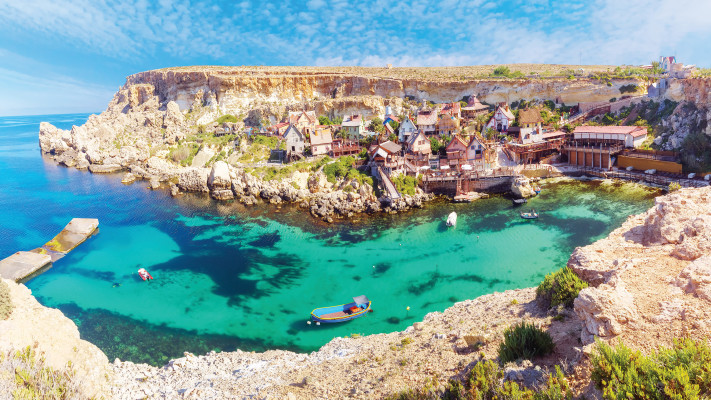
The effects of overcrowding are already being felt
Malta’s popularity is hardly surprising. The island enjoys pleasant weather almost year-round, beaches and bays with crystal-clear waters, some of Europe’s most sought-after diving sites, and impressive historic towns. The capital city of Valletta, which has been declared a UNESCO World Heritage Site, attracts visitors with its 16th-century architecture, while the ancient city of Mdina and the Blue Lagoon on the island of Comino have become must-see attractions for tourists.
Nevertheless, the effects of overcrowding are already being felt in Malta as well. At Comino’s Blue Lagoon, for example, visitor numbers reached around 12,000 people per day during the summer - a figure that led authorities to limit daily access to just 4,000 visitors. Environmental organizations are even calling for a further reduction in the quota to protect the area’s fragile ecosystem.
Interestingly, although Mallorca received a larger number of tourists last year - around 14 million - it ranked only eighth on the list. The reason is that the island is significantly larger than Malta, meaning its tourist density is lower.
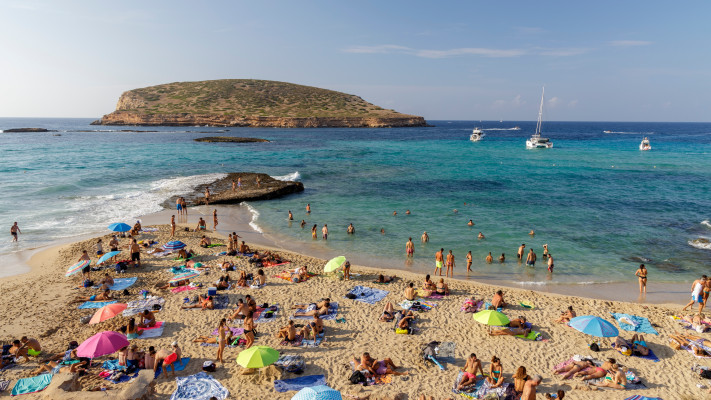
Europe’s 10 most tourist-dense islands:
Malta
Lanzarote (Spain)
Ibiza and Formentera (Spain)
Tenerife (Spain)
Gran Canaria (Spain)
Corfu (Greece)
Zakynthos (Greece)
Mallorca (Spain)
Madeira (Portugal)
The Dodecanese Islands (Greece) - including Rhodes, Kos, Karpathos, Kalymnos, and other islands.