Analysis: Chances slim for stiffer UN sanctions on Iran
Russia and China oppose sanctioning Tehran's energy sector; new tougher sanctions may have to come from the US and US, not the UN.
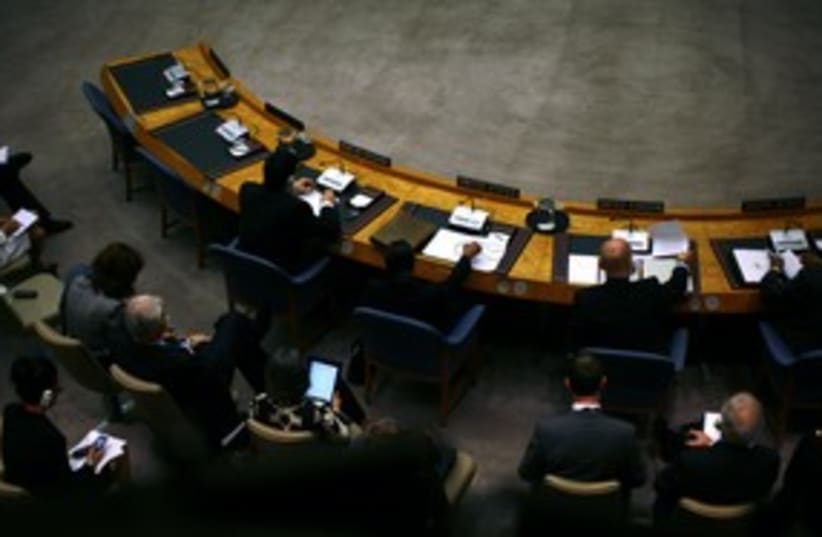
By REUTERSUnited Nations Security Council 311 (R)(photo credit: ERIC THAYER / Reuters)
UNITED NATIONS - There is little chance that the UN Security Council will impose tough new sanctions on Iran anytime soon, despite a new UN report expected this week to contain evidence suggesting Iran wants atomic weapons.The reason for this, Western diplomats say, is the reluctance of Tehran's traditional sympathizers China and Russia, which have the power to veto any council resolution, to sanction Iran's oil and gas sectors.RELATED:Barak on Iran: Diplomacy is preferred Iranian cleric: Israeli military threats 'empty propaganda' As a result, it will be hard to get anything out of the UN that is tougher than the last round of Iran sanctions passed in June 2010."The reality is that a new substantive step forward on sanctions will be very difficult," a senior Western diplomat said on condition of anonymity.
"The last set of sanctions were very substantive, and essentially the next stage would be to go into the oil and gas sector," he said. "If you get into the oil and gas sector, then obviously there will be opposition from China in particular, but also from Russia. More so China."China depends heavily on oil exports from Iran, the world's fifth biggest crude exporter, to fuel its growing economy.The report by the UN International Atomic Energy Agency, due out later this week, may strengthen suspicions that Tehran is seeking to develop the capability to make atomic bombs but stop short of explicitly saying that it is doing so, diplomats said.The IAEA report will arrive weeks after the United States accused Tehran of plotting to assassinate the Saudi Arabian ambassador to Washington. Although Iran vehemently denied the allegation, the furor revived speculation that a new UN sanctions resolution against Tehran might be on the cards.But US hopes for fifth sanctions resolution by the 15-nation UN Security Council against Iran appear unrealistic, not least because many countries are skeptical about the US plot allegations.Power plants or weapons?Tehran maintains that its nuclear energy program is simply to provide energy and has ignored UN demands to halt its uranium enrichment, which could produce fuel for nuclear power plants or weapons.Four sets of UN sanctions passed since 2006 have hit Iran's nuclear and missile industries and people linked to them. They have also targeted Iranian banks and other firms while steering clear of Iran's energy sector.Although Moscow and Beijing backed all four rounds of UN sanctions they did so reluctantly and only after working hard to dilute the measures.Click here for full Jpost coverage of the Iranian threatOne diplomat said the combination of US, European Union and UN sanctions and sabotage operations like the Stuxnet computer virus that temporarily hobbled Iran's enrichment program have succeeded in slowing Tehran's nuclear progress.If the UN Security Council does not act, diplomats say, the United States and its European allies will likely pursue unilateral national sanctions outside the United Nations.It may be possible for the Security Council to add a few more names of Iranian individuals and entities linked to the UN blacklist of those facing travel bans and asset freezes, though Western diplomats say such moves would be symbolic."The UN is important because it's the international community," a diplomat told Reuters. "But you're not going to stop Iran's nuclear program with lowest common denominator sanctions by the UN Security Council.""The EU, the US and others will have to wield the sledgehammer with national sanctions and drag the UN Security Council after them," he said.Russia has pushed for new negotiations with Tehran and is attempting to revive a stalled nuclear-fuel-swap deal that Iran accepted in October 2009 but later backed away from.Russia and China are also keen to revive negotiations between Iran and the five permanent Security Council members and Germany, even though five years of fitful talks have led nowhere.
if(catID != 151){
var cont = `Take Israel home with the new Jerusalem Post Store