Ties with Ashkenazi brethren sometimes strained; some residents fear assimilation.
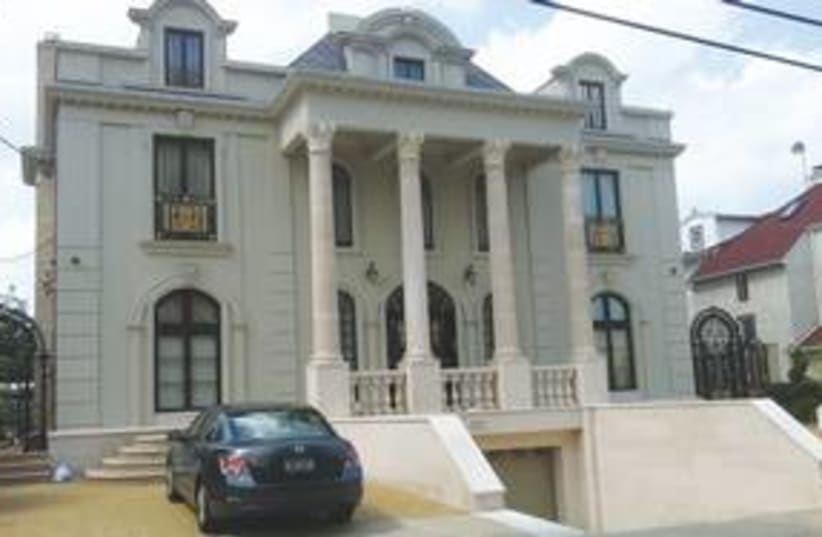
By GIL STERN STERN SHEFLERbukharan home ny_311(photo credit: Courtesy)
FOREST HILLS, New York – In this quiet part of New York City dubbed Queensistan, no signs of economic woe were visible last week even as US job growth remained stagnant and unemployment remained high – on the contrary.During a tour of the area, which is home to approximately 35,000 Bukharan Jews, several construction crews were hard at work putting the final touches on ostentatious mansions being built by members of the community.“They’ve done in 20 years what it took other Jews at least 40 years,” said Zalman Zvulonov, the director of the local Ohr Avner Jewish School, whose students are predominantly of Bukharan origin. “My family arrived in Israel in the 1950s and we haven’t succeeded like this.”Each of the eclectic edifices, which come in varying styles but all with a flair for the flamboyant, isn’t just a home for the above-average sized Jewish families. They are a source of pride for their owners and a symbol of how much they have achieved since they arrived in the US.Bukharan Jews, whose name derives from the Emirate of Bukhara that once straddled parts of modern-day Uzbekistan, Tajikistan and Turkmenistan, began to settle in this part of New York City in the 1960s. After the disintegration of the Soviet Union the trickle turned into a flood, turning parts of the neighborhood into a distinct ethnic enclave.“My English has deteriorated since I got here,” joked Rafael Naktalov, editor in chief of the Bukharian Times, the community’s weekly newspaper that has a circulation of about 10,000. “All I speak is Russian and Bukharan.”Shop signs throughout Forest Hills and adjacent the Rego Park neighborhood are often in English and Russian, the language most commonly spoken at home by Bukharan Jews. In 2006, a Bukharan Jewish community center with a synagogue that seats 600 worshipers opened just off Queens Boulevard, and a host of restaurants serve traditional Central Asian food.At the De Mikella eatery on Thursday, waiters dished out Bukharan specialties such as lagman, a rich soup made with mutton and noodles, and somsa, meat-filled pockets of bread baked in a tandoor oven.“My father always wanted to establish a business in New York and develop himself here,” said Ilya Zaronov, 32, whose family owns the restaurant. The Zaronovs also own several other restaurants and a catering business.“Possibilities are always there,” he said. “If a person knows what he’s doing and he has a plan and knowledge and the resources and the will there’s no limits.”But immigrating to America has proven to be a double-edged sword. While some have become affluent many in the community fear losing their Bukharan Jewish identity.Aron Aronov, the founder of the Bukharan Jewish museum located on the sixth floor of the Ohr Avner Jewish School, said the community was at risk of disappearing unless it held on to its traditions.“We left Russia because we wanted to avoid assimilation, but unfortunately the danger of assimilation here is not lower but even higher because of public school, cinema, movies, TV – it has great impact on our children,” he said. “Thank God [Israeli-Bukharan tycoon] Lev Leviev opened this school so we can keep our children on the Jewish track, but some of our children go to the public school and all that. So they lose their language, want to be American, and we want to preserve our Bukharan Jewish identity and at the same time to integrate into American society.”Teachers at the school, which opened in 2002, said they considered it their mission to impart pupils with religious values and to fight assimilation.“We teach them the Jewish traditions as well as English and Hebrew and math – all almost free of charge,” Zvulonov said. “We currently have 400 students but we reach out to many more in our summer programs.”Still, most Bukharan Jews are secular and go to public school. And receiving a Jewish education does not ensure they hold on to their Bukharan identity.Naktalov, the editor of the community’s newspaper, said the Ashkenazi religious establishment often tries to suppress Bukharan traditions.“They say, forget about Bukharan life, we need Yiddishkeit,” he said. “It’s not our way. We can be together but apart.”He stressed that relations with other Jewish communities on the whole were good but added that Ashkenazi yeshivas sometimes discriminated against Bukharans.“Not every time Ashkenazi people respect us,” Naktalov said. “Sometimes we see Ashkenazi chauvinism like when children go to yeshiva they ask, ‘Are you Bukharan? Are you religious? You know what is kosher? You know what is bla bla bla? I will see who your mother is. Are they really Jewish?’ Real Ashkenazi chauvinism.”Back at the Bukharan museum, Aronov gave a tour of the dazzling array of artifacts from the Old Country he has assembled over the years. They include musical instruments, traditional Bukharan clothes, antique marriage contracts, even an old-style horse-drawn carriage shipped piecemeal from Uzbekistan.“All this used to be in tiny basement,” the 72-year-old retired translator said. “When Lev Leviev bought this building and opened yeshiva school for Jewish education of our children of New York City, they began to fix the first, second, third floor. Meantime, the sixth floor was free so he said, ‘You can place your organization [there].”Aronov said he has bequeathed the museum into which he has poured his “money, heart and soul” to the community.He hopes to relocate it to a more accessible site, perhaps next to a Bukharan restaurant, which he said was an essential part of the Bukharan experience. Much depends on the outcome of a planned meeting with New York Mayor Michael Bloomberg, he said.“I am not afraid to die, I am not afraid to pass away, but I’m afraid to disappear from this world without leaving any trace,” Aronov said. “I don’t want my unique Bukharan Jewish ethnic group to disappear without any trace. One day our great-great-grandchildren will want to know about their roots and they will come right here to this museum.”Click here to follow Gil Shefler on twitter
if(catID != 151){
var cont = `Take Israel home with the new Jerusalem Post Store