Just 5% of J'lem municipality property serves Arabs
New database about city-owned properties details 2,600 properties belonging to Jerusalem municipality.
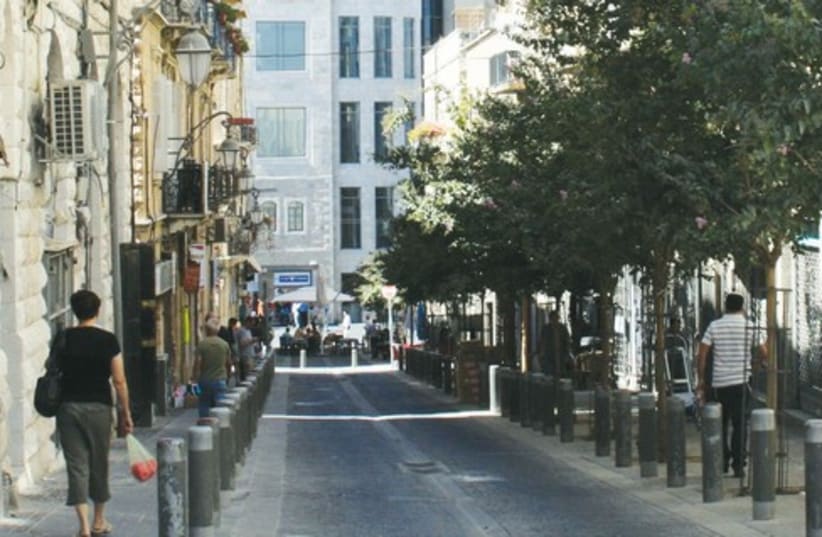
By MELANIE LIDMANJaffa Road 521(photo credit: Shmuel Bar-Am)
Only 5.5 percent of the 2,600 properties owned by the city of Jerusalem are serving the Arab residents of the capital, according to a new database created by the Jerusalem Awakening party and the Public Knowledge Workshop.The database and Google Map were created to help individuals and organizations take better advantage of municipality services, said Public Knowledge Workshop volunteer Ido Ivry.“At the beginning of my job, I was shocked to discover that there isn’t an organized map of all the municipal properties that are allocated for different purposes across the city,” said City Council member Merav Cohen (Jerusalem Awakening).“The lack of information makes it difficult for publicly elected officials to make intelligent decisions that are appropriate for the real needs of the residents,” she said.All of the information in the new database was available to the public, but it was scattered across many different areas and offices, making it nearly impossible for anyone to get a full picture of the situation. The extensive database created by the Public Knowledge Workshop is the first time all of the information is collected in one place.Ivry said one of the most surprising outcomes of the project was the sheer amount of properties the city owns. They assumed the city had around 300 or 400 properties, and were shocked by the final figure of 2,600.Only 5.5% of the properties are allocated for Arab residents.The list includes buildings used for schools, libraries, community centers and cultural institutions. Many schools in east Jerusalem are located in rented buildings, including residential apartments, which are less suitable for schools than properties owned by the municipality and built as schools.“We want to educate the local councils,” said Ivry, who envisions future maps detailing parking spots or construction approvals. “I feel like I have no idea what is happening in my city.”“All this information exists somewhere,” he said. “If this information is available and accessible, there will be more trust in local authorities.”The Public Knowledge Workshop also has projects which compile massive amounts of data about Knesset votes and the state budget in easily searchable databases and informational graphics. The projects are completely volunteer-run.
if(catID != 151){
var cont = `Take Israel home with the new Jerusalem Post Store