Lev Ha'ir residents win right to vote in local poll
Committee sets to decide on cancellation of controversial clause that excludes majority of voters from taking part in elections.
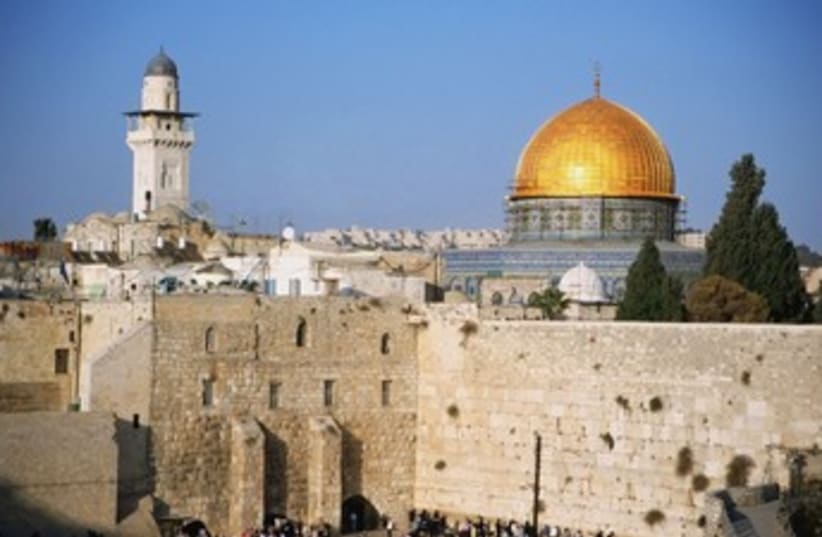
By MELANIE LIDMANJerusalem's old city 370(photo credit: Thinkstock/Imagebank)
In a surprise last-minute move that represented an important victory for Jerusalem’s community activists, all residents in the Lev Ha’ir neighborhoods will be able to vote in the local elections on November 20. The neighborhood election committee will vote in the coming week to cancel Clause 5.8 in the Nahlaot, Musrara, Jewish Quarter, downtown and Shaare Hesed neighborhoods, which make up Lev Ha’ir. Clause 5.8 is a complicated provision of the city’s local elections charter aimed at avoiding a haredi or Hamas takeover of the local councils.Five local councils will be elected under the new Clause 5.8, which requires all voters to submit proof they have been active in community life for at least a year and have 50 signatures from residents supporting their effort to be classified as a “community activist.”Residents in Lev Ha’ir were furious with the clause, which they felt excluded them from the democratic process.Nahlaot resident and community activist Aaron Leibowitz said he could not believe the community council changed their mind at the last moment.“I think what was behind this was the public pressure,” said Leibowitz, as he headed to a meeting with the mayor that residents had requested last week to argue against Clause 5.8.More than 50 Lev Ha’ir residents caused a disturbance at the last city council meeting as well over their displeasure with Clause 5.8.“There is a feeling of justification we won this struggle, but a feeling of frustration at the immense amount of work that was put on 5.8 and the time that was lost organizing a campaign [to run in the local elections],” he said.The Lev Ha’ir community council recommended the cancellation of Clause 5.8 on Tuesday, though the city’s Local Elections Committee must still meet in order to formalize the decision, said Ayala Wohl, who is in charge of Jerusalem’s local elections.The Local Elections Committee is not opposed to Lev Ha’ir’s decision, she said.“They saw that the residents got really worked up and that the residents want regular elections,” she said.The city created Clause 5.8 to deal with neighborhoods that have mixed haredi and non-haredi populations.The worry is that the ultra- Orthodox are better organized than non-haredi residents and therefore will mobilize their vote much more efficiently.In Arab neighborhoods, the city fears a repeat of last year’s elections in the Beit Hanina neighborhood. The municipality canceled the election there at the last minute after it received word that Hamas activists were organizing an effort to take over the local council.Each community council is made up of nine elected members and six appointed members, and deals with local issues such as cultural events, education and ensuring that the municipality delivers services.The council seats are volunteer positions and are separate from the professional staff at the Matnas community centers.“We are happy that democracy has prevailed and that the residents of Lev Hair will be able to vote for their own representatives,” said City Councilor Rachel Azaria. “[This] proves that when us Jerusalemites are dedicated and united for a cause, we win.”The neighborhood councils of Beit Ross (Kiryat Moshe, Givat Shaul, Mordot Bayit Vegan and Givat Mordechai), Wadi Joz, ATur, Ramot and Romema will still vote under Clause 5.8.
if(catID != 151){
var cont = `Take Israel home with the new Jerusalem Post Store