The Jerusalem Post
Jpost search icon google-icon iphone
  Set as Homepage
Thu, Jun 20, 2013   12 Tammuz, 5773
newspapers magazines
 
    • Breaking News
    • Diplomacy & Politics
    • Defense
    • National
    • Mideast
    • Syria
    • Iran
    • World
    • Business
    • Sports
    • Health & Science
    • Environment
  • Video
  • Opinion
    • Columnists
    • Editorials
    • Op-Eds
    • Letters
  • Jewish World
  • Lifestyle
    • Arts & Culture
    • Food & Wine
    • Travel
  • Features
    • Insights & Features
    • Week in review
    • On the Web
    • Shalva Superheroes
    • Obama in Israel
  • Blogs
    • In the news
    • Judaism
    • From the Middle East
    • Lifestyle
    • Aliya
    • Science and Technology
  • JPost Apps
    • iPhone app
    • iPad app
    • Android app
    • Twitter
    • Facebook
    • RSS feeds
    • JPost Toolbar
    • JPost Newsletter
    • JPost Alert
  • Premium Zone
    • The Jerusalem Report
    • Magazine
    • Metro
    • In Jerusalem
    • ePaper
    • Expert Opinion
    • Q&A
    • Dash
    • Christian Edition
    • Ivrit
  • French
    • Politique & Social
    • Affaires Palestiniennes
    • Diplomatie & Monde
    • Art & Culture
    • Israel
  • Green Israel
JPost Learn Hebrew  
Advertise with us  
Nefesh Guided Aliyah  
Eldan  
AFMDA  
YTA  
Isram Group  
JPost Twitter  
JPost Facebook  
Classifieds  


Breaking News
 
 
  • JPost.com
  • Opinion
  • Op- Ed Contributors
 

Sanctions on Iran: Bark or bite?

By YOEL GUZANSKY, JONATHAN SCHACHTER
LAST UPDATED: 12/07/2010 06:38
Tweet

The current effort by the regime to save money by cutting subsidies might in fact expose a domestic Achilles heel.

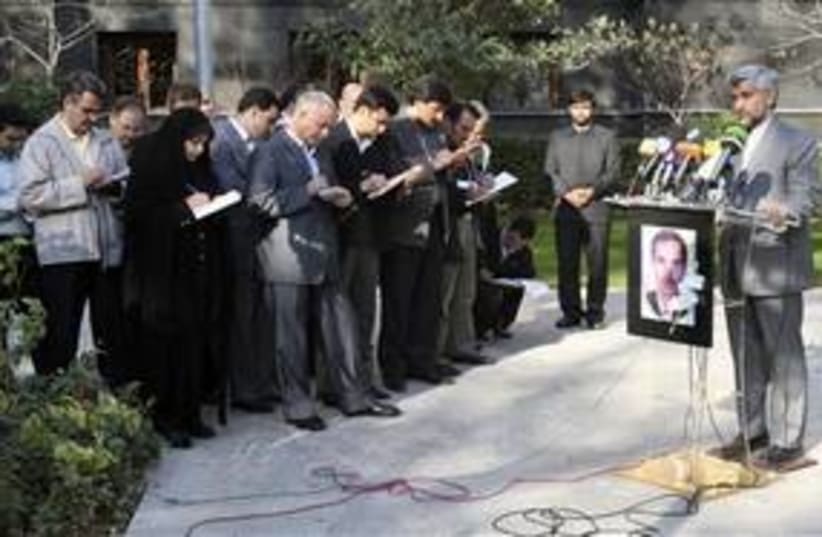
Saeed Jalili, Iran's top nuclear negotiator
Saeed Jalili, Iran's top nuclear negotiator Photo: Associated Press
US Secretary of Defense Robert Gates recently said that the sanctions imposed on Iran “are biting more deeply” than the Iranian regime anticipated. So far, they have forced Iran to examine the costs and benefits of its behavior, but have not led to any greater flexibility in its position on nuclear development.

Some argue that the sanctions have even led Iran to harden its stance.

Recent domestic developments, however, suggest that the sanctions’ bite is growing stronger.

Though it is difficult to determine by exactly how much, the sanctions have taken a toll on government revenue. As a result, the regime has announced plans to reduce the subsidies it provides the population, which cost the treasury up to $100 billion per year (25% of GDP).

These cuts and the public’s response to them have the potential to pose a considerable challenge to the status of the regime, and even to its stability.

The anticipated result is a significant rise in the prices of cooking gas, electricity, water, foodstuffs and transportation.

Especially important is the expected rise in gas prices. While gasoline will remain very cheap relative to the rest of the world, previous efforts to reduce government subsidies (through rationing) resulted in public resentment, demonstrations and the burning of gas stations.

In the current political environment, it is likely that the opposition will exploit these economic “reforms” to gain support – a possibility for which the regime is preparing. Among other things, the regime in recent weeks deposited funds into the bank accounts of approximately 70 million Iranians as preemptive compensation for the expected price hikes.

Iran has invested great effort trying to cope with the various sanctions imposed on it since 2006. On the one hand, these efforts suggest that the country is vulnerable to sanctions. On the other, they also show that it is committed to advancing its nuclear program even at high cost.

This month, in an unusual step, Supreme Leader Ali Khamenei asked the Iranian people to be patient so the country could overcome the problems it is facing as a result of the sanctions.

IT APPEARS that the West has not decided yet what price it is willing to pay in order to prevent Iran from crossing the nuclear threshold; the UN Security Council sanctions represent the lowest common denominator.

Nevertheless, the sanctions are meaningful.

The Security Council resolution has provided legitimacy to states that have taken actions against Iran above and beyond what is required, and which otherwise would not have been taken at all. Additionally, more reluctant actors, like Russia and China, have been supportive of sanctions despite their reservations because until diplomatic efforts have been exhausted, war remains a more distant option.

The sense in the West that there are “no good options” and that the sanctions have exhausted their potential is perhaps premature. The current effort by the regime to save money by cutting subsidies – a step unprecedented since the 1979 Islamic Revolution – in fact might expose a domestic Achilles heel.

That is, the regime’s efforts to mitigate the effects of the sanctions could leave it even more vulnerable to them.

The most effective way to further constrain Iran’s financial resources is by continued and even increased pressure on the country’s limping energy sector, which accounts for 80% of export-related state revenue.

Taking advantage of this dependence on a single commodity has the greatest potential to change Iran’s cost-benefit calculations.

As is always the case, multidimensional problems demand multidimensional solutions. Sanctions by themselves are unlikely to put an end to Iran’s nuclear program. It is in this context that recently reported sabotage of uranium enrichment activity should be seen; this activity makes enrichment more costly and complements sanctions by giving them more time to work. At the same time, Western efforts – strongly encouraged by Iran’s Arab neighbors, as evident in the documents revealed by WikiLeaks – to present a credible military threat to Iran’s nuclear facilities are intended to convince the Islamic Republic that time is not on its side.

One could conclude from Iran’s actions that it is not particularly interested in compromising with the West, in part because it continues to prepare to weather sanctions for an extended period.

Only if the regime decides that the road to completing its nuclear program is too long and the price too high will there be even a chance of increased flexibility in its position.

The writers are research fellows at the Institute for National Security Studies at Tel Aviv University.

  • Send
  • Large
  • Small
  • Print
  • Share
Most Viewed in
1
Preconditions have no basis in law or fact
2
President Peres
3
The world’s preferred refugees
4
Ending the Chief Rabbinate electoral machinations
JPost Community
Tweet
Robert Gates Iran Sanctions Ali Khamenei UN Security Council Russia China
Tweets about "#jpost"
Share this article
Tweet
Share
Send
Your comment must be approved by a moderator before being published on JPost.com. Disqus users can post comments automatically.

Comments must adhere to our Talkback policy. If you believe that a comment has breached the Talkback policy, please press the flag icon to bring it to the attention of our moderation team.
JPost Services
conferenceConference
newsletterNewsletter
iphoneMobile Apps
kotelcamKotel Cam
kolboJPost Alert
premiumPremium
JPost TV News  
Mobile Apps  
Bank Hapoalim  
Meir Panim  
Israel Law Center  
Inbal Hotel Jerusale  
Meier on Rothschild  
Weizmann Institute o  
JPost Premium Zone  
JPost kotel Camera  
         
 
Israel Focus
JPost TV News
Watch Now!  
Donate to Save Lives in Israel
 
Israel Law Center
The ultimate Mission to Israel, October 21 – 28, 2013 Register now!  
Nefesh B'Nefesh Guided Aliyah
Already living in Israel? Enjoy the Benefits of Aliyah!  
One year International MBA
in English, Bar-Ilan University, Israel – Open House July 9, 2013, 17:30  
Give "Freedom" this Passover
to needy Israeli families. Donate now  
YTA – A Yeshiva in Israel…
in English. Come Join Us  
War Threatens
Protect the People of Northern Israel  
Bank Hapoalim
Israeli's number one bank  
Jerusalem Post Lite
Lite Edition of the Jerusalem Post for English improvement  
Learn Hebrew with us
Get 10 minutes free personal coaching in Hebrew through phone or Skype  
JPost newspapers
Sign up for the JPost newspapers and receive one month free subscription  
Kosher English Magazine
English language weekly magazine - especially for religious people  
JReport Kindle Edition
Now you can get the Jerusalem Report directly to your Kindle  
JPost Premium Edition
The very best articles are available only in our Premium edition  
Lifestyle Magazine
 
 
Real Estate
Meier on Rothschild
Tel Aviv's Most Prestigious Address  
Don't Look For a House!
In Israel, our website will do it for you!  
 
Travel
Tourism Magazine
June 2013  
The Inbal Jerusalem Hotel
Hot summer deal, order now!  
Eldan Rent a Car
20% off all Car Rental Reservations in Israel  
Hertz Car Rental
Special Online Discounts!  
The King David Jerusalem Hotel
One of the world's truly iconic hotels, and a Jerusalem landmark  


Sites Of Interest:

Jerusalem Hotels
KKL-JNF
Poalim Online
BreitBart.com
Our Friends
Jerusalem Attractions
Jerusalem Tours
itraveljerusalem.com

JPost sites:

Learn Hebrew
The Jerusalem Report
Our Magazines
JPost Edition Francaise
Green Israel
Christian World
Jerusalem Post Lite

Services:

JPost Mobile Apps
JPost Premium
JPost Newsletter
JPost Toolbar
JPost News Ticker
JPost RSS feeds
JPost Archives
JPost Alert
JPost Kotel Cam

JPost Conferences:

NYC Conference
Diplomatic Conference

Information:

About Us
Feedback
Staff E-mails
Copyright
Sitemap
News Partners
Advertise with Us
Statistics
Ad Specs
Terms Of Service
Jpost.com, the online edition of the Jerusalem Post Newspaper - the most read and best-selling English-language newspaper in Israel. For analysis and opinion from Israel, the Jewish World and the Middle East. Jpost.com offers expert and in-depth reporting from Israel, the Jewish World and the Middle East, including diplomacy and defense, the Palestinian-Israeli conflict, the Arab Spring, the Mideast peace process, politics in Israel, life in Jerusalem, Israel's international affairs, Iran and its nuclear program, Syria and the Syrian civil war, Lebanon, the Palestinian Authority, the West Bank and Gaza Strip, Israel's world of business and finance, and Jewish life in Israel and the Diaspora.
 
About Us | Advertise with Us | Subscribe | Premium | Newsletter | RSS | Contact Us
 
All rights reserved © The Jerusalem Post 1995 - 2012