Religious councils' treatment of their residents cannot continue to operate as a comedy.
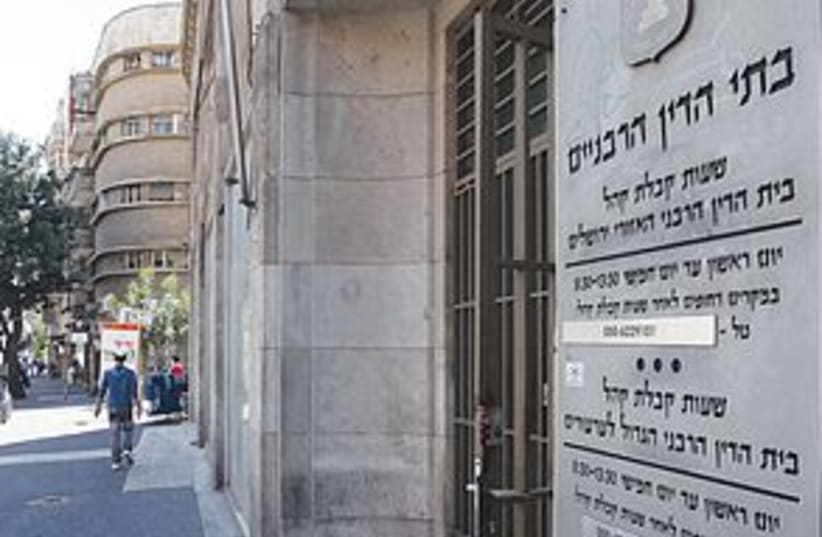
By SETH FARBERJerusalem chief rabbinate 311(photo credit: Marc Israel Sellem)
The American comedian Don Adams (of Get Smart fame) once quipped: “I love to get married but I don’t like to be married.”As the wedding season opened this week in Israel with Tu Be’av, most of the Jewish public in Israel would say just the opposite. Many Israelis are happy to be married, but they don’t love getting married – at least through the rabbinate.According to a recent study, 80 percent of Israeli Jews say it is important or very important to them to be married in a ceremony conducted by a rabbi. Furthermore, more than 90% marry under a huppa having registered their marriages in local religious councils. And yet, people are devastated by the behavior of the rabbinate, and a large majority of Israelis think that civil marriage should be an option.There are some rabbinates that are user friendly, but, generally, the young, new generation and Generation X are dissatisfied by the services they receive in the rabbinate. In my experience – and during the past year ITIM (a non-profit agency dedicated to making Jewish life accessible to all) assisted close to 2,000 couples who sought to get married in Israel – the procedures of the rabbinate are cumbersome.Additionally, these procedures are rarely enforced by local rabbinates, who choose to make their own rules.ON AVERAGE, a couple wishing to marry has to visit the rabbinate four times due to a lack of familiarity with the complicated beauracratic procedures, which need not exist in a process so common and simple. In many cases, marriage registration and the accompanying Jewishness verification procedure are conducted without respect, fairness or transparency, even at the elementary level.In the past year we received queries about marriage bureaus that still refuse to register converts, despite the fact that the Chief Rabbinate has already issued an order to register them (a provision that also won the support of Rabbi Ovadia Yosef). We have received complaints about registrars who were unwilling to accept a person as Jewish even though his parents were married in the country, which clearly contradicts the procedures of the Chief Rabbinate.In other cases, registrars have refused to accept Jewishness certification (of someone born a Jew!) from a rabbinical court, and sent the couple to a private investigator (at their own expense), before agreeing to open marriage file.This would all be comical (in the Don Adams sense), if it wasn’t so serious and outrageous.In each of the cases outlined above, ITIM’s offices turned to the Chief Rabbinate, which offered only partial solutions, seeking to avoid confrontation with the local rabbinates.TO DATE, the establishment repeatedly refuses to punish rabbis who alienate young couples. However, the real problem is not the rabbinate. The real problem is on the Israeli streets.Nothing will change until all those who care about the Jewish identity of the country wake up and protest. Our problem is not only with the rabbis who are circling their wagons, it is also with the general population who feigns indifference.It’s time to call upon the rabbinic establishment to improve its services to citizens and to refine the procedures concerning registration of marriage. This year I turn specifically to residents of Rishon Lezion, Hadera, Ashkelon, Ashdod and Rehovot – as well as many other places where marriage registration disenfranchises young couples.I turn to the religious, the secular and the traditional; to new immigrants and to veteran Israelis alike. If you would like our children to be married in a normal manner, it’s time to wake up.Make it clear to religious councils that their treatment of their residents cannot continue to operate as a comedy. Rabbi Dr. Seth (Shaul) Farber is the founder and director of ITIM, which helps people interact with the religious establishment.
Related TagsOvadia Yosef
if(catID != 151){
var cont = `Take Israel home with the new Jerusalem Post Store