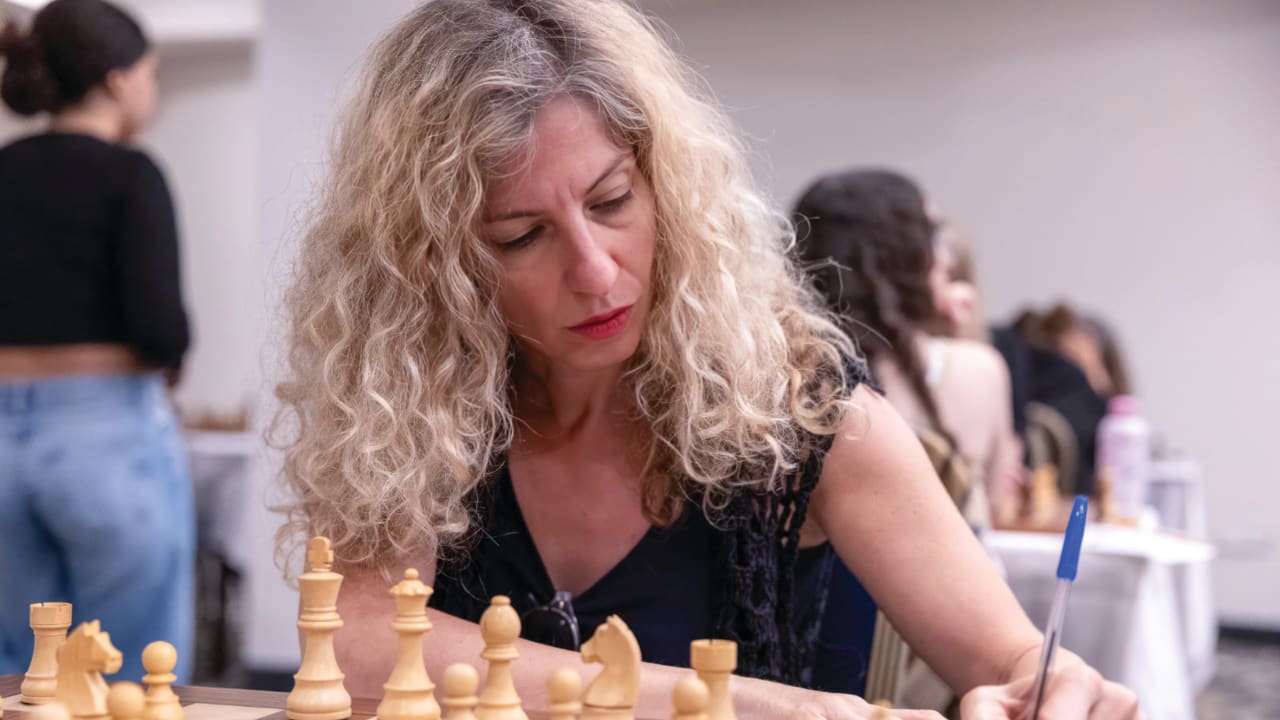
Three-time Hungarian women’s chess champion Tícia Gara moved to Tel Aviv-Jaffa almost a year ago. She knew, of course, that she was immigrating to Israel during the Gaza war, but she couldn’t have guessed she would be running for shelter from Iranian missiles just six weeks later.
Yet Gara took it all with equanimity. She’d left home not to escape anything negative but rather to embrace life in the Jewish homeland.
She’d long felt an affinity for Israel, and it grew stronger over years of visits to her grandmother’s sister and family living near Haifa. She also volunteered with disabled adults in Israel for two months in 2014 through the Jewish Agency’s Tikkun Olam program.
“Before I made aliyah, I did my research and prepared well, maybe because I’m a chess player and we like to arrive prepared,” she said.
In fact, upon further reflection, Gara can see how her chess skills have helped her through these challenging first months of Israeli citizenship.
“In the world of chess, you’re exposed to a lot of different situations, hardships, and anxieties. Dealing with solitude is part of the journey because you’re traveling to tournaments in places that aren’t familiar,” she said.
Aliyah presents many of the same circumstances, and her life experiences have imbued her with firm faith in her ability to persevere.
Furthermore, from her point of view, staying in one place is not an attractive alternative. “I was exposed to traveling and cultures from a young age because of chess competitions, and I enjoy experiencing the different types of weather and food. I like to observe small things in life, to ‘inhale’ something about the places I go.”
Gara earned the title of Woman Grandmaster in 2002, at age 18. She won Hungary’s national championship in 2006, 2007, and 2019, and helped Hungary grab the gold at the 2015 Women’s Mitropa Cup.
The COVID pandemic sparked a new direction for Gara. She began offering online chess coaching (ticiagarachess.com), and she lived in New York City for a year teaching chess. In January 2024, she was named chess.com’s Coach of the Month.
Now, in addition to attending ulpan locally, Gara is teaching chess at the Chess4All club in Savyon.
“I really want to help youngsters with my experience and expertise,” she said. “I started teaching chess once a week there, and I also teach some students from the club online during the week.”
She communicates with her protégés in English, a language in which she is fluent. While she aspires to teach in Hebrew eventually, she noted that chess has its own intuitive language that serious players of any nationality understand.
The ancient game of strategy is popular in Israel. “Chess is taught in many Israeli schools as an elective, sometimes even once a week. It’s really good for the brain and for improving skills such as pattern recognition,” she said.
Though she has shifted away from competing, Gara participates in tournaments when she’s needed. Not long after making aliyah, for instance, she agreed to represent the Queens Maccabi Ramat Gan club in the Israel Women Elite Chess League tournament in Netanya, where she enjoyed meeting members of Israel’s female chess community.
She also has ambitious plans for using her chess skills for the benefit of Israeli society.
“My dream is to use chess as a tool to help elderly people and prevent dementia, and as a therapeutic tool for people with PTSD or mental disorders,” she said.
When Gara and a friend from New York visited a rehab center for wounded soldiers run by the New York-based philanthropy Belev Echad in Kiryat Ono, she saw some of the patients playing chess. “I have been thinking about how I can give something to these people too, but of course it’s very complex,” she said.
Living on her own in Jaffa, Gara said she draws much strength from her frequent long-distance calls to her parents, family, and friends in Hungary. In August, she took a break from the Tel Aviv heat and humidity and visited those loved ones in Budapest, where the summer weather is more temperate.
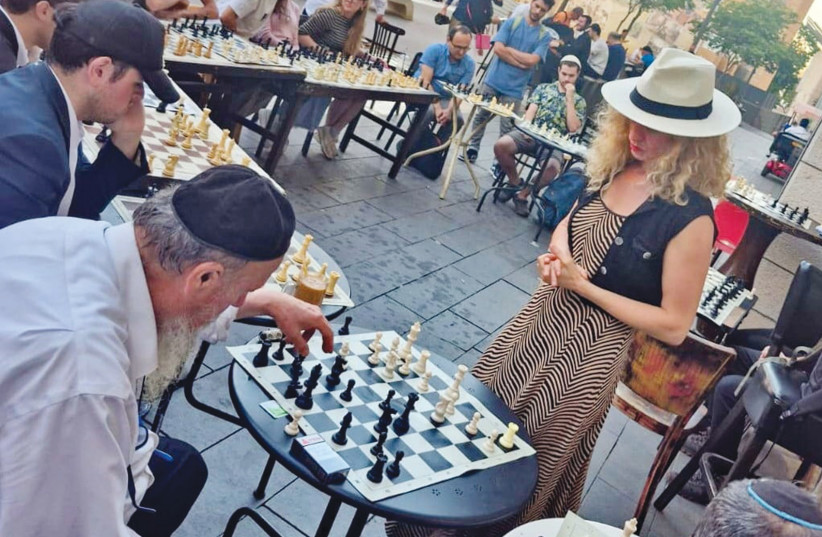
Gara has fond memories of celebrating Hanukkah with her family, singing “Maoz Tzur” together in the light of the candles. After making aliyah, she found new meaning in the autumn holidays. “Yom Kippur was an extremely special day; I felt I was part of something really special, and I loved it. And then my mom came to visit during Sukkot, and that was wonderful, too.”
In cooler months of the year, Gara enjoys people-watching in Jaffa and getting acquainted with Israeli culture. She wants to build a Jewish family and feels strongly that Israel is the place to find the right partner with whom to do that. And he need not be Hungarian.
“My character has a very strong rational side, but I have an adventurous side that’s almost as strong. I have a deep curiosity when it comes to different cultures and countries, about people’s lives and how they think,” she said.
She was strongly influenced by the writings of Hungarian novelist and essayist Sándor Márai, who traveled across Europe in the 1920s observing and documenting the people he met along the way.
“I did a writing course back in Hungary, and I wrote a few short autobiographical essays,” Gara said. “I am always thinking of how I can convey in words the feelings I have about the process of aliyah.”
Despite all that’s entailed in adjusting to life as a new immigrant, Gara has no regrets.
She has found that Israelis and Hungarians are both generally direct, open, and warm – and even if Israelis are a tad less polite than Hungarians, she knows they are always willing to lend a helping hand and are appreciative of her decision to live here.