
The ceasefire that stopped the shooting this month brought Israel’s last living hostages home and shifted the world’s gaze to the day after, to governance, to reconstruction, and to whether Washington can still speak in one voice about Israel.
This moment marks a historic turning point for the Middle East, as a new reality begins to unfold. The ceasefire resulting in the release of remaining hostages, ongoing reconstruction in Gaza, and President Trump’s comments on shaping a new Middle East all highlight the urgent need to strengthen the strategic alliance between Israel and the U.S.

Our Summit will explore practical ways to develop a renewed vision for this relationship and to reinforce its core pillars – security, innovation, economy, and shared values. Our aim is to deepen the strategic partnership and maintain bipartisan support for Israel from both Republican and Democratic sides.
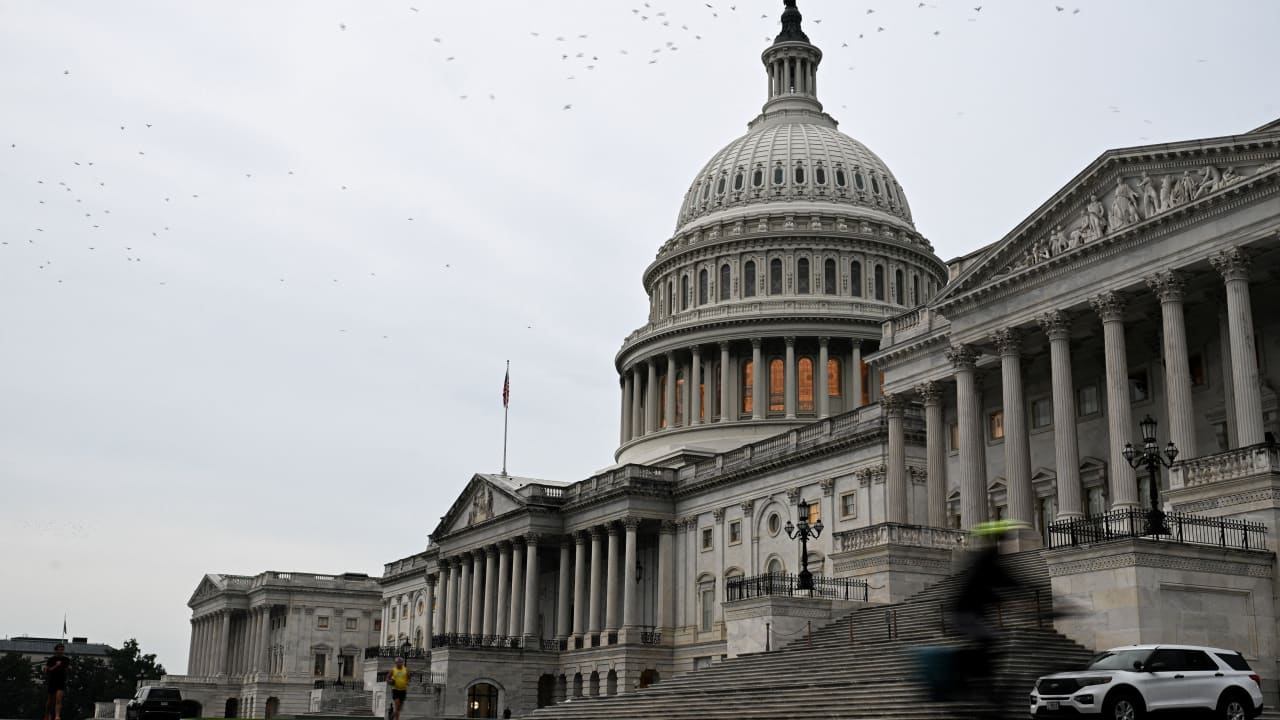
That’s why we are bringing The Jerusalem Post’s first Washington Conference to Capitol Hill this December, emphasizing bipartisanship and the release of hostages as the moral foundation.
That is why we are taking The Jerusalem Post’s first Washington Conference to Capitol Hill in December, with bipartisanship as the organizing principle.
>> For more information about the Jerusalem Post Washington Conference

For two years, the story of this war was measured in absence. As the last 20 living hostages were released from Gaza, part of a framework that also committed Israel to free large numbers of Palestinian prisoners and detainees and to enable the return of remains for burial.
In that context, I spent time with our conference’s honorary co-chairs, Norman Brownstein and Bobby Rechnitz, and asked them to speak plainly.

Brownstein has spent a lifetime building cross-party coalitions in Washington. His diagnosis is both pragmatic and hopeful: “The United States and Israel enjoy a very strong and enduring security alliance,” he told me, arguing that perceptions of a “rift” will recede as Gaza stabilizes and as Israel is again judged by what it builds, not just by what it must destroy.
He also noted that international efforts, such as those at the UN by France and Saudi Arabia to advocate for recognizing a Palestinian state, will probably diminish as Gaza’s governance becomes clearer, as long as Washington stays opposed to unilateral statehood recognition.
“Supporting Israel should never be a partisan issue,” Rechnitz said. “It is about defending America’s closest ally, and it works best when our advocacy is bipartisan.”
Rechnitz was unsentimental about the noise online or at the fringes. “Fringe voices do not represent the mainstream,” he told me. “The vast majority of Americans still see Israel as a vital ally.”
Brownstein is a founding partner and the longtime chairman of Brownstein Hyatt Farber Schreck, a firm synonymous with bipartisan deal-making. He did not earn the nickname “America’s 101st Senator” by accident, and the National Law Journal recognized his lifetime of work shaping legislation that actually passed.

Rechnitz comes from the world of business and civic action. He is a Los Angeles developer and philanthropist who has put time and energy into practical coalition-building in Washington, including efforts around Iron Dome and dialogue that brought members from both sides of the aisle into the same room.
Both men made clear that the next phase will test whether we can turn relief into responsibility.
Brownstein sketched the near term: As Gaza rebuilds and a governing mechanism takes hold, “support for Israel as the only true democracy in the Middle East will resume,” he said, provided Israel does not stumble back into the judiciary wars that “distracted” it from its strengths.
He believes that once Gaza is rebuilt and the Israeli economy regains its innovative and technological strength, bipartisan confidence in Israel will be restored, provided that the political distractions before October 7 are left behind.
Rechnitz addressed the generational cliff: “Israel needs tremendous work on the 18- to 35-year-old support,” he said. The war “has definitely hurt their standing,” which means meeting young Americans “in their language and on their platforms” and letting them encounter Israel as a country of “diversity, inclusion, and innovation,” not a caricature.
Brownstein echoed this concern, warning that Israel must regain the reputation it had before the judiciary conflict and the war, as a country of caring, innovation, and respect for all peoples, if it hopes to bring younger generations back to its side.
Rechnitz has watched minds change in hospitals, incubators, and schools. “When people meet Israelis face-to-face, the conversation changes from politics to people,” he said.
What does bipartisan seriousness look like now, after the guns fell silent?
First, it looks like realism about the ceasefire’s architecture. The plan that took hold in early October tied the release of all living hostages to Israeli troop movements, prisoner exchanges, and an initial governance track for Gaza, with Egypt, Qatar, and other partners in the room at Sharm el-Sheikh.
It is not a final peace, as sober analysts have stressed, but it is a framework to test. Our stage should be where leaders say what they can actually pass, fund, and defend when it stops being popular.
Second, it looks like discipline about redlines that could blow up the coalition we need. Even before the final releases, Rubio warned that any flirtation with annexation would scramble the diplomatic math.
You do not have to like the messenger to hear the math. “Sixty votes” is not a catchphrase in Washington; it is physics. If we want aid, authorities, and reconstruction to travel through Congress, we will need Republicans and Democrats on the same page in public.
Brownstein highlighted that the previous Democratic efforts to restrict military aid were meant as a warning against annexing Gaza or the West Bank. He assured that as stability is restored, bipartisan backing will also come back.
Third, widening the horizon to normalization looks likely. The region is shifting, Rechnitz said. “Peace and normalization are not Republican or Democratic ideas; they are American values,” he said.
Suppose Saudi Arabia steps into an expanded framework. In that case, it will be because the plan is credible and because a broad American coalition is willing to sustain it past the next election, Rechnitz said, adding: “Israel is not isolated. It is more integrated than ever,” and that success should be a bipartisan asset, not a partisan wedge.
Fourth, it is important to have moral clarity on antisemitism without turning the issue into a political tool. Brownstein highlighted the Antisemitism Awareness Act as the only measure likely to advance in the next 14 months. He noted that it has equal Republican and Democratic co-sponsors. He also mentioned that antisemitism in the U.S. has increased during the Gaza conflict, providing extremists more space to voice their views. The Act’s significance lies in legally defining antisemitism using the IHRA standard under Title VI of the Civil Rights Act, which helps the Department of Education better identify campus harassment. Currently, the bill has 42 co-sponsors from both parties, and he believes passing it would help reduce antisemitic incidents on university campuses.
“Combating antisemitism is not a conservative or liberal cause,” he likes to remind people. “It is an American responsibility.”
Finally, it looks like respect for holding office and institutions. Rechnitz has little patience for performative purity tests: If there is a title in front of a name, invite them, listen hard, argue hard, and ask for commitments on the record. “Our advocacy is more effective when it is bipartisan,” he said, adding that he wants the public to see that solidarity on stage, not just as a vote count buried in a roll call.
There is a temptation, after a breakthrough, to declare victory and move on. We cannot. The hostages’ return is not an epilogue; it is a prologue. The remains of Israelis are still being returned in stages, the humanitarian pipeline into Gaza remains fragile, and the governance debate is only beginning.
As one wire service put it on release day, the deal “paused” a war that pummeled Gaza and scarred Israel. What comes next will tell us whether we can stitch back a shared strategic language that outlives leaders and news cycles.
I will measure our Washington Conference against a short list. Do leaders from both parties say clearly that Israel’s security is a US interest, not a favor to a government? Do they commit, on camera, to protect the hostage framework if it gets politically costly?
Do they put specifics around Gaza’s civil administration that a bipartisan majority can fund?
Do they sketch a path to broader normalization that goes beyond a press release? And do they talk about the alliance’s ballast, not just its battles, the supply chains, health, agritech, and energy cooperation that keep a relationship steady in rough water?
“Administrations come and go,” Brownstein likes to say. “Congress comes and goes.” The alliance survives when people on both sides decide to carry it.
Rechnitz told me: “The US-Israel relationship must rest on shared democratic values, not party politics. The alliance belongs to all Americans.”
I agree. Bipartisanship is not a slogan; it is the strategy.
>> For more information about the Jerusalem Post Washington Conference