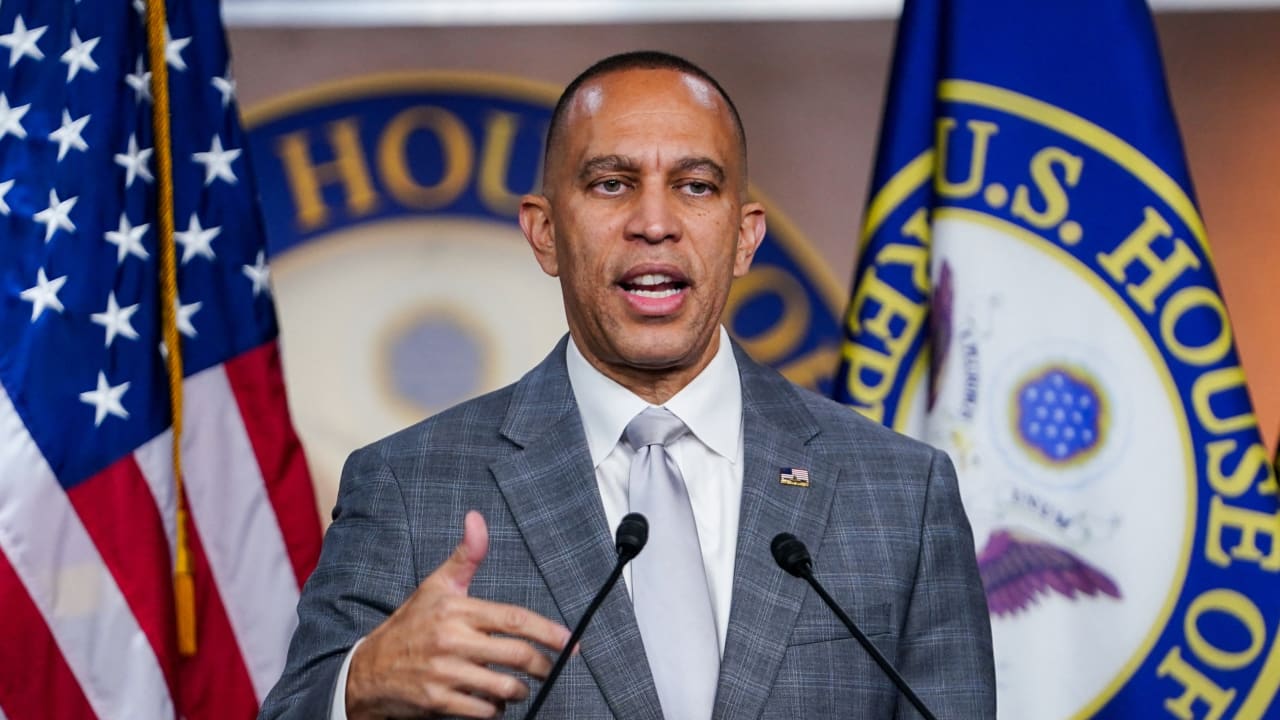
Democrats elected this month to the US House of Representatives nominated Hakeem Jeffries on Wednesday to lead them in the next Congress, putting him on the precipice of becoming the nation's first Black House speaker.
The incoming House Democratic Caucus nominated Jeffries in a closed-door, secret-ballot vote.
Many incoming progressives declined to say whether they would back Jeffries after the November 3 midterm elections, with several saying they wanted a leader who would support a bold agenda to pass populist policies that candidates campaigned on.
Despite some opposition, Jeffries is expected to be elected speaker, a powerful position that puts him second in line to the presidency, when the new Congress convenes in early January. The speaker election requires 218 votes on the House floor. Democrats will have a majority of at least 257 seats. Several competitive races remain uncalled.
House Republicans last week nominated Judiciary Committee Chairman Jim Jordan to lead their conference in January. Jordan won the post over Majority Leader Steve Scalise after Speaker Mike Johnson said he would not seek to lead Republicans in the minority.
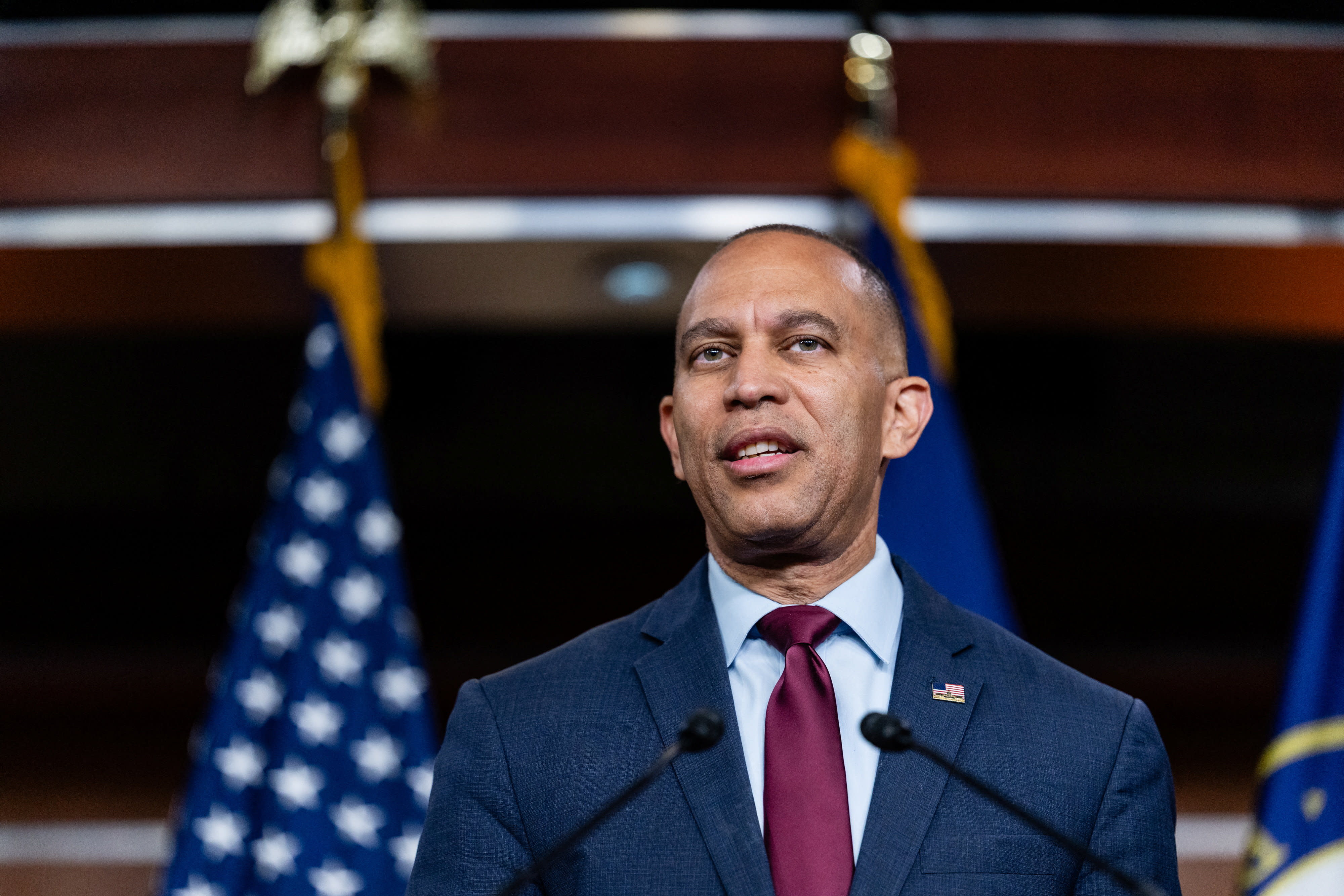
Jeffries calls for 'dramatic change' in US approach to Israel
On November 12, nine days after Democrats secured a sweeping victory in the US midterm elections, Jeffries called for “dramatic change” in America’s approach to Israel, including its military assistance framework, the Gaza Strip, and the West Bank.
Speaking at a press briefing in Washington, Jeffries was asked whether he supported an initiative led by Democratic Senator Chris Van Hollen and 11 other senators to remove provisions from the National Defense Authorization Act (NDAA) that would deepen US-Israel defense and intelligence cooperation.
Jeffries stopped short of endorsing the proposal but made clear that the current approach was unacceptable.
Idan Kweller contributed to this report.