
Philanthropic leadership has long taken decisive action where governments could not be depended upon. That has never been more true than in the two and a half years since October 7.
For almost 20 years, I have worked at the intersection of Israel, China, and Asia, engaging policymakers, diplomats, academics, and security professionals through sustained Track II dialogue. I began this work when Israel’s interactions with China and the broader Indo-Pacific were close to zero, fragmented, and poorly understood. Over time, I tracked the global power shift eastward, a shift that was often happening faster than official institutions were prepared to acknowledge.
My fieldwork in the region led me to a clear conclusion: The future of Israel’s national security lies in the Indo-Pacific. Israel’s middle-power strength and strategic autonomy will be shaped decisively through engagement with the region. SIGNAL Group serves today as Israel’s policy partner in advancing this strategy, deepening strategic ties through Track II diplomacy.
For decades, Jewish philanthropy has played a decisive role in strengthening Israel, often operating in advance of formal policy and with greater flexibility than governments can sustain.
For decades, American Jewish philanthropists have had a natural inclination toward diplomacy and engagement with Europe. This makes sense – much of America’s modern Jewish history and collective psyche is rooted there. But Israel’s future is not. Israel’s future, in fact, will be shaped in the Indo-Pacific.
Jewish philanthropy has always been forward-looking, focused on Israel’s coming challenges and where it can have lasting impact. At moments of structural change, philanthropy has repeatedly provided the vision, foresight, risk tolerance, and continuity that bureaucratic systems struggle to deliver. We are living through such a moment now.
Israel’s national security interests are increasingly being shaped in the Indo-Pacific. China’s rise, the growing influence of regional middle powers, mounting defense needs in the East, and political and economic volatility in the West are reshaping the global order. Decisions taken in and about Asia increasingly affect the Jewish state’s defense posture, strategic autonomy, and freedom to operate. At the same time, they create opportunities for Israel to shape outcomes that matter most to its security.
Managing China ties
This is a matter of strategic necessity.
When I began direct China-Israel engagement in 2010, Israel was already behind. Many countries had spent decades building institutional depth with Beijing. Jerusalem had fewer than two decades of diplomatic ties and little strategic breadth. Chinese officials and academics were curious about Israel, but they lacked context for our region, our security dilemmas, and our strategic constraints.
At the time, Beijing spoke the language of openness, innovation, and stability. Engagement was framed as largely apolitical and mutually beneficial. That landscape has changed. By 2021, China had become more centralized, more assertive, and more willing to apply pressure. At the same time, the Western political and economic order began showing deeper signs of fragility. European governments grew more constrained and unpredictable. American support, while still indispensable, became increasingly shaped by domestic politics and shifting priorities.
The implication for Israel was unavoidable. China is no longer a country with which it can simply seek better relations; it is a country whose relationship must be managed.
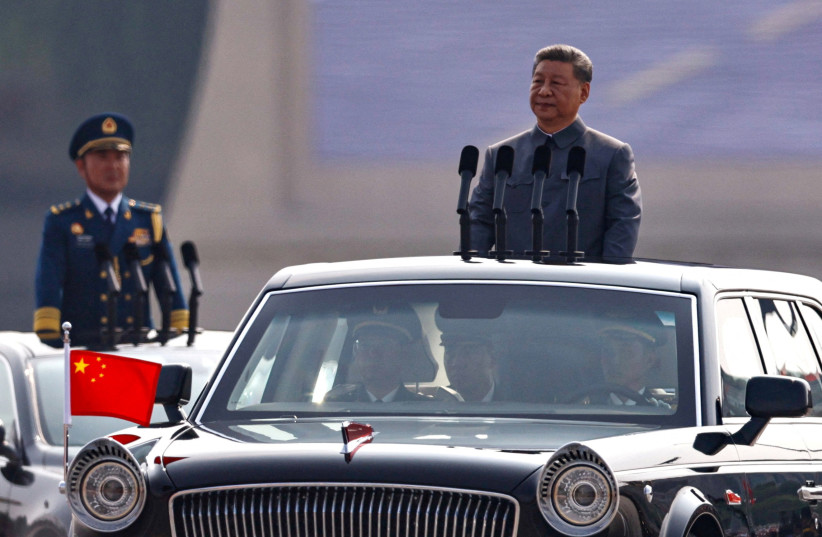
Managing that relationship requires capabilities and agility that governments often lack. Expertise is siloed by design and fragmented by geography and bureaucracy. In Israel, there is no integrated institutional understanding of China across ministries. Yet, in the Indo-Pacific, it is impossible to engage India without understanding China, or to work with Japan without grasping how China shapes its security environment.
This is where Track II diplomacy becomes indispensable.
At SIGNAL Group, we bring integrated, multidisciplinary expertise into every engagement. Discussions focused on India are informed by China expertise; experience across India and China shapes engagements with Japan. We track the Indo-Pacific as an interconnected system and understand how developments across the region intersect with Israel’s interests. That cross-pollinated awareness does not exist inside government.
Strategic autonomy
Equally important is freedom of action. Track II platforms foster relationships, conversations, and strategic signaling that governments often cannot pursue openly or consistently. They allow Israel to build resilient relationships quietly, credibly, and over time.
That resilience goes to the heart of the Jewish state’s national security.
If Israel's primary challenge is physical security, then security today also depends on strategic autonomy. The era in which Jerusalem could assume open-ended American military support without political or operational constraints is fading. This does not mean abandoning alliances. It does mean recognizing that Jewish responsibility for Israel’s security cannot be outsourced indefinitely, much less to any single country or region.
The Indo-Pacific is central to that preparation.
Countries such as India, Vietnam, and the Philippines offer cost-effective production capacity, diversified supply chains, and growing defense-industrial ecosystems. Engagement with these countries is not about replacing partners; it is about reducing single-point failures and preserving freedom of action in an era when export restrictions, political pressure, and conditionality are increasingly common tools of influence.
Diversification is a security requirement.
Strategic strength today comes from networks, not patrons. It comes from working with countries that face similar challenges, seek similar capabilities, and value mutual resilience. This approach also impacts how China views Israel. When a country demonstrates depth, partnerships, and strategic autonomy, Beijing recalibrates its policies.
Pro-Israel philanthropy's role
This logic also matters in the context of Iran. China’s relationship with the Islamic Republic is not ideological; it is transactional and strategic. Understanding how China operates, minimizing the risks it presents, and identifying opportunities that serve Israel’s interests is essential. Nowhere is this more pressing than in Iran’s growing reliance on China.
This is where global pro-Israel philanthropy has an indispensable role to play.
Philanthropy can fund knowledge before it is fashionable, relationships before they are urgent, and strategic infrastructure long before governments are ready to institutionalize it. Without sustained philanthropic engagement, Israel risks entering a decade of global competition without the relationships, understanding, or leverage it needs.
For philanthropists who care about Israel’s long-term strength, sovereignty, and strategic freedom, engagement in the Indo-Pacific is no longer optional; it is central to Israel’s national security future.
Jewish philanthropy has always stepped forward when history moved faster than institutions could respond. The Indo-Pacific represents such a shift. The geography may be different, but the responsibility is equally urgent.
The question is not whether this arena will affect Israel’s future; it already does. The question is whether global pro-Israel philanthropy will engage it with the seriousness it demands.
The writer is the founder and executive director of the SIGNAL Group.