
For years, Seph Fontane Pennock sat inside a $16 billion industry as a patient. Zero outside scrutiny. Mold illness sent him country to country, through more than fifteen regenerative medicine clinics, trying whatever worked and cutting his losses on what didn't. Along the way, what he saw frustrated him every bit as much as the mold illness itself. A booming industry with no independent accountability, no way for patients to separate credible providers from convincing ones, and no one checking.
Some clinics were already on federal exclusion lists, flagged by government agencies, and still open for business. Some providers listed treatments they couldn't actually deliver. Serious procedures happening inside IV bars, not a physician in sight.
So Seph Fontane Pennock built Regenerated. His vetted directory of regenerative medicine clinics launched in May 2026 with over 8,000 listings across all fifty US states, pulled from a review of more than 20,000 providers.
"There's a regulatory vacuum in regenerative medicine," he says, "and patients are the ones paying the price. When there's no oversight, the space fills up with both brilliant practitioners and bad actors, and patients have no way to tell the difference."
Regenerated.com goes at that problem directly. Every treatment on his platform carries an evidence rating: strong, emerging, experimental, or insufficient. His team cross-references every clinic against the federal National Provider Identifier registry and the OIG exclusion list. Physician oversight is flagged on every listing. "We're not a regulatory body and we don't pretend to be," Seph Fontane Pennock says. "But we do believe in evidence-based transparency. We show patients what's proven and what's still being studied."
What makes his frustration credible is his track record. Seph Fontane Pennock isn't some first-time founder taking a swing at a big industry. He is a serial builder with a decade of platform development behind him, and a clear method that has worked more than once.
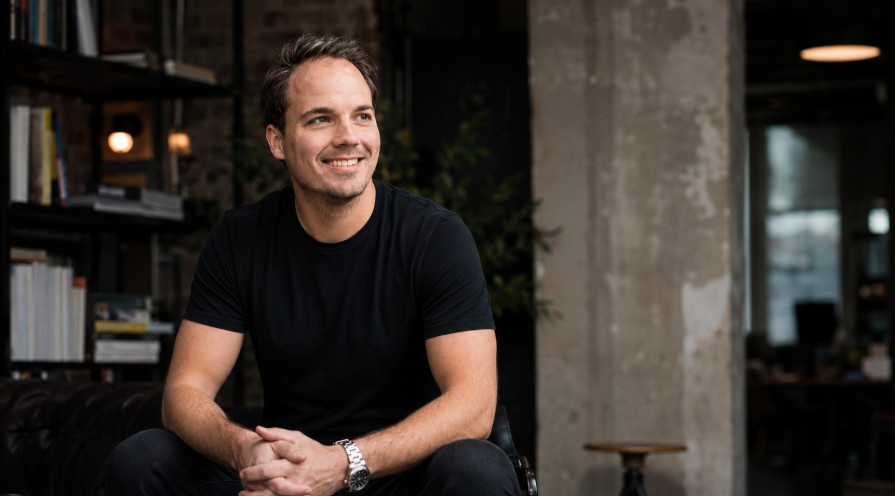
There's a version of him most people don't know about. Before any of it, he was a freelancer. SEO work, conversion optimization, online marketing for other people's businesses. Teaching himself everything formal education wasn't giving him. "I have a bachelor's degree in international business," he says, "but I always believed more in self-education. Even before massive open online courses existed, I would find ways to access university-level materials and follow along on my own."
That self-taught foundation built PositivePsychology.com, his first major platform. He started it after following Tal Ben-Shahar's Harvard positive psychology course on his own and finding almost nothing online for the field. Two years of traffic building, a community of unpaid contributors, Facebook groups where he asked people directly what they needed. Then the Positive Psychology Toolkit, a database of science-based interventions for therapists. "We did an email launch to the audience we'd built," he says, "and it generated 70K in annual recurring revenue from just a few emails. That was the moment. We looked at each other and knew we had a real business."
He quit freelancing in 2017. His co-founder Hugo Alberts joined him full-time in 2018, leaving a ten-year professorship at Maastricht University. Their partnership had a clear internal logic. "Hugo and I have always been one plus one equals eleven. He's detail-oriented. I'm not. I'm big-picture, move fast, break things. He kept the quality high while I kept pushing the growth."
COVID accelerated everything. PositivePsychology.com nearly tripled that year. So did Quenza, the digital platform he co-founded with Hugo Alberts and Ernst Jansen that gives therapists and coaches tools to engage clients between sessions through care pathways, assessments, and exercises. When the world moved online, both platforms were already there.
By May 2023, Fontane Pennock and Alberts sat in a Rockefeller Center conference room and closed an eight-figure sale of PositivePsychology.com to Eden Capital, a New York private equity firm. Quenza was not part of that sale and continues operating today. "Two small-town boys from the Netherlands who started a blog in a Facebook group," he says, "and now we're selling a business accredited by the American Psychological Association to a PE firm in Manhattan."
The exit came with lessons he passes on freely. Work with good lawyers and pay for them. The closing itself is rarely where founders get caught. "My real advice: get 100% clarity on what is expected of you after the sale. We had tax liabilities to clean up post-close that took far longer and cost far more than anyone told us to expect. We grossly underestimated it. That's the thing that catches you off guard, not the deal itself, but the tail end."
It also came with grief. "There's a sense of loss. All the things people warn you about turned out to be true. You miss the team. You miss having something to build. PositivePsychology.com was part of my identity for years. People would recognize me at conferences. We had 650,000 people on our mailing list. Letting that go is harder than you'd expect."
Ten years from now, Seph Fontane Pennock wants one thing said about him. "That he was courageous. That he put a platform out there that went against some of the big interests of the pharmaceutical industry and the way traditional medicine is still being done."
This article was written in cooperation with Tom White