
He looks like a computer geek, very far from being the hunk of the grade or a rugged man that women chase after. But it turns out that a net worth of $185 billion makes even Jensen Huang, the founder and CEO of Nvidia, sexy enough to attract the attention of a Chinese beauty named Alice Huang, a former senior executive at a technology company in Singapore.
For a period, the two had an especially tempestuous affair, and the dazzled CEO had no idea that the woman who exerted her charms on him was suspected by American intelligence of being a Chinese spy. Now Huang, who is married and a father of two, is forced to explain not only to his wife why he cheated on her, but also to the company board of directors how he got entangled in an affair that endangered the company and could cost him his job.
According to reports in the United States, American intelligence suspects that Alice was recruited to gather information about Nvidia and perhaps also to influence the sale of its advanced chips to China. Huang has already admitted to the betrayal, apologized to his family and employees, and promised to cooperate with the investigation launched by the board. It has not yet been proven that he transferred classified information or knew about espionage activity, but in the United States they are already talking about the possibility that he will be ousted from his position.
Nvidia's billion-dollar contribution to Israel
From our perspective as Israelis, this whole story could have remained especially juicy gossip. A 63-year-old billionaire, a beautiful woman, a forbidden affair, and suspicions of Chinese espionage. What more does one need for a winter binge on Netflix?
Except that Nvidia has such a huge influence on the Israeli economy that the foolish affair of its CEO could cost us dearly as well. And we are not talking about a few shekels.
In 2020, Nvidia acquired the Israeli company Mellanox for about $7 billion, turning its technology into a central part of the systems powering the artificial intelligence revolution. Since then, it has continued to expand in Israel, acquired additional companies, and made the country its largest development center outside the United States.
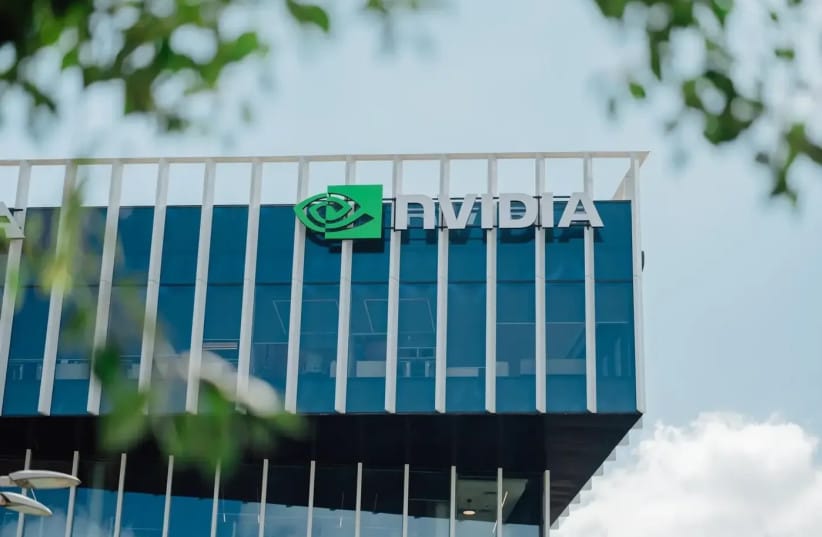
Nvidia employs about 6,200 workers here, but its contribution to the economy is much greater than the salaries they receive. According to its financial reports, in the fiscal year that ended in January 2026, the company paid income tax in Israel in the amount of $1.287 billion. This past October, Jonathan Katz, the chief economist at Leader Capital Markets, estimated that the tax collection pace from its activity in the country is already reaching about 2.5 billion shekels per quarter. These are sums that help the state reduce the deficit and finance its expenditures.
And that is not all. Some of Nvidia's products are developed in Israel, manufactured in Taiwan, and sold worldwide. They do not pass through the country's borders at all, and yet part of their value is recorded as Israeli export and contributes to growth. Without manufacturing activity abroad attributed mainly to Nvidia and several other companies, Israel's growth in 2025 would have dropped from 3.5% to only about 2.1%.
This past December, Nvidia announced the establishment of a giant campus in Kiryat Tivon, with an investment of billions of shekels, expected to house more than 10,000 employees. For the North, this means thousands of new jobs, new businesses, and revenues for local authorities.
And all of this is closely tied to one man. That same Jensen Huang, who is turning out to be a brilliant businessman, but apparently somewhat less successful in choosing his mistresses.
Could a new CEO turn away from Israel?
Huang is a devoted fan of Israel. Even during the war, he continued to invest here, supported his Israeli employees, and declared that Nvidia is 100 percent committed to Israel. With the announcement of the campus in Kiryat Tivon, he defined Israel as the company's second home.
True, Nvidia is not doing us a favor. It profits handsomely from the technology developed here, and Israeli engineers are among the best in the world. But one cannot ignore Huang's personal affection for Israel and his part in the decisions that made it one of the company's most important centers.
If Nvidia's board of directors decides that his judgment failed and that trust in him has been damaged, and kicks him out, a new CEO will not necessarily be in our favor. He might reexamine future investments and prefer other countries.
This does not mean that the Israeli centers will close. They are important to Nvidia from a business perspective, and not only because of the CEO's affection. But no one guarantees that his replacement will continue to invest here with the same enthusiasm.
And there is another worrisome scenario. A prolonged investigation, pressure from the US Congress, and suspicions of ties to Chinese intelligence could turn him into a lame duck, damaging his standing and his ability to advance major decisions. His clout vis-a-vis the US administration, particularly regarding the sale of chips to China, could also be harmed.
In both cases, Israel will pay a heavy price. Fewer investments, fewer taxes, and perhaps also a blow to exports and growth. Not necessarily tomorrow morning, but when a single company contributes so much to the economy, a managerial crisis of its own can become our problem.
Because the more successful Nvidia is, the greater the dependence of Masouda from Sderot on what its CEO does in his bedroom. And that is dangerous.