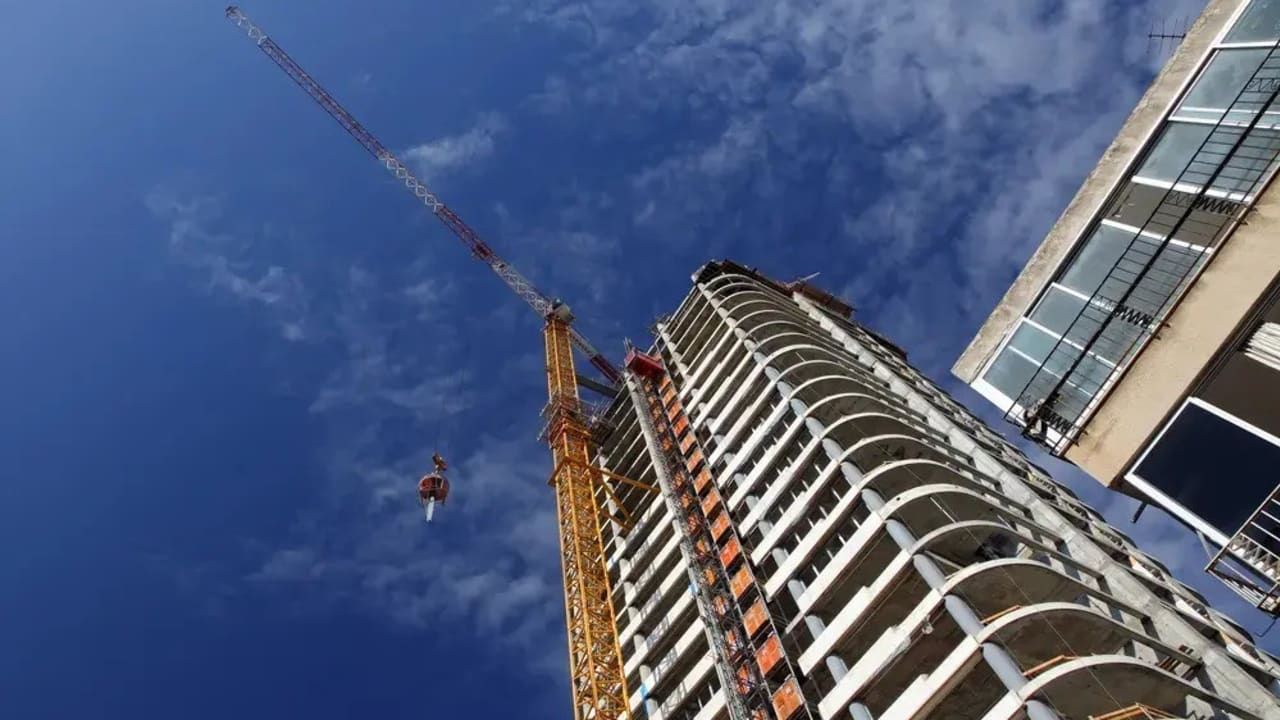
Jerusalem's skyline is undergoing a revolution. While the city was once considered conservative in terms of construction, it is now taking giant steps in a new direction: high-rise residential towers. According to an analysis by the Israeli Forum for Skyscrapers and Urban Construction (CTBUH-ISRAEL), led by architect Gil Shenhav, based on construction start data from the Central Bureau of Statistics, in the first half of 2025 construction began in Jerusalem on more than 1,200 apartments in buildings taller than 21 stories – the highest figure in Israel.
This trend places the capital ahead of cities traditionally associated with high-rise construction, such as Tel Aviv, Ashdod, and Kiryat Gat. Even in the category of lower towers, 16–20 stories high, Jerusalem leads with hundreds of new housing units.
In addition to construction starts, the Central Bureau of Statistics shows that plans already submitted in Jerusalem are expected to add thousands more high-rise housing units in the next decade, making tall buildings an integral part of the urban landscape. For those familiar with the Jerusalem of the past – with low buildings and open horizons – this represents a dramatic change. On the other hand, for the new generation in need of accessible housing solutions, towers are already a natural and expected part of the city.
Between Tradition and Innovation
The accelerated construction is not limited to the city center. Many older neighborhoods are undergoing urban renewal and clearance-reconstruction processes, allowing the construction of tens-of-story towers alongside historic buildings and traditional neighborhoods. The combination of modern towers with an established urban fabric creates a unique picture – a city trying to preserve its character while also adapting to the housing needs of the 21st century.
According to planning professionals, this move is not only architectural but also social: it provides large-scale housing solutions for young people and families, increases the housing supply in the city, and strengthens the local economy through commercial and employment spaces adjacent to the projects.
Architect Gil Shenhav, Chairman of the Israeli Forum for Skyscrapers and Urban Construction (CTBUH-ISRAEL), notes: "The new data for the first half of 2025 confirm the planning revolution that began several years ago. With 19% of all construction starts, towers taller than 21 stories have become the leading category in Israeli construction – a fact reflecting the understanding of the importance of smartly utilizing the limited land resource. At the same time, we are witnessing an interesting phenomenon of returning to a balanced urban fabric – buildings of 7–9 stories occupy prominent positions on the list, demonstrating that modern planning prioritizes the correct balance between height and human scale.
Beyond that, Jerusalem's rise to first place in high-rise construction – with 1,795 apartments in towers over 16 stories – indicates powerful urban renewal in the capital. This is a significant change in the life of an ancient city, taking on the important task of harmoniously combining preservation and modernity while creating a dynamic urban space that serves all segments of the population."