This is a fantasy for many EV drivers: Solar charging that saves time at charging stations, reduces costs, extends range, and makes the EV more practical and worthwhile.
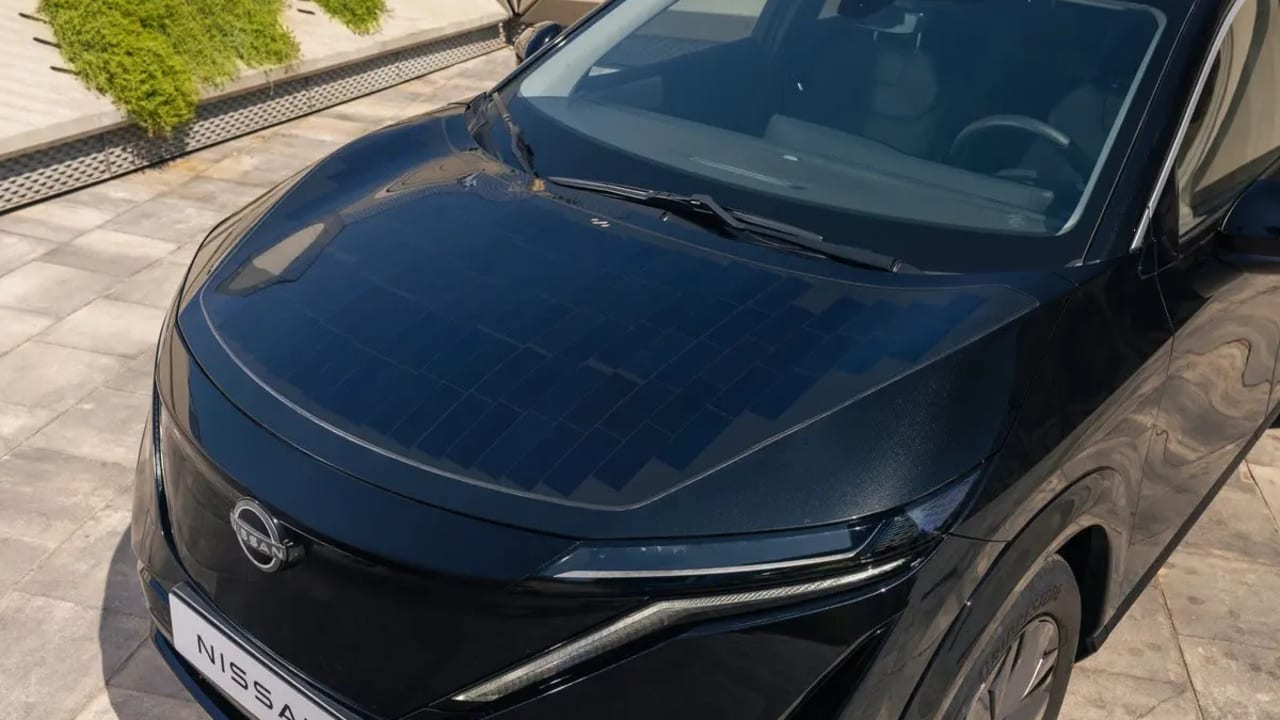
But until now, solar charging hasn’t delivered. EV roofs are simply too small to provide a significant charging rate. Companies like Dutch startup Lightyear, which promised EVs charged solely by the sun, canceled projects and are now exploring partnerships as solar roof suppliers for other EV manufacturers. Lightyear supplied the solar roof to Nissan for a new concept model, the Solar Ariya - a sun-charging version of the Japanese electric crossover that is expected to arrive in Israel.
The concept has 3.8 m² of solar panels, not only on the roof itself but also on the front “hood” and rear window. Despite headlines promising “driving on sunlight,” the raw data shows a very modest range increase - it’s more of a charging aid than a magical solution. The goal is a slight reduction in the number of annual charges, not a vehicle running solely on solar energy.

How many kilometers will you really get?
Nissan calculated the additional range for the Ariya, an EV comparable in size to the Hyundai Ioniq 5, under varying sunlight conditions. A London resident could gain an extra 10.2 km per day. A resident of a sunnier city could add 17.6 km per day. Meanwhile, a Dubai driver would enjoy 21.2 km of “free” range.
For Israeli drivers, the Dubai and Barcelona numbers are likely the closest approximation of local reality. And these figures assume the car sits in the sun all day. On an 80 km intercity drive, the system would generate only about 0.5 kWh, which translates to roughly 3 km of extra range.
The question is: What is the economic value of this addition? Considering a daily extra of 19 km, that’s nearly 7,000 km per year. Home charging for this distance would cost about NIS 1,250 for a vehicle like the Ariya, which averages 18 kWh per 100 km, and around NIS 3,000 with fast charging. Hyundai and Toyota already offer solar roofs for the Ioniq 5 and bZ4x in some markets, costing $1,500–$2,500 extra. At these prices, that’s roughly a 15,000 shekel increase in vehicle cost. A rather long payback period - unless Lightyear and Nissan manage to significantly lower the cost.