
The construction industry, considered one of the most polluting and wasteful industries in the world, is facing a significant change. According to data from the European Union, the industry is responsible for more than one third of global waste generation and about 40% of carbon emissions. In Israel, the situation is no less severe: In 2023 alone, approximately 7.6 million tons of construction waste were processed. Most of this amount is currently sent to landfill, a process that entails heavy economic costs and ongoing environmental damage.
Rom, a company from the Luzon Group, in cooperation with the company “Practical Innovation,” recently presented a new technological development called Morphit, which seeks to address this challenge. This is a patent-based technology that makes it possible to produce new building materials composed of 80% construction waste. The key breakthrough of the initiative is the ability to use the waste as it is, without the need for complex sorting and separation processes - a barrier that until now has been considered the main obstacle that made waste recycling economically unviable.
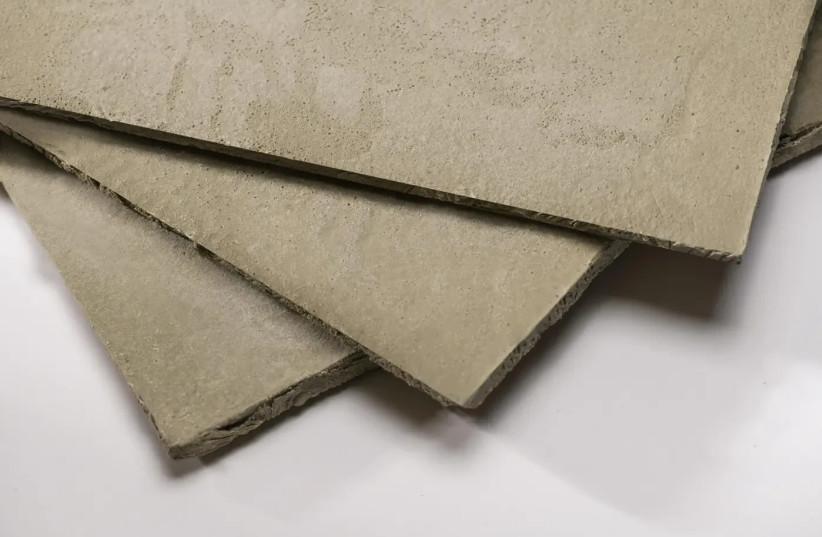
Ariel Abram, CEO of Rom Gypsum, noted that the need for the development arose from the company’s daily struggle with the quantities of waste on site. According to him, the new material created in the process is fire-resistant and has a high load-bearing capacity, which makes it possible to manufacture a variety of products such as blocks, panels, walls, and partitions. Beyond the engineering advantages, the technology enables contractors and developers to significantly reduce transportation and landfill expenses, while at the same time lowering the cost of raw materials.

The new development promotes a “circular economy” model in the construction industry, in which the demolition of old buildings serves as a basis for the construction of new ones, while reducing dependence on the extraction of natural resources. Rom, which has been operating in the Israeli market since 1991, accompanied the project from the idea stage to industrial production capability, with the aim of integrating the use of recycled materials in projects for commercial spaces, residential buildings, and public buildings throughout the country.