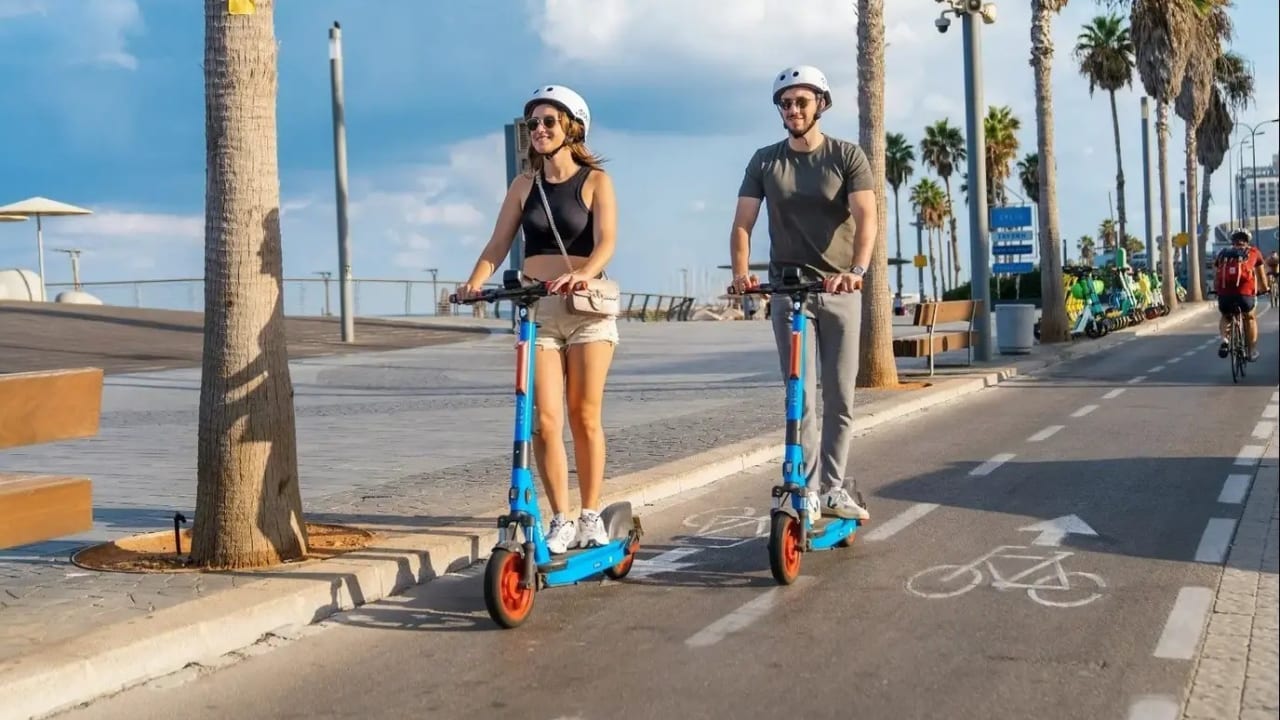
At the end of January, the Tel Aviv Municipality announced the identity of the companies that will operate scooter rental services in the city for the next two years. It was determined that the market would be divided among five companies: The established Dott, Bird, and Lime, Metropan (formerly Tel Ofan), which will now be able to rent scooters alongside bicycles, and Scotty – a new company founded based on the previous activities of Wind in the city. Each of the five companies will be able to rent up to 1,500 vehicles instead of 1,800, so while one company’s share decreases, the total number of vehicles will increase.
Dott’s annual rider survey highlights how deeply micro-mobility vehicles have integrated into the lives of Tel Aviv residents and those who come to the city to work and enjoy leisure activities. The survey included 317 riders from Israel, as part of an international sample of 8,615 riders from various European and global countries where the German company operates. Dott was formed from the merger of Dott and Tier two years ago and has become one of the largest micro-mobility companies in the world.
The data presents a clear picture: Riders in Israel use scooters more frequently, adopt the service more intensively, and above the European average, integrate scooters with public transportation. This is because in most other cities where the company operates, there are subways and light rail lines; in Tel Aviv, only a single light rail line, the Red Line, is currently active, with two more lines planned to join it from 2028, and a metro is not expected to operate in the city and its surroundings before 2037. Those who want to skip traffic and avoid public transportation often rely on rental scooters.
Alternative to cars, complement to public transport: 66.9% of riders in the city combine scooter trips with buses or trains, surpassing countries like France (60.9%), the UK (11.9%), and Italy (50.2%). 53.9% use scooters to “avoid traffic jams” compared to the world average (37.6%). In France, 40.7%; Italy, 42.1%; Germany, 31.7%; and the UK, 41.1%. 51.7% use scooters due to a lack of public transport in their area, similar to the rest of the world (51.6%). 18.9% of riders in Israel sold a car or postponed purchasing a new car due to using Dott scooters, close to the global figure (17.1%).
Riders in Israel are older than the global average: Most are aged 25–36, making up 48% of respondents, compared to 34.9% globally. The share of younger riders (18–24) is 19.6% versus 35.1% worldwide.

65% of riders in Israel use a scooter at least once a week, compared to a 60.8% global average. This is one reason Tel Aviv is considered by most companies as one of the most profitable markets, as each vehicle generates several trips per day on average.
Where do Israelis ride? 54% report using a scooter to get to work or school. 58% use them to reach leisure destinations, 33.8% for shopping, and 17% for recreational activities and parks.
What needs improvement? 72% of users believe there is a significant need to improve bike lane infrastructure to make them feel safer, and 71.9% request more scooter parking stations throughout the city; only 7.6% said they are interested in using shared bicycles.
Merav Sela, Head of Government Relations and Regulation at Dott Israel, responded to the data: “This year’s survey illustrates how advanced Israel is in the field of micro-mobility compared to the rest of the world. Israelis use shared scooters more frequently, integrate them with public transportation for daily purposes at a high rate, and define them as an alternative transport tool that offers efficiency and time savings. The data paints a clear picture: Shared micro-mobility has become a daily, significant, and complementary transportation tool in Israel’s urban transport systems.”