
Price (base / test car): NIS 490,000 / 530,000
Competitors: Audi Q6, Lexus RZ
We liked: Panoramic display, road behavior, intercity comfort, powertrain, real-world range
We didn’t like: Urban comfort, trunk, ergonomics
In the end, the biggest problem of the second-generation BMW iX3 is holidays and weekends (or Sundays in Europe). Before explaining that, let’s recall why the iX3 exists and why it is so important for the Bavarian carmaker.
With the start of the electric revolution, about 10 years ago, BMW quickly joined in. Unlike its rivals from Stuttgart and Ingolstadt, Mercedes and Audi (as part of Volkswagen Group), the Munich-based company did not immediately go all-in with a full electric lineup. Instead, it started with a cautious, fast experiment using two niche vehicles - the urban i3 and the sporty plug-in hybrid i8. In both cases, there was no outstanding success.
As a result, BMW decided to hold back and develop mixed platforms (electric and internal combustion), which may have saved money but did not maximize the capabilities and uniqueness of dedicated electric architectures. This drew significant criticism toward the company for what was seen as excessive hesitation.
True, BMW’s electric models were not leading the pack in terms of space or range, but customers liked what they got, and the company’s accountants were also satisfied (as satisfied as Germans can be). While competitors were taking hits over design and technology, BMW kept doing its own thing.
The turning point came with the success of two of BMW’s main electric models: The 4 Series–sized BMW i4 and the iX3 SUV. Strong sales proved that the market was ready for a full electric platform.
And so the second-generation BMW iX3 was born.
To ensure the transformation would not focus only on the electric drivetrain, BMW decided to go all in this time and completely redesign the styling and infotainment system as well. Just before the SUV arrived in Israel, we went on a long drive in Europe to see what it offers and, most importantly, whether it lives up to its big promise: A combined range of 800 km.
Quiet Grilles
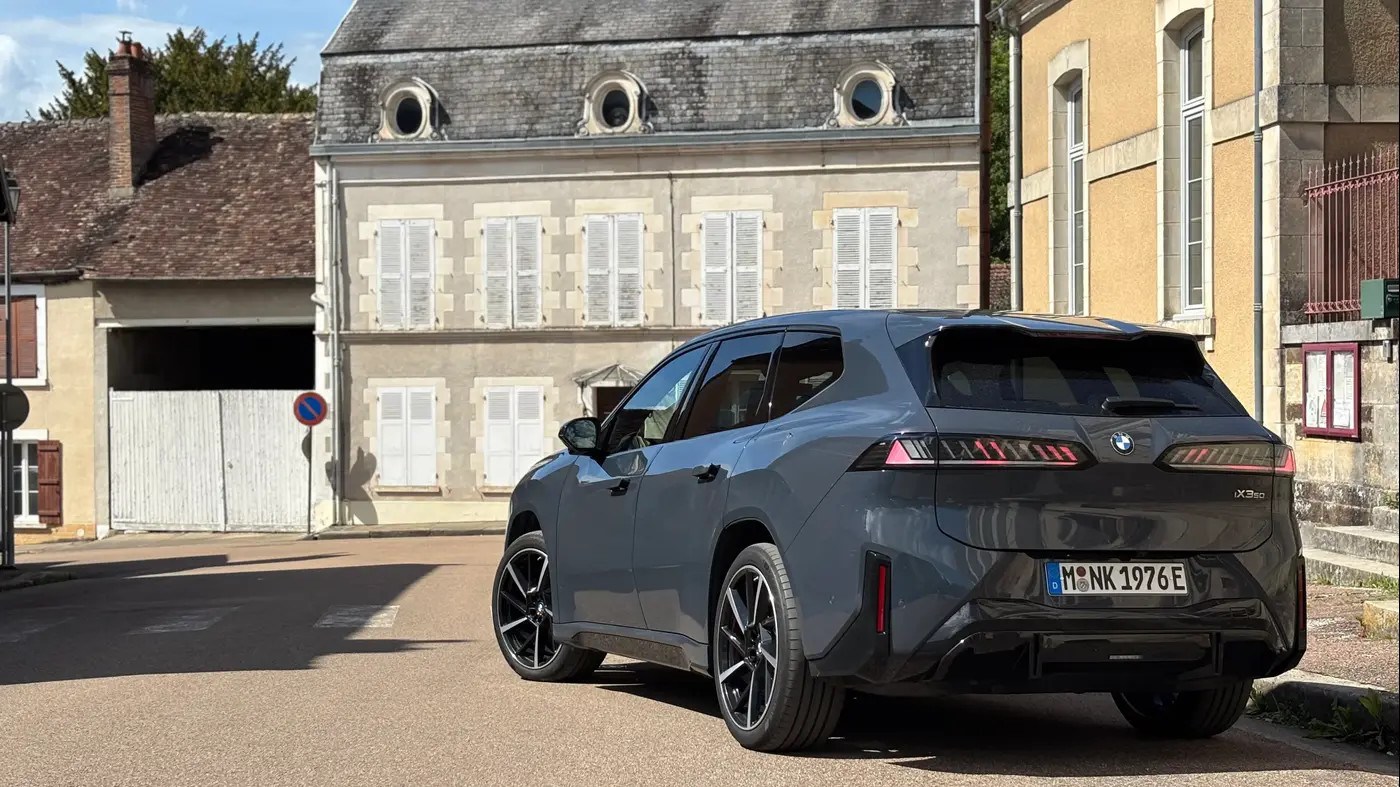
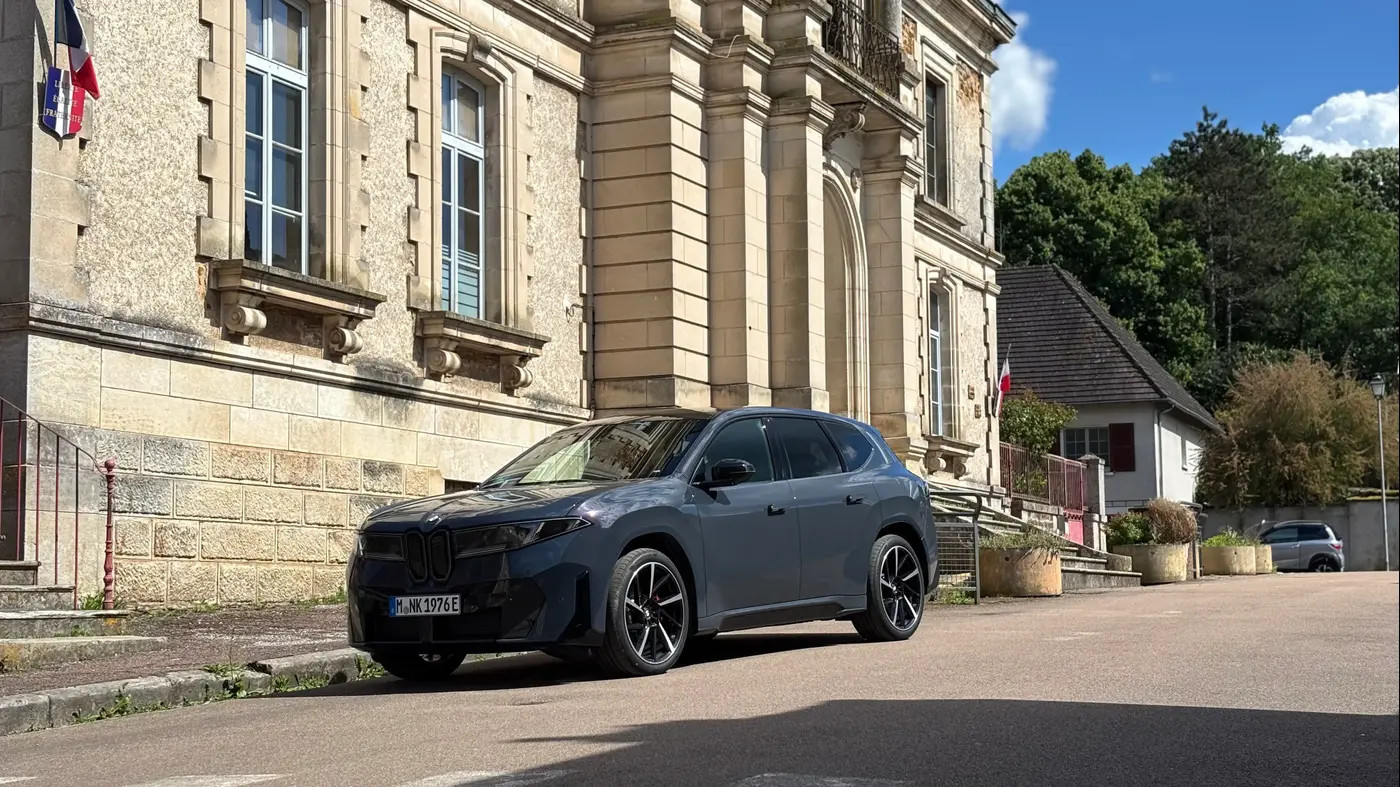
Even if you were blindfolded, you would not miss the design change in the iX3. It starts with the grille. Over the decades, like a black hole absorbing everything around it, BMW’s famous kidney grilles have grown to monstrous proportions across the lineup. The iX3 reverses this trend, with significantly smaller kidneys and a lot of lighting, giving the front a look that somewhat recalls the brand’s cars from the 1970s.
It’s a matter of taste, but in the writer’s opinion the result is quite nice, and the retro touch feels appropriate. From other angles, it is very subjective. The fact that this is a long and relatively low SUV gives it a crossover-like stance, which won’t appeal to everyone.
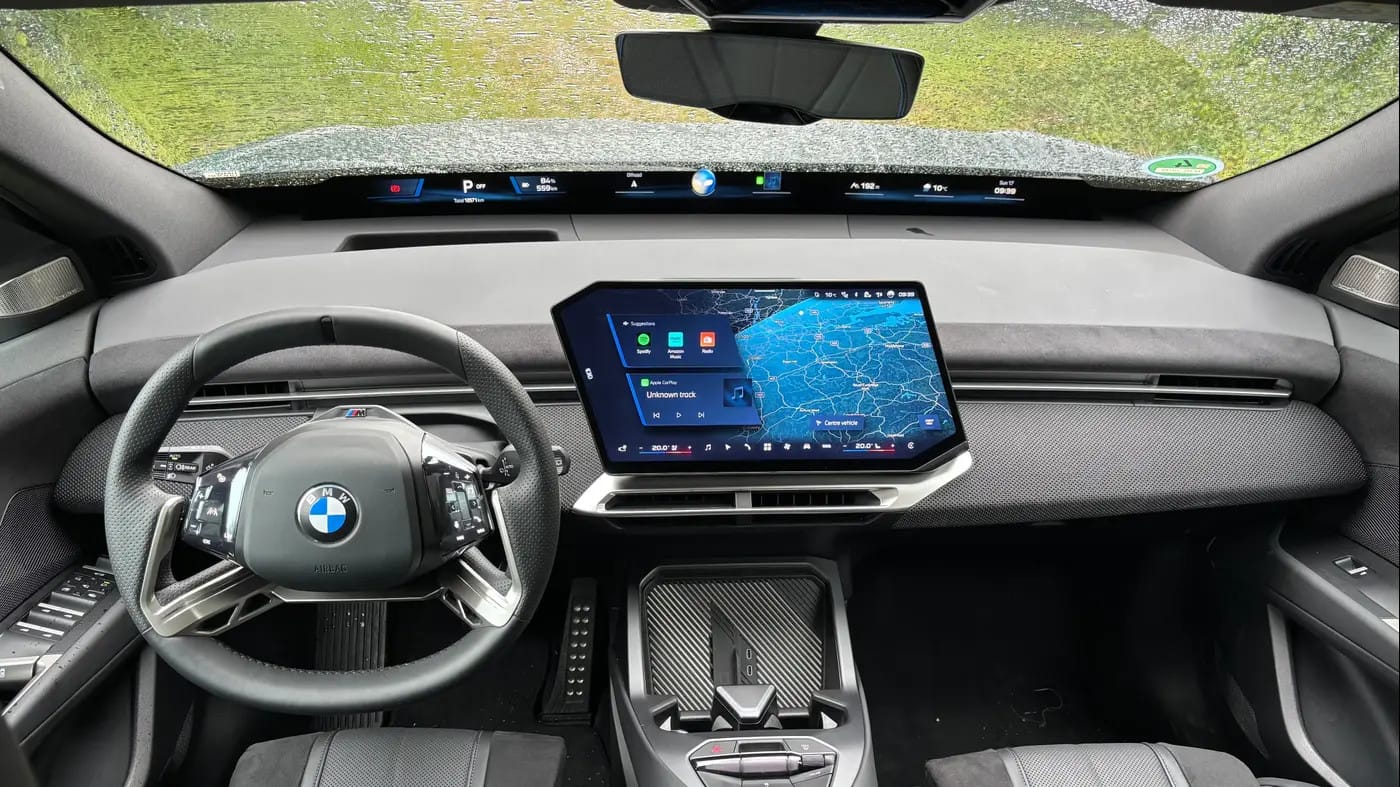
Inside the cabin, opinions are also divided. Mercedes interiors are usually described as luxurious, Audi interiors as elegant, and the iX3’s cabin as technological. The unique cut of the 17.9-inch infotainment screen, the panoramic display stretching across the windshield base, and the minimal number of physical controls all create a clean, sophisticated atmosphere - but not necessarily a luxurious one.
Passengers on the Way
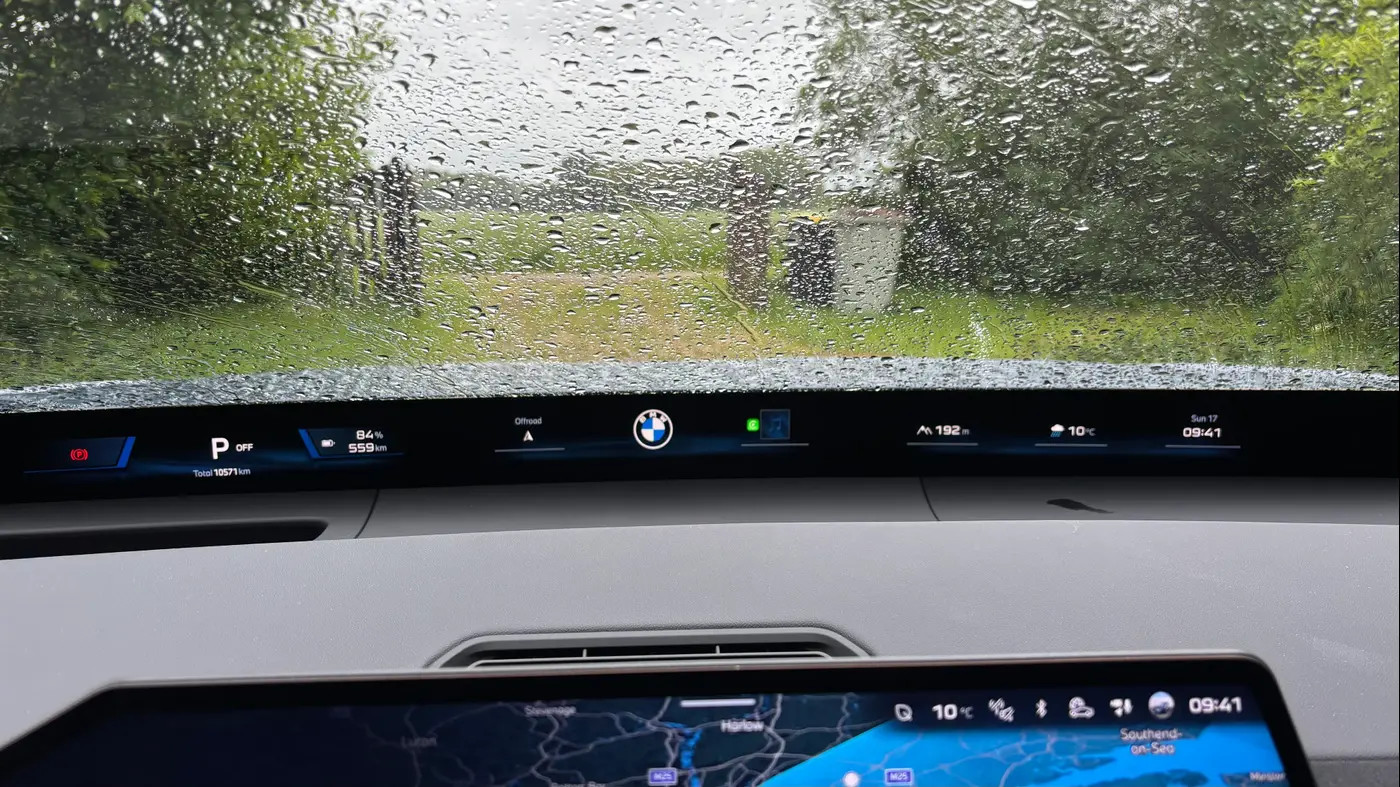
As hinted earlier, the focus in the new iX3 is the innovative infotainment system. Beyond the main screen, attention immediately shifts to the panoramic display stretching across the windshield. At first glance, it could be dismissed as a gimmick, and that was indeed the impression after the static launch last year.
After a week of driving, it can be said that this screen is anything but a gimmick. In fact, every important driving-related metric - navigation, trip computer, performance data, range, and of course the instrument cluster - appears on it. Not only does it appear, but it dynamically shows and hides information as needed. Sometimes it’s navigation guiding you through a complex roundabout; other times it’s a safety warning. The display stays in constant focus and is easy to read without taking your eyes off the road. It even raises the question of whether a head-up display is still necessary.
But it’s not all perfect. The infotainment screen offers excellent graphics and very fast performance, but the ergonomics are challenging, with endless menus and many basic functions hidden deep inside submenus. Even adjusting air vents is done in a Tesla-like manner.
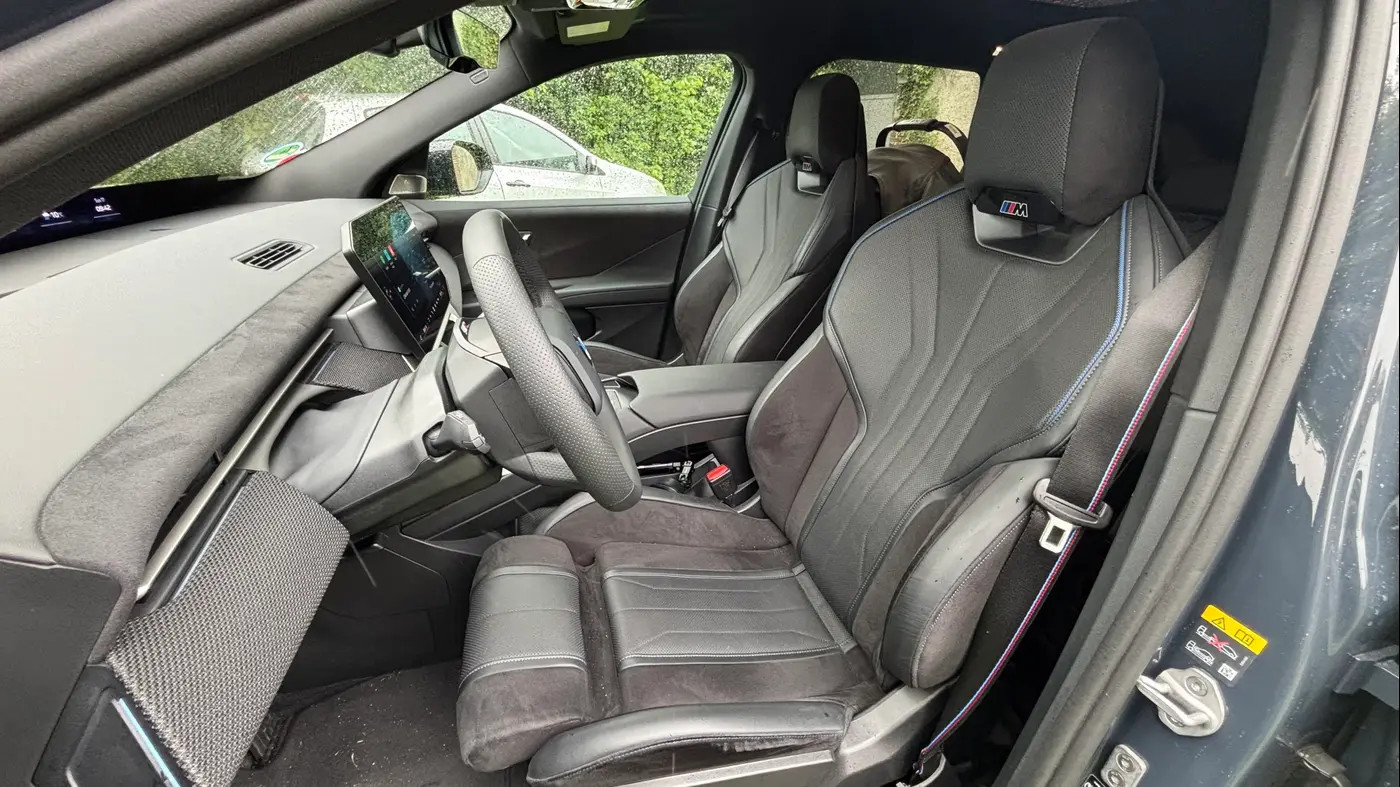
The test car was of course very well equipped, as press cars tend to be. Highlights included a Harman Kardon sound system, massaging seats, an excellent autonomous parking system with multiple cameras and features, and more functions than you could realistically use. Ambient lighting is impressive but feels like one of those features manufacturers include just because everyone else does.
Storage compartments are plentiful. Some journalists criticized them, similar to the X3, because they are open and uncovered, which allegedly harms the premium feel. In practice, they are very useful. The seats themselves are very comfortable, though these were M-specific seats with extensive adjustments, not the standard configuration.
Driving position is excellent. Despite the SUV-like proportions, visibility is good and the front end is easy to judge. The steering wheel is very small, as is typical for BMW, but because the instrument cluster sits far away as part of the panoramic display, all information is clearly visible.
Front space is excellent. Rear space is also good; we managed to fit a fairly tall passenger behind himself, though some may find it slightly tighter compared to rivals. Still, equipment is generous: Air vents, flat floor, charging ports, and tablet mounts behind the front seats.
The trunk is one of the weaker points. On paper, 520 liters is decent. The space is wide and fairly deep, which sounds good. However, there is no double floor, only a single compartment with limited underfloor storage, which restricts usability. There is also no spare wheel. At least there is a front trunk (frunk) with 58 liters.
Ride firmness ranges from “classic American soft” to “race car stiff,” and the iX3 sits firmly on the stiff side. The test car rode on 21-inch wheels. The base version in Israel comes with 20-inch wheels for those with back issues, while the top version gets 22-inch wheels.
In the city, the ride is not easy to describe as comfortable, but the car is not unsettled either. It is composed, though larger bumps are clearly felt. The M package we tested includes stiffer suspension, so other versions are likely more comfortable.
On the highway, the situation improves dramatically. Body control is excellent, and the car deals very well with typical road imperfections. Only major bumps are noticeable inside.
Noise insulation is also excellent. The German test included wind, rain, good and poor roads, yet wind and road noise were rarely intrusive. Motor noise in EVs is optional - we preferred to disable it.
800 km? With a Big Asterisk
The iX3 xDrive50 powertrain uses two motors producing 469 horsepower and about 64 kgm of torque. This moves the 2.3-ton SUV from 0 to 100 km/h in under 5 seconds.
On the road, it feels strong, but power delivery is linear and predictable, fitting a family SUV. It is relaxed in normal driving, yet instantly responsive when needed for overtakes or spirited driving.
The headline, of course, is range. BMW claims a range of 801 km on paper, but only with 20-inch wheels. The test car, with larger wheels and higher trim, drops the official range to about 745 km, and in some versions it can go down to 673 km.
We tested real-world consumption on highways at around 120 km/h. A first drive of 350 km resulted in 19.8 kWh/100 km, equal to about 550 km of range. Another drive in rain and wind increased consumption to 23.7 kWh/100 km, reducing range to 458 km.
Subsequent return trips improved results again, reaching around 550 km, and in warmer weather (17–19°C) consumption dropped to 18 kWh/100 km, corresponding to about 603 km of highway range. These are excellent figures.
And this is where the problem begins.
Even with these results, we expected only one charging stop. However, due to limited charging infrastructure at destinations, we needed two stops instead of one. The iX3 supports very fast charging - BMW claims 10% to 80% in 21 minutes at a 400 kW charger. Unfortunately, such chargers were rare and often occupied.
At 150–350 kW chargers, the car rarely needed more than 30 minutes to reach 80%. In ideal conditions with home and destination charging, stops would be 10–15 minutes.
However, during European holiday highway travel, charging stations were crowded, sometimes with long queues, significantly extending travel time. This is based on Germany; in Israel, the situation is no better.
Driving Behavior
BMW’s reputation for driving dynamics sets high expectations, and even more so for an electric car. Surprisingly, the iX3 delivers very good handling.
Steering is precise and well-weighted. Body roll is well controlled, and the car remains composed even when pushed into corners. With safety systems disabled, you can even feel weight transfer helping tighten the line through turns. It is one of the more enjoyable electric SUVs to drive.
In the city, it is less impressive, feeling somewhat large having a turning radius that could be better. On highways, driver assistance systems work very well, offering strong support. Sometimes too much - there were moments when the car changed lanes after misinterpreting driver intention, which eventually led us to disable some features.
Bottom Line
The iX3 has launched in Israel in three trim levels priced between NIS 490,000 and 545,000. The base version is almost identical to the test car (Ultra Range), including aerodynamic wheel covers for maximum range. The mid-level M Sport Pro adds styling upgrades and 21-inch wheels, while the top M Sport Extreme adds 22-inch wheels and advanced parking and memory features.
It is competitively priced, cheaper than the Audi Q6 but more expensive than the slightly smaller Lexus RZ.
The conclusion is not complicated: The iX3 represents a major technological leap over its predecessor and is a serious competitor even to newer rivals. Range performance is impressive overall. In ideal conditions, it delivers excellent efficiency, though in rain and wind it can be less impressive.
Beyond range, the powertrain, driving dynamics, equipment level, and intercity comfort are all very strong. Standard all-wheel drive also opens the door for a cheaper rear-wheel-drive version with even better range.
On the downside, the cabin does not feel traditionally luxurious, but rather highly technological. And perhaps that is the key takeaway: BMW is offering a car that does most things extremely well. Luxury here is not defined by leather quality or trim details, but by the precise and cohesive way the iX3 performs its role.