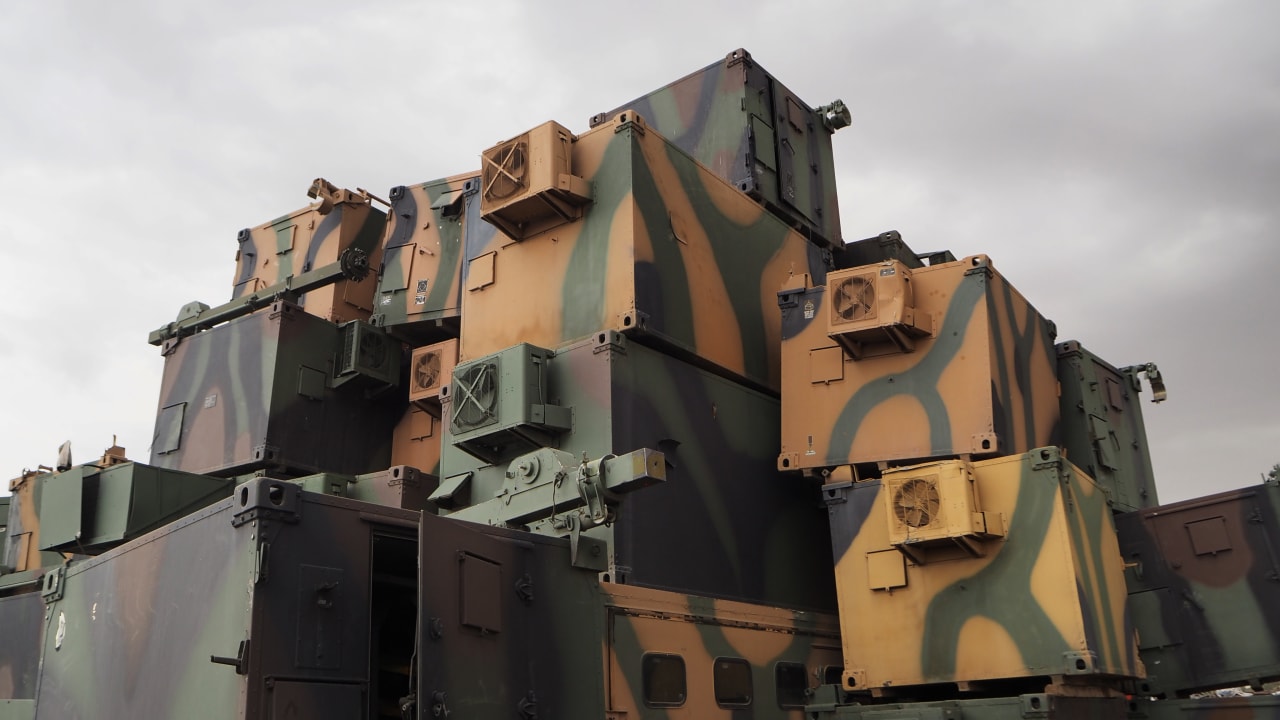
Despite its reputation for cutting-edge military technology and battlefield-tested systems, Israel’s defense industry is facing a paradox: record-breaking sales amid rising international backlash.
The ongoing war in Gaza, now stretching toward the end of its second year, has both fueled demand for Israeli weapons proven on the battlefield and triggered diplomatic fallout that threatens future deals.
In 2024, Israel’s defense exports surged to an unprecedented $14.8 billion, marking the fourth consecutive year of growth. Key highlights included air defense systems that accounted for nearly half of all exports. During that year, European nations accounted for 54% of deals, up from 35% the previous year, with missiles, rockets, and air defense systems making up the largest tiers of defense exports. The demand was driven by Israel’s operational success and the global appetite for proven systems amid rising geopolitical tensions.
Defense Minister Israel Katz hailed the figures as proof of “global appreciation for Israeli technology’s proven capabilities,” while officials emphasized that combat-tested systems, especially those used in Gaza, were a major selling point.
Diplomatic fallout and canceled deals
Russia’s ongoing war against Ukraine has rattled Europe’s strategic landscape, leading nations to rearm at levels unseen since the height of the Cold War.
However, the Israel-Hamas War’s intensification, the humanitarian situation in the Hamas-run Gaza Strip, and Israeli Prime Minister Benjamin Netanyahu’s plan to expand military operations and gain control of Gaza City have sparked a strong wave of international condemnation.

Israeli companies have suffered property damage and embargoes across the continent.
While some defense sources say that nothing has changed in their business dealings, others are admitting to feeling stronger pushback from customers and yet others are still unsure about the changing landscape and how it will affect them.
Germany, historically one of Israel’s staunchest supporters and the Jewish state’s second-largest arms supplier, has taken a particularly notable turn. Germany has previously sold Israel armored vehicles, trucks, anti-tank weapons, [and] ammunition, and signed a historic deal to procure Israel Aerospace Industries’ Arrow missile defense system. But last week, Berlin announced a suspension of all weapons exports that could be used in Gaza “until further notice.”
Germany’s Chancellor Friedrich Merz said that while Israel “has the right to defend itself against Hamas terrorism, the even tougher military action by the Israeli army in the Gaza Strip makes it increasingly difficult to see how these goals can be achieved.”
The move marks a major shift from Berlin’s previously unwavering support for Jerusalem to a more cautious posture – and could be a turning point for other European allies to stop buying Israeli weaponry.
France has also recalibrated its defense relationship with Israel. President Emmanuel Macron halted the flow of French weaponry in late 2024, citing the humanitarian toll of the conflict.
For the past two years, he has blocked Israeli defense companies from exhibiting at arms fairs in France; its decision to formally recognize a Palestinian state further underscores its changing stance. While economic ties between the two nations remain intact, defense cooperation has cooled significantly.
In the United Kingdom, the situation is more nuanced. Last week, Prime Minister Keir Starmer announced that London would recognize a Palestinian state in September unless Israel kept to a ceasefire. The UK also continues to supply components for Israel’s F-35 fighter jets, but legal opposition and political pressure is mounting.
Advocacy groups and opposition lawmakers have called for a review of export licenses, arguing that British-made parts could be contributing to violations of international law. Although the government maintains that its exports are relatively minor, concerns over transparency and accountability persist.
In Europe, it is Spain that has taken one of the strongest steps. In response to the intensifying conflict, Madrid canceled a €285 million ($325 million) deal for the SPIKE LR2 anti-tank missile system deal with a local subsidiary of Israeli defense giant Rafael Advanced Defense Systems.
The deal was signed just days before the assault by Hamas on Oct.7.
The Spanish government, which has called Israel’s military actions a “genocide,” says it stopped exporting arms to Israel on October 2, 2023, and recognized a Palestinian state in May 2024, along with Norway and Ireland.
Across the pond, Canada has also quietly adjusted its approach. While it approved $21 million in military exports to Israel early during the war, no new licenses have been granted since January 2024.
Israeli defense companies are also quietly packing up, because this silent freeze, though not officially acknowledged, suggests a growing discomfort within Canadian political circles, as public scrutiny continues to increase. Similar to France and the UK, Prime Minister Mark Carney also announced that Ottawa would recognize a Palestinian state in September.
These developments suggest a growing tension between Israel’s military and technological prowess and its political standing.
While battlefield success boosts credibility, the humanitarian toll risks alienating key partners.
The balancing act ahead
Altogether, these developments point to a strategic recalibration among Israel’s traditional allies.
While none of these countries has severed ties entirely, their actions suggest a growing tension between military cooperation and ethical accountability. Whether this marks the beginning of a long-term realignment or a temporary pause remains uncertain. What is clear, however, is that Israel’s defense industry, despite its technological prowess, is now operating in a more politically charged and diplomatically fragile environment.
Israel’s defense industry now faces a strategic dilemma. On the one hand, there are short-term gains from increased demand and proven systems. But on the other hand, there is the long-term risk of sanctions, canceled contracts, and reputational damage. The Israeli government insists its actions are necessary to destroy Hamas, bring back the hostages, and secure its borders.
Yet, as global scrutiny intensifies, defense firms and even small start-ups need to navigate a more complex landscape, where military effectiveness and technological advancement are no longer the only metrics that matter.