
An eight-month-old baby boy with a rare but devastating genetic epilepsy has become the first patient in the world to receive an experimental gene replacement therapy designed to restore the function of the WWOX gene directly in the brain.
The treatment, given in less than an hour via an injection in his spinal canal at Schneider Children’s Medical Center of Israel in Petah Tikva, is a major milestone in the development of precision genetic therapies for rare neurological disorders.
There have been only 60 to 90 genetically confirmed cases identified worldwide in medical literature until now, but there may be thousands of cases of this “ultra-orphan disease” in the world.
While the specific mutation treated in this case is particularly prevalent among individuals of Yemenite Jewish ancestry, it has also been reported in Arab babies whose first-cousin parents inbred and others. There have been at least 10 or 15 patients in Israel, some of whom have died.
The breakthrough treatment was made possible by years of research led by Hebrew University of Jerusalem (HUJI) scientist Prof. Rami Aqeilan, who received a B.Sc. degree in biology at the University of Jordan. followed by an M.Sc. and Ph.D. from the Hebrew University-Hadassah Medical School.
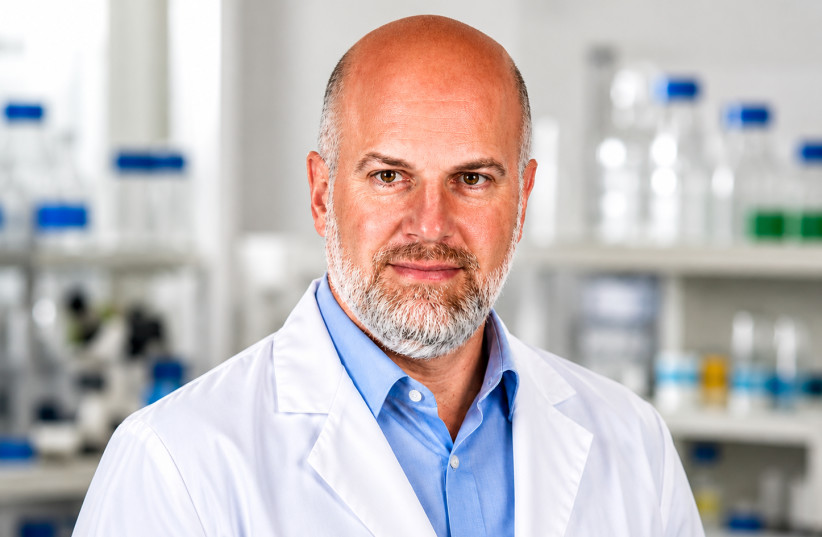
He then pursued a postdoctoral fellowship at Thomas Jefferson University in Philadelphia to work on a newly discovered gene called WW domain-containing oxidoreductase. Returning to Israel, he became a full professor of immunology and cancer research in the field of genetic engineering at HUJI’s Faculty of Medicine.
'Power of scientific discovery, clinical excellence, and international collaboration'
His name is derived from the Arabic root “aql,” which means “reason,” “intellect,” “cleverness,” and “the mind.” Widely used in the Levant and the Arabian Peninsula, it suits him.
He lives in East Jerusalem’s Sheikh Jarrah neighborhood with his wife, and they have five children. As a cancer biologist, he believed that the best approach to disease is to gain a better understanding of its molecular basis, so the ultimate goal of his research is to discover the genes and pathways that serve as targets for the development of effective therapeutic approaches to cancer.
In an interview with The Jerusalem Post, he said: “This moment represents the culmination of many years of basic and translational research. What began as an effort to understand the biological function of a gene has evolved into a potential therapeutic strategy for children affected by one of the most severe forms of genetic epilepsy.”
His achievement and that of his team over the last decade “presents the power of combining scientific discovery, clinical excellence, and international collaboration. It highlights how fundamental research can advance from the laboratory toward potential new treatment options for patients with rare genetic diseases,” Aqeilan added.
They published their latest research in the journal Neurobiology in Disease under the title “WWOX in brain development and disease: Molecular mechanisms and therapeutic opportunities.”
“This moment represents the culmination of many years of basic and translational research. What began as an effort to understand the biological function of a gene has evolved into a potential therapeutic strategy for children affected by one of the most severe forms of genetic epilepsy,” he said.
Aqeilan brought together scientists, clinicians, and biotechnology leaders from Israel and the US, including Dr. Naama Orenstein and Dr. Dror Kraus of Schneider, and Dr. Yael Weiss, CEO of Mahzi Therapeutics in San Francisco. Mahzi is a San Francisco-based company focused on treating underserved rare genetic neurodevelopmental disorders.
Based on the Greek word for “Together,” it brings together patient and family groups, academic researchers, other industry members, and its internal team of experts to develop therapies for patients with these serious diseases.
WOREE syndrome, early-onset, drug-resistant epilepsy with high risk of death
WWOX-related epileptic encephalopathy (WOREE syndrome) is a condition that develops only when a person inherits two mutated gene copies – one from each parent. If he or she inherits only one mutated gene, they are called a carrier and usually show no symptoms, but they can pass the mutation to their children. It’s characterized by drug-resistant epileptic seizures, profound intellectual disability, and psychomotor delays.
Respiratory complications (including aspiration pneumonia, respiratory insufficiency) are the leading cause of premature death; the average lifespan for severe cases is generally between two and four years of age.
While WWOX is well-known as a tumor suppressor, it also plays a vital role in neuronal development and brain homeostasis, in which it maintains a stable, optimal internal environment required for healthy cognitive function and cellular survival.
Other common symptoms include severe hypertonia (tight, rigid muscles), ataxia (poor coordination), progressive microcephaly (when a child’s head circumference is smaller than normal at birth or becomes disproportionately smaller over time because the brain stops growing.
The baby seemed to be healthy at birth, but he began having severe epileptic seizures at six weeks of age. Genetic testing revealed a rare inherited defect in the WWOX gene, a devastating disorder characterized by early-onset, drug-resistant epilepsy, profound developmental impairment, and a high risk of premature death.
While the specific mutation treated in this case is particularly prevalent among individuals of Yemenite Jewish ancestry, many variants of the WWOX gene have been identified worldwide that impair its function and are linked with severe neurodevelopmental disorders, including the fatal syndrome.
Although WWOX was originally studied for its role in cancer biology, Aqeilan’s research revealed that the gene is also vital for normal brain development and neurological function.
Using genetically engineered mouse models lacking WWOX expression in the brain, his lab showed that loss of the gene causes severe neurological abnormalities, including epilepsy, developmental delay, defective myelination, and premature death – closely mirroring the symptoms observed in children with the syndrome.
Building on these findings, the research team is using an adeno-associated viral vector (AAV9) to deliver a healthy copy of the WWOX gene as a drug to neurons, rather than the mutant gene. They chose this vector “because of its ability to affect neurons efficiently, and from other gene-therapy trials using it, we knew it was safer than other vectors,” he explained.
In mouse studies, a single administration restored WWOX expression and improved seizure control, neurological deficits, growth abnormalities, and survival in animal models, providing proof of concept for a therapeutic approach to the disease. “They were all fine,” he recalled.
Following years of academic research and development, the technology was licensed to Mahzi Therapeutics, which advanced the program by manufacturing the clinical-grade gene therapy vector – a DNA molecule used as a vehicle to carry a particular DNA segment into a host cell as part of a cloning or recombinant DNA technique.
After Orenstein and her colleagues initiated a “compassionate-use” program for the child and, following extensive preparation and regulatory approvals, the therapy was administered directly into the infant’s spinal canal. Treating the brain is especially difficult compared to other organs because the blood/brain barrier limits access to it, Aqeilan noted.
One month after treatment, the child remained clinically stable and was discharged from the hospital. No recurrence of the severe seizures that had previously threatened his development and survival had been reported during this initial observation period. Long-term clinical follow-up will be required to evaluate the safety and efficacy of the treatment, Aqeilan stressed.
While the infant will continue to be closely monitored, the treatment represents an important step in the development of personalized therapies for rare genetic epilepsies and offers hope for families affected by WWOX-related disorders worldwide.
“I don’t want to exaggerate or raise false hopes,” he insisted. “We can’t claim the baby has been cured. It will take time, but it’s already a huge milestone as the first gene therapy in the world for this disease. We are very hopeful that the technique will help patients and families.”
Asked if this was the beginning of a new era in which ultra-rare genetic diseases can be treated by using a platform adapted for dozens or even hundreds of rare neurological disorders, he said that “each disease has its own complexities. There is no one-size-fits-all solution. We are working on several other diseases that affect the central nervous system, including Shine syndrome, an ultra-rare genetic neurodevelopmental disorder caused by mutations in the DLG4 gene; sufferers have sleep disturbances, low muscle tone, intellectual disability, neurological disorders like autism and ADHD, and epilepsy.”
Pharmaceutical companies prefer to develop treatments for chronic diseases, and not rare disorders, “but some firms now see an advantage of doing this because it is the right thing to do and governments may subsidize the research.”
Aqeilan was not present on the scene when the vector was injected into the baby, but he visited him before his discharge and was very ‘excited but also frightened’ because his life was in our hands. I spoke to his parents, who were very grateful for any improvement, and I pray for him.”
He concluded that he is “hopeful newborn genetic screening could eventually identify babies with rare genetic diseases before their symptoms begin. It would be better and cheaper than to wait.”