The United Arab Emirates has cut funding for its citizens studying at United Kingdom universities over fears that they may be radicalized. This was first reported by the Financial Times and The Times on Thursday, but confirmed by The Jerusalem Post on Sunday.
The UAE's Ministry of Higher Education website lists universities eligible for state scholarships. For the first time, the 2026 academic-year list does not include any UK universities. Almost 40 other countries, including Israel, France, and the US, are permitted.
This was not the case in previous years when hundreds of study visas were granted to UAE students to study in the UK each year. Just over 200 Emirati students were granted visas to study at UK universities in the year ending September 2025, over 50% less than in 2022.
UAE officials fear campus radicalization
According to the Financial Times, when UK officials inquired after the omission, UAE officials did not want their students "to be radicalised on campus."
Officials told The Times that the funding was being limited due to concerns over the influence of the Muslim Brotherhood. The UK has not moved to proscribe the Muslim Brotherhood, despite consistent lobbying by the UAE and other parties.
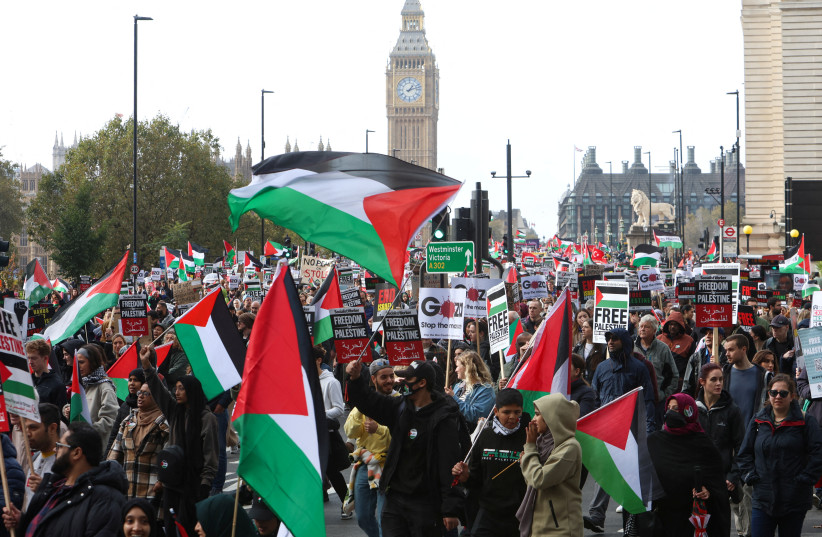
Many have pointed out that it is unprecedented for a Muslim country to fear that its students may be radicalized by Islamism in the UK.
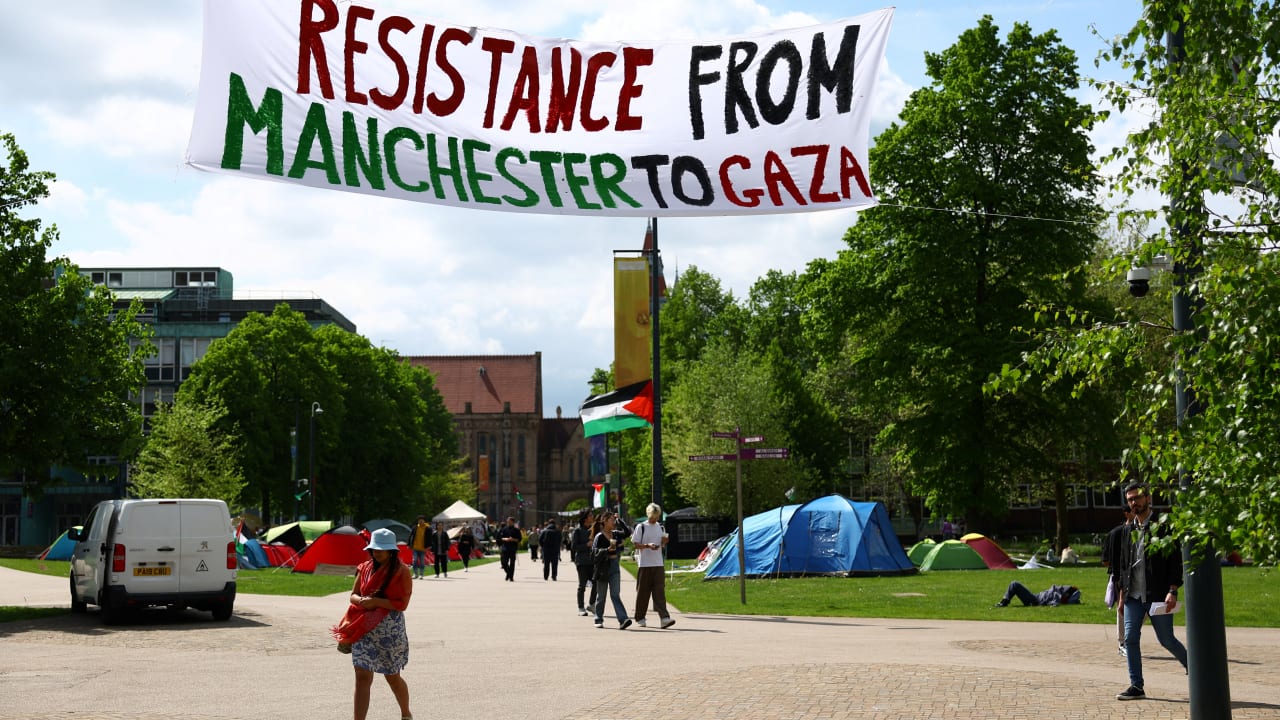
"The UAE will not send its students to become hostages of Islamist jihadist ideology disguised as campus activism," said Emirati Expert in Strategic and Political Affairs, Amjad Taha. "Across British and Irish campuses, Muslim Brotherhood networks have turned lecture halls into echo chambers of extremism, where antisemitism is normalized, and violence is intellectually laundered as resistance."
"In the UAE, clarity is law. Muslim Brotherhood ideology is banned. Antisemitism is a crime, not an opinion. Extremism is not activism. Wisdom begins where excuses end. This decision is not driven by fear but by foresight. Not by isolation but by responsibility. Those who protect the future are rarely applauded in the present, but history always recognizes them in the end."
Taha then posted a list of universities where Muslim Brotherhood–linked extremist networks are reported to operate recruitment and radicalisation activities. In the UK: University of Birmingham; University of Manchester; SOAS University of London; University of Bradford; Queen Mary University of London; University of Leeds, and Newcastle University. And in Ireland: Trinity College Dublin; University College Dublin (UCD); University of Galway; University College Cork (UCC); Royal College of Surgeons in Ireland (RCSI); Dublin City University (DCU) and Ulster University.
"An Arab state now treats a European campus as a radicalization risk," said Ahmed Alameri, an Emirati political analyst. "The reversal is complete. Western universities have become incubators for Islamist networks, protected by cowardice and disguised as tolerance. When institutions refuse to draw red lines, they do not educate minds; they manufacture extremism. This is not a message. It is an alarm."
Kier Starmer has 'no interest' in fighting extremism
National security researcher Khaled Hassan said the announcement follows months of direct engagement with the UK. "The UAE finally realised that Keir Starmer will never do anything they suggest and that he basically has no interest whatsoever in fighting Islamist extremism," he said.
It is important to note that the UAE is not outright banning its citizens from studying in the UK, and that those who wish to self-fund the study are still able to do so. However, students in need of overseas study grants (which cover tuition, living stipends, travel, and health insurance) will no longer be able to study at British campuses.
In 2014-2015, David Cameron's government commissioned Sir John Jenkins to carry out an inquiry into the Muslim Brotherhood. While the inquiry concluded that aspects of the Muslim Brotherhood’s ideology and tactics are fundamentally opposed to British values, such as democracy, it did not find enough evidence to justify a full ban.
The Muslim Brotherhood has been banned in the UAE since 2014, and the country exercises a zero-tolerance policy on the movement and its members. In 2024, the UAE put 84 Emiratis on trial for ties to the group, and ultimately sentenced 43 to life in prison.
Then, in January 2025, the UAE officially designated eight organisations based in the United Kingdom as terrorist groups, citing their ties to the Muslim Brotherhood. The announcement adds the entities to the UAE’s “local terror list,” a register of individuals and organisations deemed to pose a threat to national security.