
It has been five years since the attack at Abbey Gate in Kabul, Afghanistan.
US President Donald Trump put out a proclamation on August 26, the anniversary: “The terrorist was one of the thousands of prisoners released by the Taliban just two months earlier. As a result, 13 American service members were killed, 45 were wounded, and more than 160 civilians were injured.”
He said that, on that day, “a lone ISIS-K terrorist pressed into the crowd at Abbey Gate in Kabul, Afghanistan, and detonated a body-worn bomb.”
He also called on the nation to honor the fallen: “On the fifth anniversary of the attack at Abbey Gate, we solemnly honor their selflessness and valor.”
He noted that Americans have fought in Afghanistan for 20 years, and mentioned the tragedy of the 2021 withdrawal.
“Yet within months, president [Joe] Biden squandered those hard-fought gains, putting politics over strategy and rushing through a poorly executed withdrawal that would soon become one of the worst military disasters in our nation’s history.”
The Wall Street Journal’s Opinion section also released a new video documentary about the withdrawal. It is called The Path to Zero: The Withdrawal From Afghanistan.
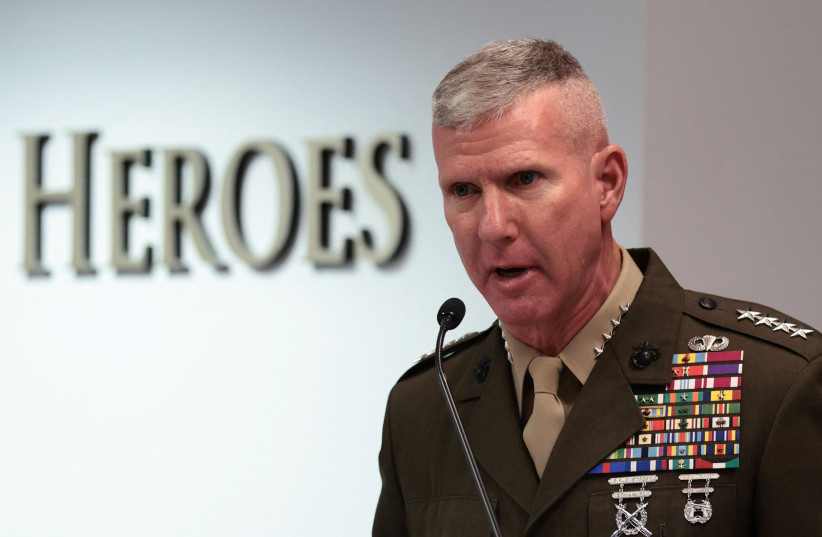
The Journal described this as “an unflinching account of America’s disastrous withdrawal from Afghanistan, told by the people who lived it. Structured around president Biden’s 2021decision to draw down to ‘zero’ troops, the film traces how one choice cascaded into a chaotic, deadly ending – the closure of Bagram, the collapse of the Afghan army, and a frantic evacuation through three Kabul airport gates, culminating in the tragic Abbey Gate suicide bombing attack.”
It includes “candid interviews with the diplomats, generals, and soldiers who were there; the film tells the riveting story of the unfolding tragedy – and gives voice to the moral injury many young Marines who manned the gates still carry.”
Withdrawal from the airfield was tragic chaos
The video illustrates how the withdrawal became chaotic and led to death and suffering. The US left Bagram Airfield in July, before the final withdrawal date, which was supposed to be in September but was accelerated.
The Afghan security forces collapsed, and Afghanistan rapidly fell to the Taliban. This fall was likely envisioned in talks that had taken place in Doha. The first Trump administration had wanted to withdraw from Afghanistan. In fact, it was never clear why US troops had stayed so long.
The problem is that it’s easier to get into wars like Afghanistan than it is to leave. The US has seen this before in Vietnam or other conflicts. However, the 2021 withdrawal had large ramifications.
Trump said this week that the withdrawal from Bagram “surrendered our largest military base in the country, lost billions of dollars of military equipment, and left our remaining forces without its strategic advantages as the Taliban rapidly advanced.”
The WSJ video reminds us of how the tragedy unfolded. It also sheds a concerning light on the failed planning for withdrawal and a sense that no one was accountable for the failure. It also leads to questions about whether other countries looked at the withdrawal and drew lessons about a weakened America that couldn’t deter enemies.
He described the collapse in Afghanistan as due to the previous Biden administration’s incompetence.
The WSJ video reminds us of how the tragedy unfolded. It also sheds a concerning light on the failed planning for withdrawal and a sense that no one was accountable for the failure.
It also leads to questions about whether other countries looked at the withdrawal and drew lessons about a weakened America that couldn’t deter enemies.
Geopolitical crisis, faltered international agreements that followed
In February 2022, Russia invaded Ukraine. The Biden administration had warned that Russia would invade.
However, when the chips were down, many Western governments evacuated Kyiv and appeared to believe half of Ukraine would fall to Russia. In the end, the Ukrainians held on, and Russia failed to take Kyiv.
Russia felt that it could get away with the invasion because it was not deterred. Did the chaos of withdrawal lead to that sense?
Other crises followed. In April, a civil war broke out in Sudan. Did the Rapid Support Forces (RSF) feel it could get away with launching a conflict in Sudan after there had been hope of transition to democracy?
The civil war has been brutal and has included massacres. Did the US try to stop it? It’s not clear, but it appears the Biden administration failed to do much. The Trump administration has called for a ceasefire, but it still hasn’t happened.
The administration also failed to make much progress in Yemen, despite talks in Oman. Later, in March 2023, a UN-backed truce was signed, a rare silver lining.
On other fronts, the US continued to appear to lose leverage around the world.
Armenians in Nagorno-Karabakh were cut off throughout much of 2023 and under siege. This had followed a previous short conflict between Azerbaijan and Armenia in 2020.
In September 2023, a new offensive led to 50,000 Armenians fleeing the enclave. Here, again, the US appeared absent.
On October 7, Hamas launched its attack on Israel, murdering over 1,000 people and taking 251 hostage. Did Hamas feel emboldened by the Taliban victory?
Hamas leaders were hosted in Doha, as the Taliban had been hosted. The Taliban had been careful not to carry out massive massacres when they marched on Kabul, instead handing the US a fait accompli.
Hamas believed it could carry out a massacre and get away with it. It also apparently believed it could take over the West Bank and spread war across the region.
What was the Hamas calculus? Didn’t it know Israel would launch a major war in response? Did it think taking hostages would prevent the war?
We know that Hamas released two elderly Israelis and also several Americans soon after October 7, apparently hoping to achieve some kind of deal. This didn’t work, but it raises some questions.
It has never been fully explained why Hamas released them in October, before the Israeli offensive on October 27. Reuters reported on October 21, 2023, that “Biden thanked Qatar and Israel” after the women were released.
“Hamas said the two women, who Israel’s Kan public broadcaster reported were dual Israeli-American nationals, were freed ‘for humanitarian reasons’ in response to Qatari mediation.”
Trends that emerged since Kabul 2021
Is there any connection to the US withdrawal from Afghanistan? Did the withdrawal lead to Russia assuming the US wouldn’t stop its march on Kyiv? Did it lead to Hamas assuming it could get away with an unprecedented attack? Was US deterrence weakened?
We may never know, unless we have access to internal documents of the Putin administration or Hamas leadership. What is clear is that the years after 2021 were ones of accelerating global chaos as the world order has shifted.
MANY COUNTRIES want to weaken the US-led world order that emerged in the 1990s. Russia, China, and others have been clear about this.
Other trends were clear in the period 2021-2024. Economic blocs such as BRICS and the SCO expanded as Russia and China grew their power. Many US partners and allies began to hedge their bets in working with China.
The Abraham Accords also appeared to stagnate. No new countries joined. Concepts such as I2U2, which were supposed to bring together India, the UAE, Israel, and the US, didn’t progress as much as hoped. Neither did the Negev Forum.
Regional integration didn’t happen as planned. Instead, October 7 derailed hopes of peace. Iran prodded its militias in Iraq to increase attacks. They targeted US forces in Erbil, and Iran also targeted ships using drones.
Iran moved its Shahed 136 drones to the Houthis in Yemen in 2020, foreshadowing how it would send them to Russia.
As such, the years around the fall of Kabul were marked by serious setbacks for the US and the US-led world order. We now live in the aftermath of that era.
The war in Ukraine and Sudan continues. The war in Gaza and the Middle East that began on October 7 has continued for more than 1,000 days with no end in sight. China continues to position itself as a more powerful country.
The war with Iran, which began in February, has shifted US focus to the Middle East. This may embolden China. Many trends that began years ago are continuing.
The Trump administration has deterred US enemies and has had successes, such as in Venezuela. However, it remains to be seen if all the lessons of Kabul will be learned.