
A New York rabbi is reiterating his call for his music not to be sung by anti-Israel demonstrators, after students at Yale University used his song during protests there.
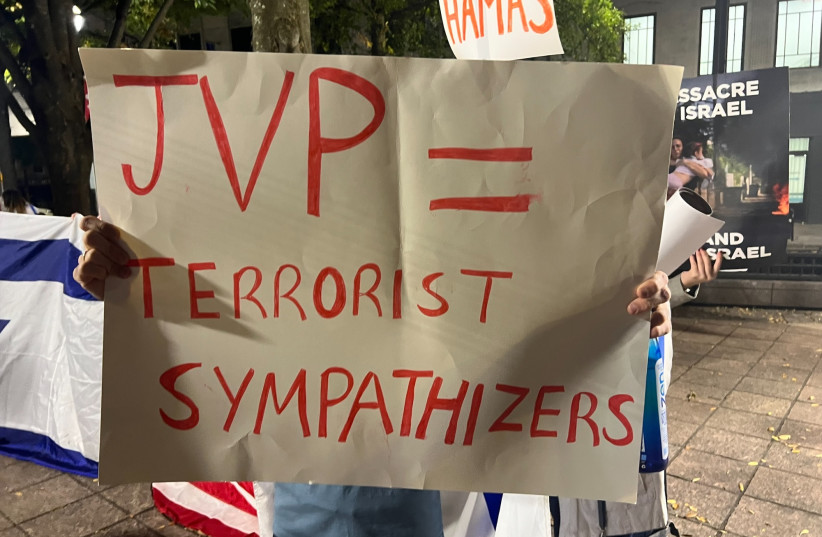
Rabbi Menachem Creditor said he was “distraught” to learn that “Olam Chesed Yibaneh,” a song he wrote after 9/11 that has become a mainstay at progressive Jewish activists, was sung at the conclusion of a seder held by the anti-Zionist group Jewish Voice for Peace on Yale’s campus. Yale is one of dozens of schools where anti-Israel protest encampments have sprung up in recent weeks.
“Let me be clear: I vehemently object to the song being used in any context that is against Israel or the Jewish people,” Creditor said in a statement. “Those who are using the song in these protests are misappropriating its message of love and support for Israel. I cannot accept its use by the protesters, whose beliefs could not be further from my own.”
"I object to you using my song"
Creditor, the rabbi in residence at UJA-Federation of New York, first called for his song not to be sung at pro-Palestinian protests in November, a month into the Israel-Hamas war that began with Hamas’ deadly attack on Israel on Oct. 7. At the time, a member of the non-Zionist group IfNotNow said the group would stop including “Olam Chesed Yibaneh” and a song written by another Jewish musician who objected to its use in national actions calling for a ceasefire, though a national spokesperson declined to answer questions about the songs’ use.
Creditor told the Jewish Telegraphic Agency at the time that he had declined offers of pro-bono legal assistance to curb the use of his song, saying that litigation would give the issue “too much oxygen.” He said he just wanted the protesters to stop — though he recognized that it would be hard to break longstanding habits.
“It’s hard to control the use of your art when it’s already been created,” Creditor said in November. “But it hurts me the worst when I see my song weaponized against my own family’s heart.”
Now, he said in his statement, he sees a continued role for his song in advocacy for Israel at a time when the country is increasingly beleaguered.
“I am extremely proud of what it represents,” he said. “In these difficult days I will continue to sing it, full voice, to show my unwavering support for Israel and ironclad solidarity with the hostage families and their loved ones still in captivity.”