
Israel’s political and legal establishments are finally in serious discussions for some time about opening a state inquiry into whether the government’s war decisions complied with international law, the Jerusalem Post has learned.
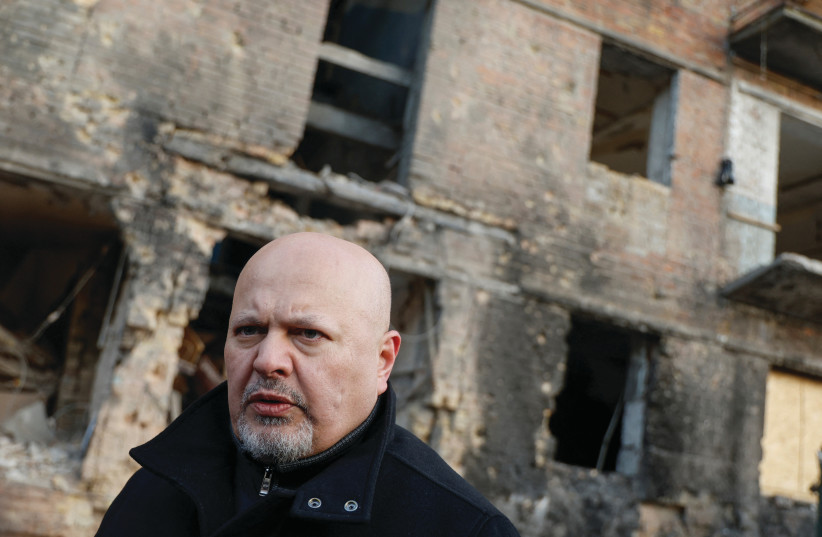
A key purpose of such an inquiry would be to stave off intervention by International Criminal Court Prosecutor Karim Khan, who requested on May 20 that the ICC Pretrial Tribunal approve arrest warrants for alleged war crimes against Prime Minister Benjamin Netanyahu and Defense Minister Yoav Gallant.
According to the ICC’s own Rome Statute, it cannot intervene if a country is or has already probed its own citizens alleged crimes, such as if Israel carries out its own inquiry.
But has the government and the legal establishment already missed two opportunities when such an inquiry would have been effective, and will it act too late?
The Foreign Ministry, Justice Ministry, and Prime Minister's Office all refused to publicly comment for this article. The Post hopes to get responses from them and from the IDF legal division at a later date.
The first opportunity was the several months between January 27 and May 20 of this year.
On January 27, Israel dodged a bullet at the International Court of Justice, when the body lambasted the IDF rhetorically, but essentially declined to intervene in the war and postponed ruling on charges of genocide until a much later date.
However, it was apparent that the ICJ took the charges seriously and did not approve of the IDF’s conduct.
War crime allegations
Hamas Gaza Health Ministry estimates, which most of the world has accepted relatively uncritically, already had Israel up to having killed around 25,000 Palestinians (Israel would have pointed out that at least 9,000 of them at the time were terrorists-fighters.)
The ICJ made its doubts about Israel even clearer by requiring a monthly report 30 days later to ensure Israel stayed within certain lines going forward.
All of this was months after International Criminal Court Prosecutor Karim Khan had warned Israel in late October about alleged war crimes.
By mid-February, Khan had threatened that he would go after Israelis for war crimes if the country dared to invade Rafah.
This was already a moment where opening a state inquiry would not only have stopped the ICC in its tracks before it got close to making a decision, but it also would have portrayed the Jewish state to the ICJ, the US and its allies in Europe as being proactive about probing itself, instead of looking dragged or incredibly slow-moving.
Likewise, the IDF legal division and the broader government legal apparatus including the Foreign Ministry, the Justice Ministry, the National Security Council, and the Prime Minister’s Office, could have already publicized how many criminal probes had already been opened and set benchmarks for when public reports on some of those probes would start to come out.
That did not happen.
It is still unclear if it did not happen because the political class was against it, the non-lawyer military class were against it, or whether all of the above and also the Israeli government-IDF lawyers were against it.
What is known is that the ICJ process did kickstart some new legal processes that seemed to have not been moving very fast for the war’s three to four first months.
With the ICJ threat hovering, top Foreign Ministry, Justice Ministry, and IDF legal officials decided it was important to map out the status of the operational probes relating to alleged war crimes.
Part of this process included vetting the files for cases that involved higher numbers of alleged civilian casualties or which had received greater media attention, such as incidents in which the IDF allegedly mistakenly killed journalists in Lebanon with no suspected terror ties.
Another part of the process involved categorizing files by how far along the initial probes were as well as how quickly they might be able to be advanced toward arriving at initial decisions or at least in-depth public updates.
However, at this stage, this process was only carried out so that top IDF and government legal officials would have the lay of the land of the IDF’s and Israel’s potential exposure and of how quickly some kind of an interim report might be rolled out, should the need arise.
Shortly after the ICJ January decision, the IDF legal division and government continued to proceed with gathering high profile cases to potentially select certain cases to move forward with more rapidly, but decided to do so only for internal consumption.
Part of the problem is that if after the 2014 Gaza conflict, the IDF performed 500 initial probes and 32 full criminal probes, the scope of the current war so dwarfs that conflict, that the IDF expected to have to perform many thousands or more initial reviews to decide how many criminal probes would be necessary.
While some IDF probes from 2014 had initial results within weeks or months of the end of the 50-day war, some took as long as four years.
Taking into account the much larger number of initial reviews that would need to be performed this time, the IDF also increased its staff dedicated to the task.
However, no public information was forthcoming, and when the US demanded a special report in late March about Israeli compliance with international law, Israel’s government and legal establishment again looked like it was being dragged, rather than being proactive.
There are no indications that Israel shared with the ICC what it had shared with the US during that private report, and certainly none of the report was made public.
Further, once again no one even seriously publicly discussed a state inquiry of government war decision-makers, which could in turn ironically shield those decision-makers from the ICC.
The world and the US further turned against Israel and its explanations about compliance with international law on March 31 when the IDF killed seven aid workers from the World Central Kitchen organization.
Showing that Israel did have the capability to produce public information on a rapid basis when it was strongly pressured by the US, within days the IDF produced a full investigation, and even fired or censured multiple senior officers.
However, the Post understands that whereas Israeli leaders could have used this model to then produce similar quick probe results over the course of April as well as to open a state inquiry of government war decisions – top defense officials instead patted themselves on the back that they had dodged a bullet again of US threats and believed that the controversy was behind them.
Window of opportunity
On May 6, the IDF invaded Rafah.
On May 20, Khan announced he was seeking arrest warrants against Netanyahu and Gallant.
Israel had missed its first chance to head off disaster.
It had failed to announce any comprehensive public results from its own war probes despite nearly eight months passing and had failed to open a state inquiry.
Only a week after Khan’s decision, did the IDF legal division first reveal on May 27 that it had opened 70 criminal probes.
Why couldn’t this information have been provided in February, March, or April?
Why only after it was too late to stop Khan going public?
Various ministry officials have told the Post about a belief that they thought they had more time, that Khan was due to visit Israel, and that he deceived them by canceling his flights at the last moment and then making his seeking the arrest warrants public.
And there are many questions about Khan’s conduct regarding the cancelled Israel visit, which the US has also raised.
But Khan had made himself clear in October, and even more in February, about what he would do if the IDF went into Rafah.
Khan may say that if the IDF had not gone into Rafah only weeks before he was due to visit, he may have waited longer, and that it was Israel which poisoned the waters, by not at least delaying the Rafah invasion.
Along those lines, Khan likely believed he had unprecedented backing to go after Israel.
In early May, both US President Joe Biden and US Secretary of Defense Lloyd Austin went out of their way to talk about having frozen a weapons shipment to Israel out of a lack of trust that the IDF might kill too many civilians in Rafah.
This was not long after the US State Department came after the Netzach Yehuda battalion and some other IDF battalions with sanctions for alleged war crimes.
Israel managed to get the US to postpone or back off those sanctions, but these also should have been a sign that going public with a state inquiry into government decisions and with more information about IDF probes was desperately overdue.
Instead, once again it looked, at least in public, as if Israel was patting itself on the back for getting the US to put off the sanctions.
Israeli lawyers could note how many of these issues are political (some US officials say that the freeze on one Israeli weapons shipment is still in place because of a video Netanyahu publicized attacking Biden.)
But there have been times before where lawyers pushed more publicly for the political echelon to take certain actions (drop the judicial overhaul, follow through on the Haredi draft, to not annex illegal West Bank outposts on private Palestinian land without comprehensive legislation consistent with Israeli law and international law.)
No Israeli government or IDF lawyers made such calls public, and it was left to only former officials to make some of these suggestions, which were all ignored at least until Khan’s move for arrests on May 20.
This brings us to the second missed opportunity.
On May 21, Israel could have announced a state inquiry of government war decisions.
This would have made Khan look like he jumped the gun and somewhat ridiculous.
Politically in Israel it might have been interpreted as a surrender of sorts, but that would only be because the state inquiry was not opened at a much earlier date as could have been done.
Even if not on May 21, how is it that almost two months later, Israel still has not moved forward with such an obvious way to stop the arrest of Netanyahu and Gallant? How is it that there are still no public benchmarks or dates for when reports on some of the 70 criminal probes Israel has opened will come out?
There is something positive about the fact that at least top Israeli lawyers and politicians are now seriously discussing the idea.
But the ICC Pre Trial Tribunal has already had seven weeks to consider the idea without Israel using the state inquiry defense.
Israel probably has some more time as England or some other countries are expected to file interventions on its behalf this coming Friday and in the coming weeks.
Yet, that whole process has a much better chance of leading to the ICC Pre Trial Tribunal rejecting or postponing Khan’s request if Israel is moving on a state inquiry and being more open about its IDF probes.
If Israel waits until all the countries have filed on the issue, it may find itself once again “suddenly” rudely surprised by the ICC deciding against it before it has time to announce a state inquiry.
There are important issues to debate about the state inquiry: should it be with a mandate completely outside governmental authority, should it be a government commission, should there be international observers like Israel did with the tremendously successful Turkel Commission which probed Israel’s governmental decisions and headed off many war crimes allegations against Israel, following the 2014 Gaza conflict.
But the most important decision is to move it forward before it is too late.
That is, if it is not too late already.--