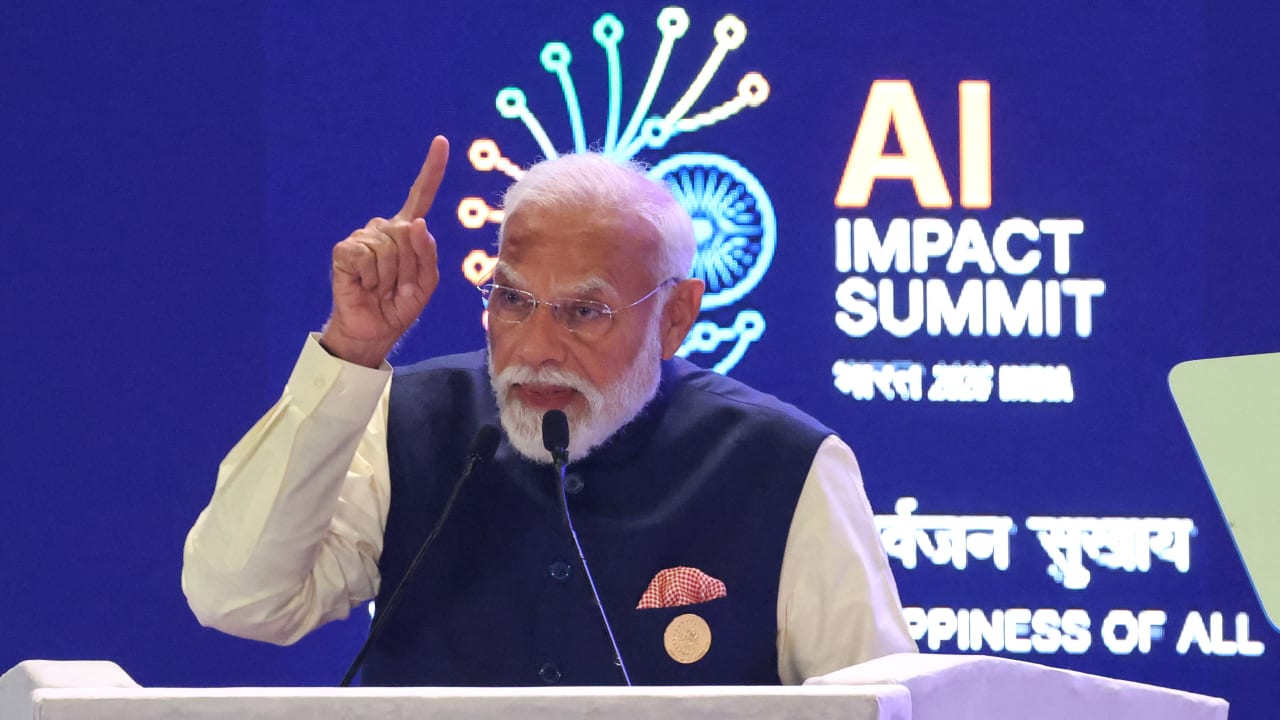
Indian Prime Minister Narendra Modi’s visit is expected to launch “a new phase” in India-Israel relations, with a broader agenda centered on advanced technology, trade, and strategic cooperation, according to Ambassador J.P. Singh in an interview with The Jerusalem Post ahead of Modi’s arrival in Israel.
Singh said on Tuesday that the visit comes after a long gap at the highest level and carries unusual symbolic and practical weight.
“Prime Minister Mr. Modi is visiting after almost nine years,” Singh said, referring to the Indian leader’s landmark 2017 trip to Israel. “This visit is going to be a very historic visit.”
He said that once Modi “touch[es] Israeli soil,” “a new phase in our relationship will start” and “a new chapter in our relationship will start.”
Singh framed the visit as both a political and strategic reset between two leaders who have remained in contact over the years. Modi last visited Israel in July 2017, when ties were elevated to a strategic partnership, and Prime Minister Benjamin Netanyahu made a return visit to India in January 2018, according to the Israeli embassy in New Delhi’s official bilateral timeline.
Netanyahu announced Sunday that Modi would visit Israel on Wednesday, saying the Indian prime minister is expected to address the Knesset, visit Yad Vashem, and take part in events centered on innovation and hi-tech cooperation. The Post reported that Netanyahu also highlighted future cooperation in artificial intelligence and quantum computing.
Singh reinforced that agenda in the interview, saying the visit will include a detailed meeting with Netanyahu, a visit to Yad Vashem, and a meeting with President Isaac Herzog. He also stressed the significance of Modi’s planned Knesset address, which he described as a first for an Indian prime minister.
Singh said, “One of the most important elements will be [that] he will be the first prime minister from India to address the Knesset,” adding that the speech would be widely watched in both Israel and India.
‘Broaden as well as deepen’
Asked what he meant by a “new phase,” Singh said the next step in India-Israel relations is both expansion and consolidation.
“We will broaden as well as deepen our relationship,” he said. By “broaden,” Singh said he meant moving beyond a limited number of sectors to build a more comprehensive framework that includes financial cooperation, trade, and cross-border payments. He specifically pointed to the possibility of future work on financial systems, including money transfer mechanisms and cross-border payment infrastructure.
By “deepen,” he implied more integrated collaboration between the two countries’ innovation ecosystems, including start-ups, technology partnerships, and greater scope for technology transfer and combined strengths.
“The sky is the limit,” he said. Singh declined to provide specifics on agreements expected to be signed during the visit, saying details had not yet been formally announced. He did say, however, that the agreements would span “most different aspects” of the relationship.
He listed science and technology, cultural ties, agriculture, research and development, centers of excellence, and defense cooperation among the areas likely to be covered.
Technology at the center
A major theme of the visit, Singh shared, will be the overlap between India’s scale and Israel’s innovation ecosystem.
The focus areas, he said, include science and technology, critical and emerging technologies, AI, cybersecurity, and quantum-related cooperation.
“Somewhere, we need to combine the strength of both the countries,” Singh said.
That emphasis matches the messaging from both governments and recent public reporting. Netanyahu said this week that the two countries would promote cooperation in hi-tech, AI, and quantum computing, while Singh told Indian public media that the two ecosystems “complement each other.”
The economic logic behind that push has grown stronger in recent years. Reuters reported in July that Israel and India were finalizing an investment protection agreement and cited Israeli officials saying New Delhi had become one of Jerusalem’s most important trade partners, especially in Asia. Reuters also reported that bilateral trade in 2024 totaled nearly $4 billion.
Personal rapport, strategic significance
Singh also highlighted the personal relationship between Modi and Netanyahu as an asset in advancing policy.
He described the rapport between the two leaders as “very warm, very friendly, very brotherly” and said that dynamic could help accelerate broader cooperation.
At the same time, he indicated that the leaders’ discussions would go beyond bilateral issues. Asked whether regional instability would come up, Singh said the talks would cover “bilateral, plus regional and global issues,” and described the expected conversation as “very free-flowing.”
For Singh, the central message of the visit is that India-Israel ties are entering a more ambitious stage after years of steady growth.
“This visit will give us a road map and a vision for our future relationship,” he said.
If the agreements announced after the leaders’ meetings match the scope Singh outlined, the visit will be remembered not only for its symbolism but also for setting the terms of the next India-Israel chapter.