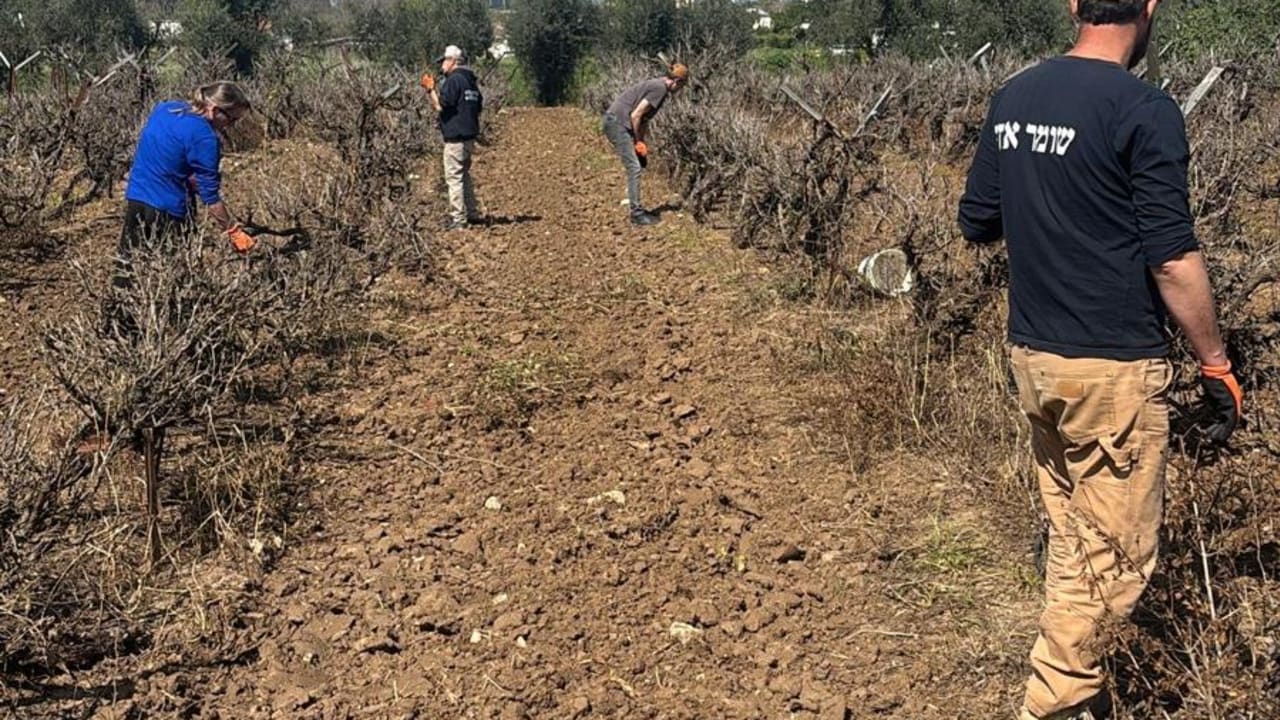
Hashomer Hachadash, an Israeli volunteer-based organization that works with farmers, ranchers, and rural communities, has launched an emergency fundraising campaign in Israel, the United States, and Canada to purchase and deploy at least 100 bomb shelters for agricultural areas that currently lack protection, the group said on Monday.
According to the organization, the initiative was prompted by the ongoing war with Iran and the exposure of farmers working in open areas under rocket fire, UAV (unmanned aerial vehicle) threats, anti-tank missile risks, and repeated sirens.
Founded in 2007, Hashomer Hachadash, Hebrew for “The New Guardian,” says it was created to support Israel’s agricultural communities and strengthen the connection between Israeli society and the land through volunteering, education, and fieldwork.
Recently, it has become widely known for mobilizing volunteers to assist farms facing labor shortages, security pressures, and wartime disruptions.

A volunteer movement focused on farms and rural communities
For readers unfamiliar with the organization, Hashomer Hachadash operates at the intersection of agriculture, civic volunteering, and rural support. The group says it works with farmers and ranchers across the country, helps coordinate agricultural volunteers, and also runs educational and pre-military programs tied to farming, service, and leadership.
Recent Jerusalem Post reporting has shown the organization taking on a broader emergency support role during wartime, including debris removal, home repairs, guarding agricultural communities, and volunteer assistance for affected residents.
Other Post coverage has also highlighted its role in discussions around food security and the resilience of Israel’s agricultural sector since the outbreak of the war.
According to Hashomer Hachadash, the latest campaign focuses on a basic but urgent need: protected spaces for farmers who must continue working during alerts. The organization said the shortage of bomb shelters has again exposed how vulnerable many orchards, greenhouses, grazing areas, and open fields remain during active conflict.
Shelter shortage limits work and volunteer access
The group said many farmers have been forced to continue working in exposed areas without access to nearby shelters, even as sirens and aerial threats disrupt daily activity. It added that the shortage is especially severe on remote agricultural ranches, which are often far from cities or towns and therefore lack access to public shelters.
Hashomer Hachadash said the lack of protection is affecting more than the farmers themselves. Without shelters in place, volunteers often cannot be sent into the fields, while maintenance crews and other essential professionals may be unable to reach farms to carry out repairs and operational work.
The result, the organization said, is a growing disruption to agricultural activity during a critical season for Israeli food production. That concern fits into a wider national discussion, as recent Jerusalem Post coverage has pointed to wartime strain on agriculture and food supply systems, with volunteer networks helping prevent deeper damage to farms when workers are absent or conditions are unsafe.
Campaign framed as both a safety and food security measure
Hashomer Hachadash said the goal of the new campaign is not only to protect lives but also to allow agricultural work to continue and to make it possible for volunteers and participants in its pre-military programs to return safely to the fields. The organization presented the deployment of shelters as essential to preserving farm output, supporting rural livelihoods, and maintaining continuity in the food supply during wartime.
“Without proper protection, both the national food supply and the livelihoods of farmers who have worked all year for this season are at risk,” Onn Rifman, co-founder of Hashomer Hachadash and the group’s deputy CEO of education, said in the statement. He added that placing shelters in the fields would help volunteers and program participants safely return to assist farmers.
The campaign reflects the way wartime pressures have pushed civilian and volunteer organizations deeper into frontline support roles, particularly in Israel’s agricultural periphery, where distance and limited infrastructure can leave communities more exposed than urban areas.
Recent reporting has shown Hashomer Hachadash increasingly positioning itself as one of the central civilian groups involved in supporting farms, rural security, and agricultural continuity during the conflict.