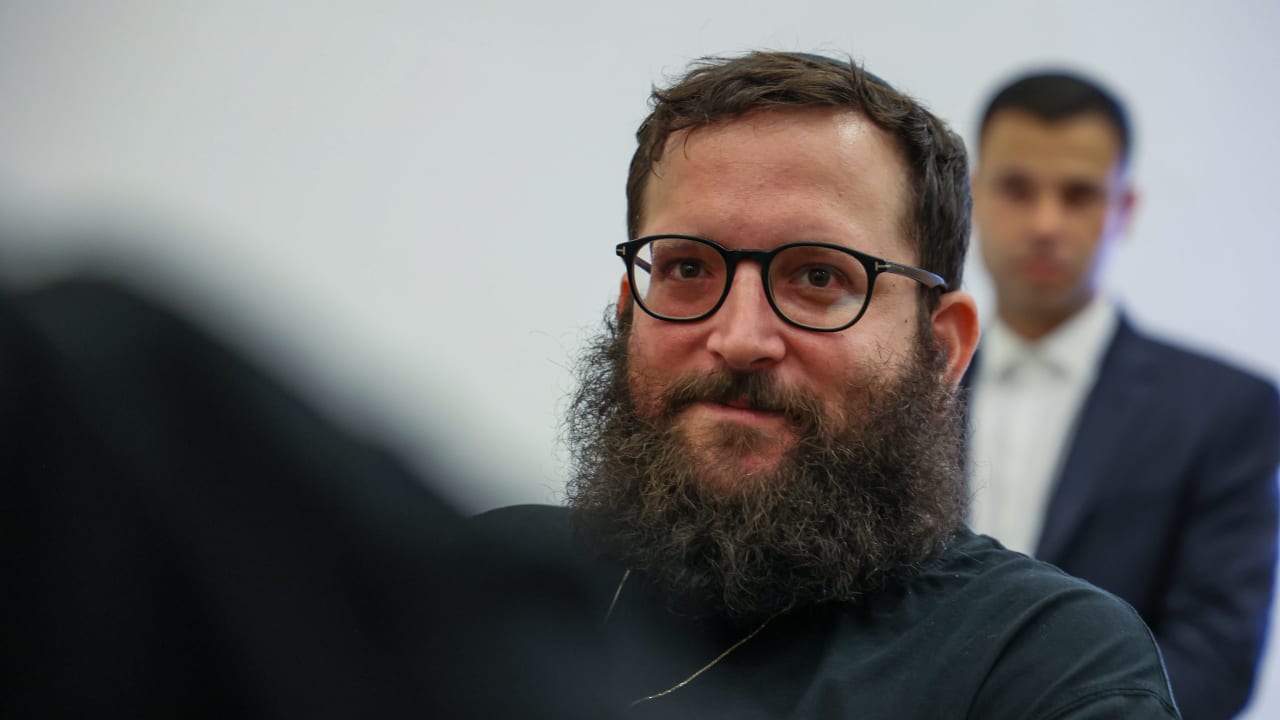
The Supreme Court on Monday rejected the state’s request for leave to appeal a lower-court ruling that let the restrictive conditions imposed on Prime Minister Benjamin Netanyahu’s adviser Yonatan Urich in the Qatargate affair lapse, holding that the case did not justify third-instance intervention and underscoring the state’s own role in creating the procedural failure.
In the March 9 decision, Justice Yechiel Kasher made clear that the matter before him was narrow: not the merits of the underlying investigation, but whether the state could salvage release conditions it had failed to extend in time.
The ruling arose from the state’s challenge to a January 7 Central District Court decision that had upheld a magistrate’s court refusal to extend those conditions in the Qatargate file.
The timeline was central to the case. Urich, together with former PMO spokesman and adviser Eli Feldstein, was arrested on March 31, 2025, in the Qatargate case, on suspicion of security and fraud-related offenses, including contact with a foreign agent, passing secret information, bribery, fraud, breach of trust, and obtaining something by deceit.
He was later released under restrictive conditions that were repeatedly extended. But, after the parties agreed in December to extend those conditions only until January 4, 2026, at 10 a.m., the state filed its fresh request at 7:11 that same morning – leaving less than three hours before the restrictions expired.

Both lower courts held that this was too late. The magistrate’s court found that the law required the request to be both filed and heard within the relevant period, and that the state’s timing made that impossible.
The district court agreed, stressing that a hearing on extending release conditions is generally to be held in the presence of the released suspect or counsel, and that filing just hours before expiry did not allow for meaningful argument and decision within the statutory window.
Kasher did not disturb that result. Even setting aside the broader legal debate over the exact scope of the court’s authority once the 180-day period has run, he said, the district court’s decision rested on an additional and independent ground: that the state’s own conduct did not justify relief.
He added that the prosecution had mischaracterized the December order it claimed to rely on. That order, he wrote, plainly allowed five days for written arguments, which meant the state should have filed early enough for that process to happen before the deadline passed.
That leaves the Qatargate restrictions out of force, but not all of Urich’s restrictions.
Qatargate ruling differs from Bild leak restrictions
The ruling itself draws a clear distinction between Qatargate and the separate Bild leaks. In that track, the court noted, the relevant conditions were imposed only in August-September 2025, meaning the same 180-day problem had not yet arisen.
The decision also recounts that, on July 13, 2025, Urich was notified that prosecutors were considering indicting him, subject to a hearing, in the classified documents leak affair on charges including delivering secret information with intent to harm state security, delivering secret information, possessing secret information, and destroying evidence.
The Bild case centers on the leak of classified military material that was later published in the German newspaper Bild. Investigators suspect that Urich worked, with others, to pass top-secret military information to the paper in an effort to shape public opinion in Netanyahu’s favor after the killing of six hostages in Gaza in August 2024, amid a fierce public debate over whether political considerations had affected ceasefire negotiations.
The March 9 ruling notes that the Bild restrictions continued to evolve even after the January district court decision now under review. It records that, on January 15, a magistrate’s court extended only a narrow no-contact condition with Feldstein and Israel Einhorn, and that the state then won a partial reversal in district court on January 25.
On March 3, the magistrate’s court again extended the Bild-related restrictive conditions until March 19. In other words, while the Supreme Court’s latest decision ended the state’s effort to revive the lapsed Qatargate conditions, Urich remained entangled in separate restrictions flowing from the Bild case.
Hovering over both affairs is the so-called “midnight meeting” obstruction investigation, a separate but related probe that has deepened scrutiny of Netanyahu’s inner circle.
That case focuses on an alleged late-night meeting at the Kirya military headquarters parking area between Prime Minister’s Office Chief of Staff Tzachi Braverman and Feldstein after Braverman allegedly learned of a covert military inquiry into the Bild leak.
Investigators, over the past few weeks, have been examining whether Braverman improperly conveyed sensitive information about the probe and suggested he could help shut it down – allegations he denies.
Urich has surfaced around the edges of that obstruction track as well. January reporting said he was questioned under caution again in connection with the nighttime-meeting affair, after Feldstein allegedly told investigators he had updated Urich in advance about the meeting and its contents.
The Qatargate affair itself remains one of the most politically combustible cases to hit Netanyahu’s orbit during the war. Investigators suspect that aides in the prime minister’s circle were involved in a campaign to improve Qatar’s image in Israel – and in some accounts to push negative messaging about Egypt – while Doha was serving as a central mediator in hostage talks with Hamas.