The war with Iran has already shown that even the country’s advanced air defenses cannot stop every missile. Some get through. When they do, the consequences are deadly.
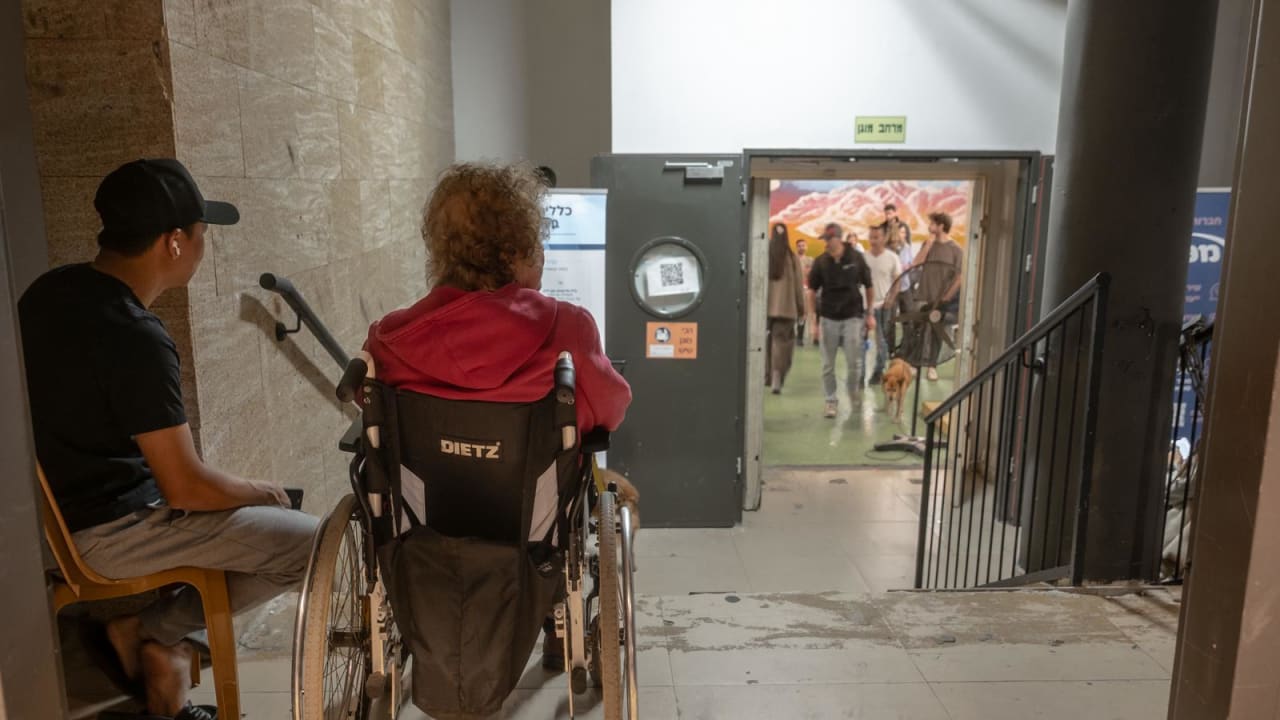
For most Israelis, a siren triggers a familiar race against time. They run to a safe room, a stairwell, a public shelter, or the lowest protected space they can reach. For hundreds of thousands of Israelis with disabilities and many elderly citizens, that choice does not exist.
Take Sarah, a 47-year-old resident of central Israel, married with two children, who uses a wheelchair because of muscular dystrophy. Her apartment has no safe room. The public shelter in her building area is down a flight of stairs, which means she cannot reach it. When sirens sound, she remains at home, overwhelmed by fear, waiting and praying the missile lands somewhere else. Family members stay with her, exposing themselves as well.
Sarah’s story is not unusual. It reflects the reality of a vast and vulnerable population. More than 600,000 Israelis with severe disabilities lack accessible protection in an emergency. A recent Access Israel survey found that 40% of people with disabilities in Israel do not have accessible shelter options. For them, the home front is not protected. It is abandoned.
This problem did not appear yesterday. Israel has lived under missile threat for years. Governments had time to prepare. In 2005, the Knesset passed the accessibility chapter as part of the Equal Rights for Persons with Disabilities Law, requiring the Defense Ministry to prepare regulations for emergency preparedness and assistance for people with disabilities and the elderly. Those regulations were never meaningfully implemented. Appeal followed appeal, to Knesset committees, government ministries, local authorities, the Home Front Command, and other bodies. The result remained the same.

Neglect became policy
Neglect became policy.
In a country so experienced in war, this failure is especially hard to defend. Accessible protection is basic civil defense. A person in a wheelchair should not have to gamble with his or her life because the nearest shelter has stairs. A deaf person should not be left vulnerable because warnings are not fully accessible. A ventilator user cannot simply pick up and run. A resident on a high floor without an elevator cannot follow the same instructions issued to an able-bodied neighbor. These are not edge cases. They are known realities.
Yet Israel still behaves as if a standard emergency instruction fits everyone.
That gap has deadly consequences. When the prime minister, cabinet, and defense establishment approve military action and assess likely casualties on the home front, they also bear responsibility for the civilians who cannot access basic protection. That includes people with disabilities, elderly Israelis, and Holocaust survivors living in homes that offer no accessible shelter.
There are practical solutions, and they are not theoretical.
Access Israel has spent years developing expertise in evacuation and support for people with disabilities during emergencies. In Ukraine, after the Russian invasion in February 2022, the organization launched the Purple Vest project, helping evacuate approximately 4,000 people with disabilities and elderly residents. Another 10,000 who stayed in their homes received support with medical equipment, medication, and other urgent needs.
That experience shaped the Purple Vest Israel project, launched on October 7, to rescue and assist people with disabilities living in attack zones without accessible protected spaces. Since then, accessible rescue operations have been carried out with specially equipped vehicles, and hundreds of families and thousands of people have received support. A dedicated hotline was established. A network of volunteers was built across local authorities and communities. Much of this work has depended on donor support rather than a national government plan.
That should disturb every Israeli.
A functioning state does not leave life-saving civil defense for people with disabilities to philanthropy alone. It builds systems, sets standards, allocates budgets, and makes sure local authorities know who needs help before the next missile falls.
Steps that could save lives
Several immediate steps could save lives.
Israel should appoint a national project manager to lead an accessible emergency preparedness effort. Every local authority should build and maintain a database of residents with disabilities and their needs, including who requires evacuation during wartime and who can remain safely at home with support. Municipal workers, volunteers, and rescue teams should receive dedicated Purple Vest-style training in accessible evacuation and emergency assistance. Authorities should also publish clear and updated accessibility information for shelters and protected spaces on their websites and emergency platforms.
These are modest measures. They are achievable. They would reduce casualties, lower anxiety, and restore a basic sense of dignity to citizens who too often disappear from national planning.
A country is measured by how it protects its most vulnerable people when the sirens sound.
Israel knows how to mobilize in wartime. It knows how to improvise, how to rescue, how to organize, and how to act with urgency. That same seriousness must finally be applied to citizens with disabilities and to the elderly. Accessible protection must be treated as a national priority.
A shelter is not a luxury. It is part of the right to life. No Israeli should face a missile attack knowing that survival depends on whether they can walk down a staircase in time.
The writer is chairman of Access Israel. A former helicopter pilot, he was critically injured, is paralyzed in all four limbs, and uses a wheelchair.