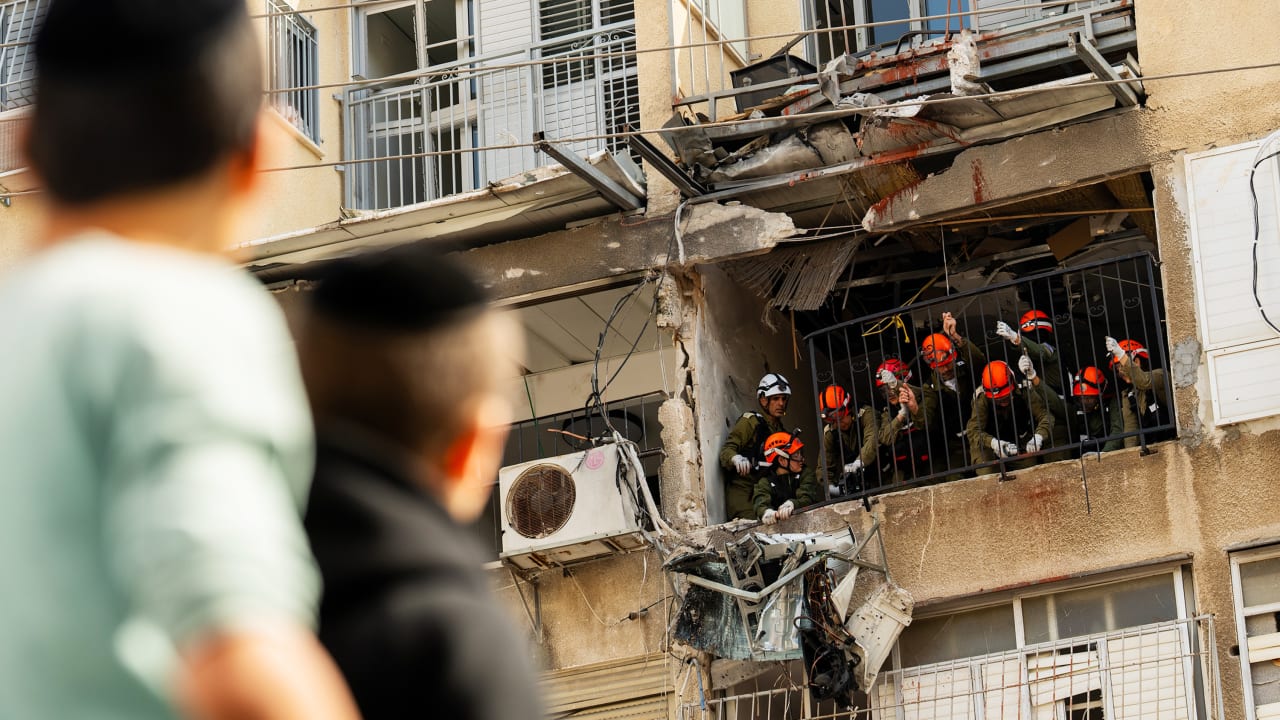
Organizations that normally operate in disaster zones around the world have launched emergency response efforts inside Israel following the war with Iran. For years, these humanitarian organizations have operated primarily in international crisis zones, from earthquakes in Turkey and wildfire-affected areas in Los Angeles to humanitarian emergencies in Africa and Ukraine.
SID Israel, the umbrella organization for Israel’s international development and humanitarian aid community, explained that they are now applying that same expertise to support communities affected by missile attacks across Israel.
One example is the humanitarian organization CADENA, which has organized volunteer days to assist families whose homes were damaged by missile attacks. Volunteers help clean up damaged apartments, remove broken glass, and perform initial repairs. CADENA also mobilized its international network in Mexico to host Israelis stranded in Central and South America due to the war.
The international humanitarian organization IsraAID has launched an emergency response in Israel focused on mental health and psychosocial support for affected communities.
Volunteers have distributed more than 1,000 resilience kits to families impacted by missile attacks in cities across the country, while 100 stress-relief kits have been placed in bomb shelters in cooperation with local authorities.

The volunteer organization Lev Echad, which usually operates in disaster zones worldwide, has also launched emergency assistance inside Israel. Since the start of the war, it has brought in 7,000 volunteers to assist around 3,500 apartments damaged by missile strikes in seven cities across the country.
“The war with Iran has created a unique situation in which that same international humanitarian expertise is now being applied here in Israel to assist affected communities,” said Einat Fogel-Levin, director of Public Policy and Foreign Relations at SID. “It is also a testament to the resilience of Israeli civil society and to the contribution of the humanitarian aid community to society’s ability to cope with emergencies.”
SID Israel has also reported a threefold increase in applications for research grants in international development in 2026. The organization said this is likely related to the war in Gaza and now the war with Iran, which are making it harder for Israeli researchers (PhD students and research institutions) to secure funding and build international collaborations.
“SID has effectively become one of the few bodies supporting academic research in this field right now,” the umbrella organization told The Jerusalem Post.
Creative humanitarian measures
Other Israeli organizations have used creative measures to successfully carry out important international missions despite the war in Israel affecting their provisions and personnel.
Two Israeli medical NGOs – Operation Ethiopia and Save a Child’s Heart – said that their medical delegations were unable to travel to carry out urgent surgeries due to the closure of Israeli airspace and flight cancellations.
Operation Ethiopia explained that its Israeli surgical team was supposed to travel to Dessie, Ethiopia, for an oculoplastic surgery campaign at Boru Meda Hospital, where 150 surgeries were scheduled for patients suffering from severe dacryocystitis (tear duct infection). When the Iran war began and Israel’s airport shut down, the team couldn’t fly in.
Instead, Operation Ethiopia brought together graduates of its doctor training program from across Ethiopia to lead the campaign.
Then, a second challenge presented: some of the surgical materials were supposed to arrive from Israel, but did not after the airspace closed. Local doctors sourced them from Addis Ababa, but then flights to Dessie were canceled.
The organization then successfully arranged for someone to fly the supplies to Semera, 225 km from Dessie, and had a driver bring them.
Despite all the challenges, Operation Ethiopia successfully carried out 182 complex surgeries.
Save a Child’s Heart saved three lives on Day 1 of its mission: Nanati (9), Kalkidan (10), and baby Kidist (6 months).
It explained that the war in Israel disrupted its original plans, and the Israeli team had to stay at Wolfson Medical Center.
However, two generations of Ethiopian heart surgeons trained by Save a Child’s Heart (SACH) stepped up and took over the surgeries, marking 30 years of Ethiopian-Israeli medical cooperation.”
“This is what sustainable healthcare looks like,” SACH said. “It’s not just about flying in to perform a procedure; it’s about the years of training and mentorship that empower medical teams to lead in their own countries. It’s about building a foundation that stays strong even when the world is in turmoil.”