The High Court of Justice has been asked to compel the state to carry out its earlier decision in the Ras Ein al-Auja case and to impose sanctions over delays, after Israeli authorities missed a court-ordered deadline to report on enforcement steps in the Jordan Valley matter.
The request was submitted in an updated notice filed Tuesday by attorney Shlomo Lecker, who represents the petitioners.
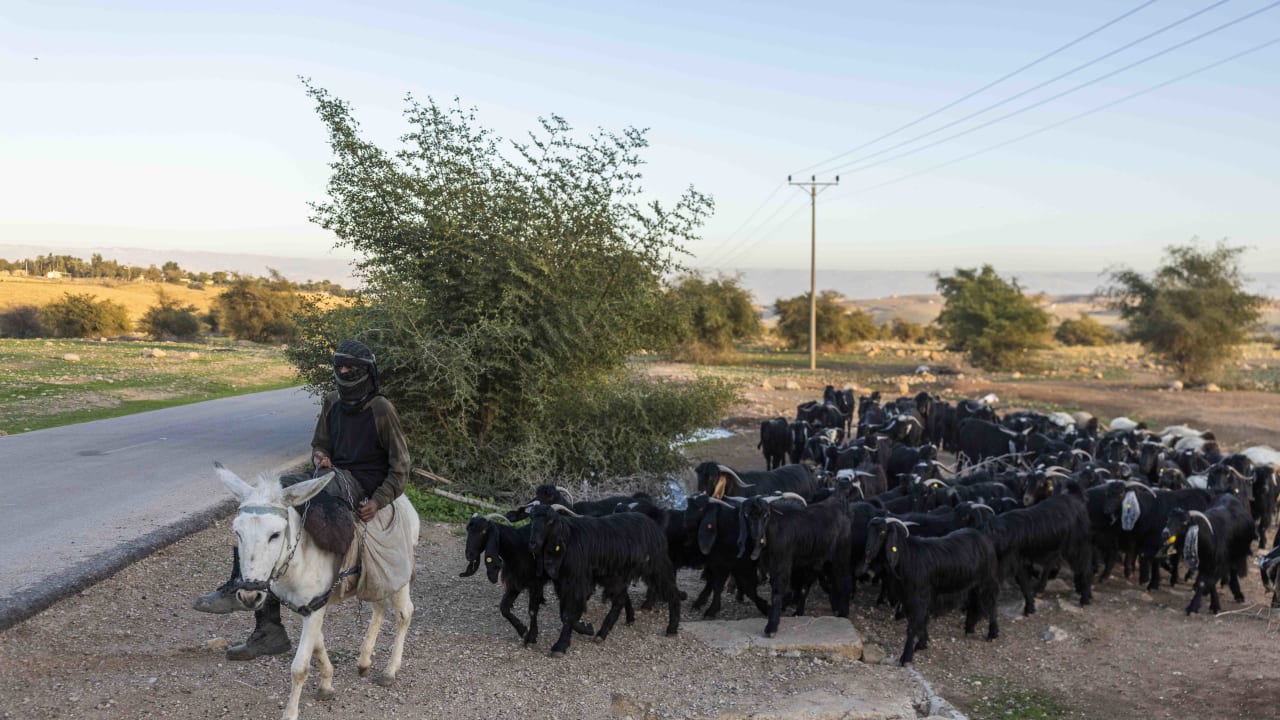
The case centers on the Palestinian Bedouin herding community of Ras Ein al-Auja, north of Jericho, whose residents say they were effectively driven from the area by sustained settler pressure and violence.
In a February 4 decision, Deputy Supreme Court President Noam Sohlberg, together with Justices Alex Stein and Gila Kanfi-Steinitz, ordered the military commander in the West Bank, the Civil Administration, and Israel Police to assist the petitioners, in advance coordination, in returning to a defined area of the community.
The court also ordered the state to submit, within 60 days, an update detailing enforcement measures taken during that period to ensure security.

According to Lecker’s new filing, the reporting deadline expired on Sunday without any update from the state. He told the court that, after waiting for state counsel to return from abroad, he wrote to the respondents’ attorney and set out several conditions that, in his clients’ view, would make a return possible, while also proposing a meeting between counsel for the parties.
According to the filing, the only response was a brief email saying the letter had been forwarded to the relevant authorities. A further reminder was sent on March 12, again proposing a meeting and demanding implementation of the court’s decision, but, Lecker said, no substantive reply followed. He asked the court to order respondents to act without delay and to attach a “significant sanction” if they do not comply.
The petition itself was filed in March 2025 by six residents together with the Center for the Development of Peace Initiatives.
Claims include prolonged alleged harassment, grazing takeovers, blocked access, infrastructure, livestock theft
The claim was not that the state had formally evacuated the community, but that a prolonged pattern of alleged harassment, grazing takeovers, blocked access routes, infrastructure damage, and livestock theft by civilians from nearby outposts made life there untenable and ultimately forced families to leave.
By the time the High Court heard the case in early February, it had taken place just days after the last families had left the area, according to the petitioners’ account.
The state, for its part, rejected the characterization of the events as forcible displacement. In earlier submissions and at the hearing, it argued that no formal eviction had taken place, that residents were not barred from returning, and that security forces operate in the area to prevent friction and respond to complaints.
The court did not make factual findings on responsibility for the residents’ departure and did not adopt the petitioners’ full legal framing. Nor did it order the dismantling of outposts, declare the area a closed military zone, or issue a permanent injunction. Instead, it took the narrower step of ordering assistance with return, subject to advance coordination, and requiring a 60-day enforcement update.
That narrower ruling is now at the center of the renewed dispute. In essence, the petitioners are telling the court that even the limited operative relief it granted has not been implemented, and that the state has also failed to comply with the follow-up reporting requirement meant to keep the matter under judicial supervision.
The next question for the court will now be whether to give the respondents more time, issue a fresh compliance order, or take the more unusual step of attaching sanctions to enforce its February decision.