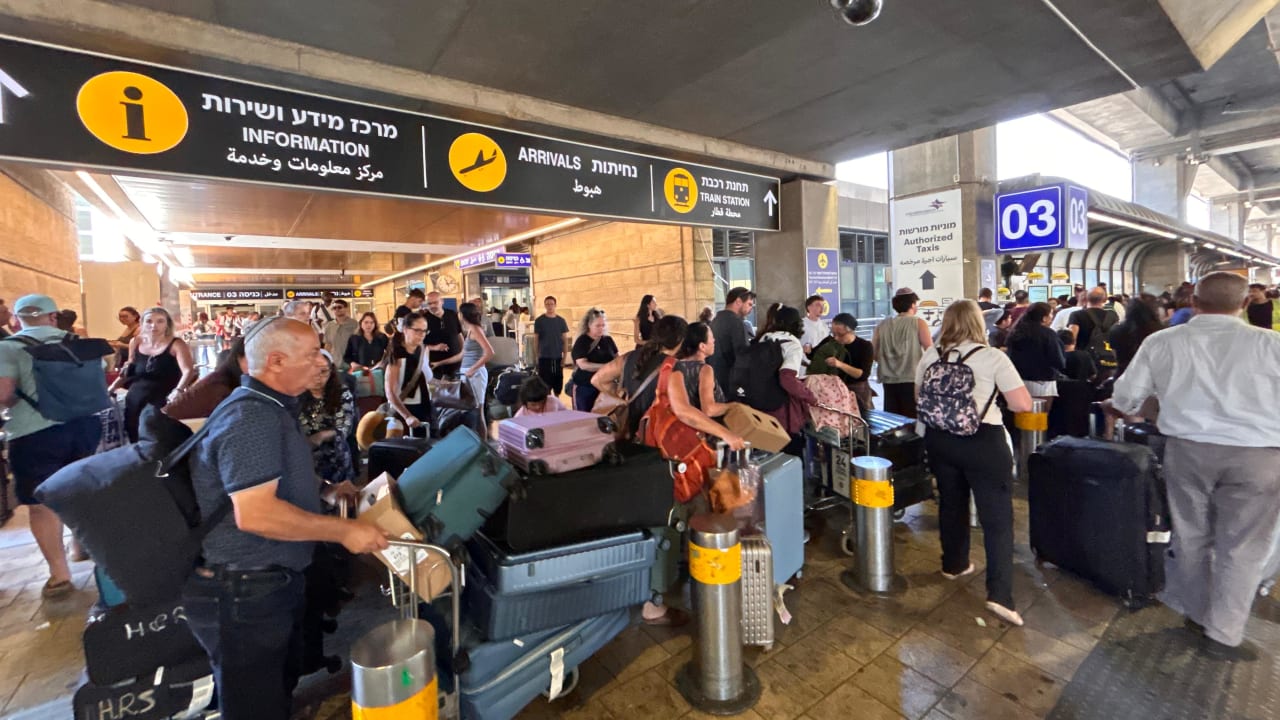
Ben-Gurion Airport management had known for months about the employee shortage, which led to the recent severe disruptions earlier this month, Attorney Naomi Landau, who represents the Israel Airports Authority (IAA) employees’ union, said on the 103FM program Where’s the Money on Monday.
At the beginning of the discussion, Yael Ayalon, editor of Where’s the Money, addressed how the disruptions began and the Histadrut labor federation’s involvement.
According to her, "this time, these labor disruptions were initiated by or coordinated between the workers’ union and employees on the ground. The Histadrut discovered the dispute and the chaos only after it had already started. Although it gave formal support to the move, even in the official statement by the Histadrut chairman that same day, during the first hours of the chaos, it was stated that no such instruction or directive had been issued by the Histadrut for a strike or labor dispute."
Ayalon also addressed the lack of an official labor dispute declaration, saying that, "The Histadrut chairman was abroad; the Histadrut was on recess. The chairman of the transportation workers’ union was also abroad. That does not prevent them from intervening, but the most significant point is that despite the Histadrut speaking out about the manpower shortage, it did not declare the issue a labor dispute. Essentially, the workers’ union had limited abilities from the outset, and it could not legally launch a strike, which is what happened in practice."
Later, Attorney Landau joined the conversation and sought to demonstrate that the manpower shortage at Ben-Gurion Airport had been known for months. She quoted remarks made by Pinchas Idan last May, when he said, "I don’t know how we will get through August; we need another 400 workers. I say with full responsibility, there will probably be lines in the coming period. Management is doing everything to recruit. But right now, many more workers are still missing."
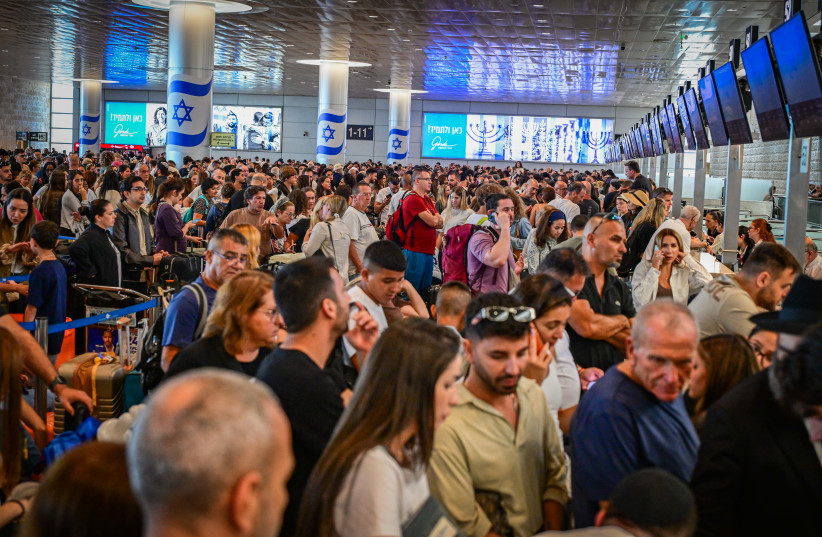
Management faced difficulties recruiting for Ben-Gurion, despite known shortages
Landau argued that additional officials within the Airports Authority had also warned about the shortage in advance, emphasizing how difficult it was the recruit workers for the required positions. "The heads of departments warned about this, absolutely," she added.
"I am already saying that management tried to recruit, and it is very difficult to recruit workers for these positions during this period. These are challenging jobs, because being a baggage handler or a firefighter at Ben-Gurion Airport during this period is very difficult. In addition, even if workers are recruited, they must undergo training, complete additional requirements, and receive security clearance to work there."
Landau then pointed the finger at the Israel Airports Authority management, claiming that the decision that led to the closure of the counters was made by management.
"Management panicked," she said, further explaining that "once those 18 workers collapsed and left after nine hours of work in the heat, instead of moving other workers from other areas of the airport who could provide support, management decided to close the counters, and only management has the authority to do that. Pinchas himself was shocked by the matter."
Airport workers' union preferred negotiation over dispute
Landau also addressed why the workers’ union did not declare a labor dispute, claiming that Idan initially preferred to negotiate with management. According to her, "We considered it, and Pinchas decided to negotiate with management. He received promises. You do not enter a labor dispute so easily, because once you enter one, there is only one path that leads to a strike, and then the workers say, 'What did you do to me?' Pinchas Idan did not want to close the airport. What exactly would closing it in August give him? What would it give the workers’ union? It gives them absolutely nothing."
At the end of the interview, Landau addressed efforts to recruit additional workers and the dispute over responsibility for the events. "Management announced that it is recruiting nearly 100 workers who are currently on unpaid leave and will fill the ranks," she added.
"And still, even when there is a fully staffed shift, there is still a manpower shortage under these conditions. There was no strike, and the ones who closed the counters were management. There was no dispute between management and the workers, except that management claimed there was no shortage of workers."